The Centers for Health and Public Safety is joining Emergency University to raise awareness about preventable deaths.
Here's your chance to get an early look at new products being exhibited at the Orlando conference.
NSC describes the Safety Trail in the central aisle of the expo as "a visual journey through corridors of safety milestones from the last century."
A new Staples.com feature, the Safety Research Center, offers guides to help them prepare for common safety issue and emergencies.
The presentation is set for Sept. 26, the first day of the 61st Governor's Industrial Safety and Health Conference in Spokane.
The agency says the Safety Data Initiative launched in May is bearing fruit, with tools to help home and car buyers, farmers, and law enforcement officers.
An observational study of patients with cardiac arrest at 435 U.S. hospitals find facilities with the longest attempt had higher survival to discharge.
"Fast response during traumatic events like a heart attack is critical, and these new findings once again affirm the skill of our dispatchers who take 911 calls and the professionals who provide rapid, high-quality emergency care and transport," said County Executive Dow Constantine.
The new program will award up to 1,000 CPR Anytime kits to each of five cities, the American Heart Association announced.
Through July 20, those who Like the conference's page have a chance to win free registration for the Sept. 11-15 event.

From its inception in the Great Depression to today's recession, this publication has been a continual resource for worker protection.
This app gives instant access to information on how to handle the most common first aid situations and includes videos and interactive quizzes.
The American Heart Association's mobile training unit is in Albany, N.Y., June 9-12 as part of its summer tour. A related video shows how the Bee Gees' "Stayin' Alive" has an ideal rhythm for chest compressions.
The blood typically contains five to seven minutes worth of oxygen, and constant, fast chest compressions keep that oxygen moving to the brain and other vital organs.

With an average of 250 fire calls each year, quick response is vital to keep fires from spreading, says Brad Hukreide, fire chief at the Lewiston, Idaho, paper mill.
Those living less than 100 meters (328 feet) from the roadway have a 27 percent increased risks of dying over 10 years than those living at least 1,000 meters (3,280 feet) away, according to new research.
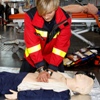
Its effectiveness at improving CPR depends on the type of feedback that is given, the nature of that feedback, and when and how it is given, says researcher Carolyn L. Cason.
Early and effective CPR, along with early access to defibrillation to shock the heart to restore a normal rhythm, is essential to patient survival.
“By any measure—such as the return of pulse and circulation or improved brain recovery—we found that implementing the new guidelines in these patients resulted in better outcomes from cardiac arrest,” said Peter J. Kudenchuk, M.D.
New advancements simplify the process of using an AED.