The Mile High Chapter of the American Red Cross launched Save a Life Denver on Monday, offering 1,000 AEDs at low or no cost to high-use businesses and promising to train 10,000 people annually in CPR and AED use.
Dr. Mickey S. Eisenberg, MD, Ph.D., and co-author Bruce M. Psaty, MD, Ph.D., write in the July 7 issue of JAMA that "a starting assumption is that every patient with witnessed ventricular fibrillation should survive."
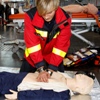
EMTs at the scene said the incident was an excellent example of what is possible if CPR and AED use are initiated quickly, along with timely activation of the emergency medical services system.
Recent saves at a Hong Kong hotel and at a casino in Pennsylvania back up a study indicating use of AEDs before medical help arrives is associated with improved survival.
Baltimore is known as a "City of Firsts" for good reason. In 1743, its Maryland Jockey Club became the first professional sports organization in the United States; in 1774, the city opened the first post office system in the country; in 1816, it became the first city to illuminate streets with hydrogen gas; and in 1920, its Rustless Iron & Steel Co. became the first factory to manufacture stainless steel. And that's just scratching the surface.
Every organization has diff erent characteristics and safety challenges that must be considered when starting or enhancing an automated external defi brillator program. Only then can a workplace determine how many AEDs to purchase, where to place them, and how many employees to train.
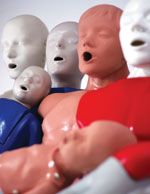
Way back in the day, we used to pack up our cleaned CPR manikins, legs and all, into giant hard cases and drag those behemoths back to the storage room. The best you could hope for was to avoid getting a hernia trying to heave “Anne” up onto the rolling cart.

The American Heart Association's goal is to get 1 million people to learn about CPR during CPR Week, June 1-7.

There is almost no excuse for everyone not to learn some form of rescue techniques, be they rescue breathing, CPR, or using an AED.
"The most important -- and yet sometimes the most difficult -- thing to do is to keep your composure," said ACEP President Dr. Angela Gardner. "You will be better able to provide critical information to emergency responders and physicians, whether for yourself or someone else."
The company's guilty plea and the proposed resolution would represent the largest criminal penalty ever imposed on a device manufacturer for violating the Food Drug and Cosmetic Act, said Commissioner of Food and Drugs Margaret A. Hamburg, M.D.
March 22 is the deadline to apply for the awards being handed out at Fire-Rescue Med in early May. The awards honor creative approaches to improving therapies for patients with acute coronary syndromes and sudden cardiac arrest.
The Feb. 3 announcement is separate from a Nov. 13, 2009, voluntary device correction the company had issued.
ZOLL Medical Corp. is offering its popular Pocket CPR for iPhone free during February in recognition of American Heart Month.
At some point, most learners will have little experience with traditional approaches to learning that don't involve technology. Finding newer methods is essential.

Jan. 31 is the deadline for the Medtronic Foundation's $1,000 grants to schools' staffers to help fund CPR and AED training. The foundation funds the American Heart Association's Be the Beat campaign to educate teens about sudden cardiac arrest.
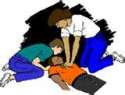
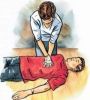
Writing in the latest issue of Circulation, authors from Public Health Seattle–King County’s Emergency Medical Services Division and the University of Washington Department of Medicine report the frequency of serious injury related to dispatcher-assisted bystander CPR among non-arrest patients was low.
Research has found that heart attacks peak during the winter months, and the prevailing hypothesis has been that cold temperatures stress the heart. But in 2004, researchers analyzed 12 years of Los Angeles County death certificates and found that heart attack deaths also rise in the balmy Los Angeles winters. What's more, cardiac deaths peak on Christmas and New Year's Day in L.A. County.
The chance of surviving an out-of-hospital cardiac arrest has not improved since the 1950s, according to a report by the University of Michigan Health System. The analysis shows only 7.6 percent of victims survive an out-of-hospital cardiac arrest, a number that has not changed significantly in almost 30 years.
People can survive cardiac arrest if they receive only chest compressions during attempts to revive them--as advised by the current American Heart Association guidelines--but they cannot survive without access to oxygen sometime during the resuscitation effort, research suggests.