Look around: Automated external defibrillators (AEDs), which give life-sustaining defibrillation therapy to a sudden cardiac arrest victim, are popping up all over the world.
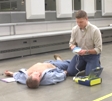
The agency says its facilities experience an average of one sudden cardiac arrest per year among more than 46,000 employees. In the next three years, 97 percent of those employees should have AEDs at their disposal at work, according to the new plan.
Physio Control Inc. has issued a recall of the LifePak CR Plus Automated External Defibrillators (AED), which is used by emergency or medical personnel to treat adults in cardiopulmonary arrest.
"Our hope is that this gift will increase the chance of survival for
students, faculty, and visitors who may suffer sudden cardiac arrest
while at school or attending campus activities," said Texas Health
Resources CEO Douglas D. Hawthorne, FACHE.
Workplace safety professionals who want the ability to interact with each other more than just once a year at trade shows and conferences now have a new resource.
While AEDs are increasingly being installed in public gathering places such as stadiums, shopping malls, hotels, airports, and bus terminals, their use in the workplace is just beginning to gain momentum, said Brian Trusky, vice president of loss prevention at Moss & Associates.
The American Heart Association and the American College of Cardiology have released a scientific statement on the need for more research for the connection between heart disease and sleep apnea. The statement will be published online in Circulation: Journal of the American Heart Association and the Journal of the American College of Cardiology.
Reflecting the growing emphasis on evidence-based cardiology practice, the American Heart Association has announced a September premier for Circulation: Cardiovascular Quality and Outcomes. The journal--the fifth in a series of six new titles to appear under the banner of Circulation: Journal of the American Heart Association--will be published by Lippincott Williams & Wilkins, a part of Wolters Kluwer Health.
San Antonio researchers who published their results in the journal Resuscitation recommend more frequent refresher training be provided.
The bill would set up a Department of Education grant program to provide AEDs and related training to schools.
No matter whether the AED order is large or small, companies taking the plunge to deploy automated external defibrillators at their facilities are doing their homework, comparing available models, and making selections based on performance and reliability. Safety managers who are overseeing two recent deployments say their companies adopted AEDs proactively—not because of a fatality in their ranks—to build on a strong foundation of health and safety at their facilities
Respondents report lack of confidence, concern about legal consequences, and fear of hurting a victim as reasons they would not take action in a cardiac emergency.
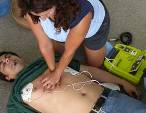
SCAA Executive Director Chris Chiames said the program will strengthen the "chain of survival" in identified communities across the nation.
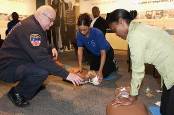
There's a difference between a heart attack and sudden cardiac arrest, and rescue response to the two can be different.
The opportunity is an easy and convenient way for people to learn or renew critical skills that could make the difference between life and death for a family member, colleague, or any individual experiencing cardiac arrest, the council says.
Circulation: Heart Failure is the second of six publications set to extend the American Heart Association's weekly journal.
Sixteen months after voluntarily halting U.S. shipment of AEDs made at its Redmond, Wash., plant, the company's president says quality problems should be solved "in the near future."

The gift, presented before the pope's current American trip, illustrates churches' role in public access defibrillator programs.
The study, released Tuesday, suggests companions of heart attack survivors should be trained on CPR and summoning emergency medical services.