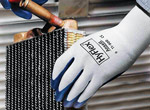
Today, branded manufacturers are placing greater emphasis on product differentiation as customers become more sophisticated in their expectations. Hand protection products must meet customer requirements at every level, providing the protection, comfort, and dexterity that help promote worker safety and productivity.

Almost two-thirds of the more than 7,000 respondents did not know that all forms of UV exposure, whether from natural sunlight or artificial light sources found in tanning beds, are unsafe.
Thirty-four percent of respondents said they have an infection control plan to increase interventions in the event of an outbreak of CDI, a condition frequently associated with previous antibiotic use and most commonly contracted by the elderly and those with recent exposure to hospitals, nursing homes, and other health care institutions.
The company announced today that its $1.4 billion bid has been approved by Sperian's board. This will vault Honeywell into the lead position among PPE manufacturers worldwide.
The company was cited for violations at its Parsippany, N.J., worksite, which it shares with Salonika Associates LLC, also cited after a Site-Specific Targeting Program inspection.
The ASTM International Committee F23 on Personal Protective Clothing and Equipment is sponsoring the June 16-17, 2011, event in Anaheim. Interested presenters must submit a 250-300 word abstract online by Aug. 15, 2010.
The union, which represents some 390,000 active members, said May 11 that it filed its petition last month with OSHA.
Specifically, the facility failed to adequately train workers on respirator selection, use, storage, and maintenance; did not supply positive-pressure filtered air to all work cabs; did not label containers of coke-contaminated clothing; allowed food and beverages to be consumed in an area with visible accumulations of coke-oven emissions; and more, according to investigators.

While professional drivers have to worry about speed traps, weight restrictions, and traffic jams, many don't consider the effects of prolonged sun exposure from driving.
This contractor has been inspected by OSHA 25 times since 1991 and has been issued numerous willful, serious, and repeat violations, including many lead violations, the agency said.

Outdoor workers should be protected against excessive heat exposure, and particularly if they are wearing protective apparel.
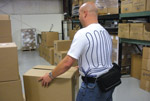
NIOSH notes in its publication "Occupational Exposure to Hot Environments," (1986) that although workers can acclimatize themselves to different levels of heat, each worker has an upper limit for heat stress beyond which that worker can become a heat casualty. Further, it has been shown that a worker's ability to focus attention and the worker's reaction times can be dramatically reduced by even a 2 percent dehydration level due to heat stress.
Since the inception of the NFPA 70E 2000 Edition 10 years ago, there has been a major evolution in our understanding of the electric arc flash hazard.
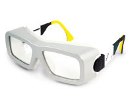
The Control of Artificial Optical Radiation at Work Regulations took effect April 27 and make employers responsible for analyzing visible light hazards, such as from lasers, and protecting and training workers exposed to them.

The latest semiannual regulatory agenda does not advance the rulemaking except to give an October 2010 date to complete analyzing comments submitted in 2008. EPA's agenda says NPRMs will be issued in July 2011 to enhance pesticide protection for applicators and agricultural workers.

Its work in the investigation of an Indiana man's death from rabies last October has caused CDC to issue recommendations for pathologists who perform autopsies on people who had suspected or confirmed cases.

Disposable nitrile, natural latex, and vinyl gloves, often referred to as thin-mil gloves, are used in a variety of distinct applications. Understanding the truths about glove performance is important in selecting the right glove for each application.
The free, one-hour event will focus in part on the new A10.47 standard, which covers flagger safety, run over/back over prevention, equipment operator safety, illumination, PPE, and more.
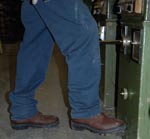
Manufacturing a protective boot that can meet exacting national standards is challenging enough. When the relevant industry adds its own performance testing to the mix, as the aluminum smelter industry around the world has done, the challenge grows — but this happens for all the right reasons.

Throwing sharps containers, red bags, and spill cleanup materials into the trash sends up a red flag to commercial or municipal trash collectors because they are not allowed to take this waste.