The event, held in conjunction with Reach Expo 2010, will feature a variety of noted professionals in the overhead crane and rigging industry.

"We constantly refresh our pool of ideas. Our end users are very vocal about what works and doesn't work."
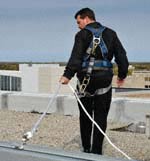
Learning how to minimize the risk of potentially dangerous or fatal fall hazards allows organizations to take a proactive approach to worker safety. In November 2007, the American National Standards Institute (ANSI) released a comprehensive family of standards, known as the Z359 standard or "Fall Protection Code," to help organizations learn how to reduce risk.

The H1N1 pandemic was 2009's biggest safety and health story, but OSHA also grabbed the spotlight last year with a blockbuster $87 million fine. For all of the attention paid to tower crane safety, combustible dusts, crumbling infrastructure, and a jobless recovery, the biggest story of 2000-2009 was Sept. 11, 2001.
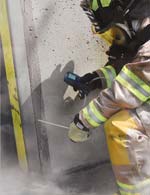
Are user seal checks necessary to ensure protection? And, if so, when should they be performed? A white paper prepared by the American Industrial Hygiene Association's Respiratory Protection Committee asks these and several other questions to resolve important issues.

Trust and involvement are vital components of the Incident and Injury Free safety program that has improved results for Baker Concrete Construction Inc.
Among other charges, the company faces citations for six willful violations that address its failure to provide adequate energy control procedures and a hearing conservation program.
As part of a settlement, an alleged violator may voluntarily agree to undertake an environmentally beneficial project related to the violation in exchange for mitigation of the penalty to be paid. This company chose to donate a RAE Systems gas monitoring system and 42 radiation pagers.
Parents and children giving or receiving an electronic device with music this holiday season should give their ears a gift as well by pre-setting the maximum decibel level to somewhere between one-half and two-thirds maximum volume.
The endorsement establishes it as the model law for harmonizing OSH regulations nationwide. Subject to a four-month comment period late next year, the act will go into force on Jan. 1, 2012.

"Make the Promise" has persuaded 15,000 farmers thus far to promise to work safely for the sake of their families.
"If scaffolding parts had been inspected and replaced or repaired as needed, it is possible that this tragic accident and loss of life could have been avoided," said Eric Harbin, OSHA's area director in Austin.
Dr. William Schaffner, president-elect of the National Foundation for Infectious Diseases, expressed optimism Wednesday that the seasonal flu vaccination rate for U.S. health workers will be higher than in 2008. The peak months for seasonal flu are right around the corner.
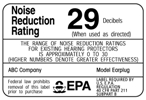
The National Hearing Conservation Association's comments on the EPA proposal recommend simpler labels, 42 months to retest and relabel protectors, and requiring a statement on the labels saying individual quantitative fit testing is the only way to estimate a user's attenuation.
"Few Americans are aware of lead's deadly effects or the fact that lead taken home on clothing and work tools can infect an entire family," said OSHA Area Director Richard Gilgrist in Cincinnati.
The Connecticut-based company received citations for working around energized transmission lines that were not grounded and working within the minimum approach distance in a bucket truck that was improperly rated for the work being conducted, OSHA said.

Titled "Best Practices for Protecting EMS Responders During Treatment and Transport of Victims of Hazardous Substance Releases," the new guidance document addresses adequate training and personal protective equipment for emergency medical services responders who assist victims of hazardous substance release incidents.
According to OSHA, workers at the site lacked proper respirators and protective clothing and had not been informed of the presence of asbestos at the site, and the employer failed to determine the asbestos exposure level and establish a regulated work area for asbestos removal and handling.
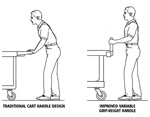
You're in the market for a material handling product, something that can help your employees move those loads quickly and safely. You surf the Web and flip through catalogs, but how do you start to narrow your choices? The same way best-in-class manufacturers create innovative products: research, testing, and knowledge.

The new system will display the risk of extreme heat stress and time to flashover (the point when all combustible materials in a room simultaneously erupt in flames) on the incident commander's screen, along with the firefighters' locations and vital signs.