
Endocrine disruptors may be addressed this year, but comprehensive action on combined chemicals as a whole probably is two years away, according to the EU.

This approach is the correct risk management process because data are lacking for the risk potential of individual engineered nanomaterials, but there is some understanding of hazards posed by different groups of nanomaterials, Safe Work Australia said in a new report.
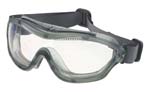
The group, consisting of representatives from 14 major vision protection suppliers, held a kickoff meeting Nov. 9 during the association's Fall Meeting.
"For the companies, they have to be at this show if they want to be in the market," said Birgit Horn, A+A 2009 director.

Attendees from around the world are filling some of the lavish booths occupied by the largest PPE companies, including the Uvex unit of Sperian Protection, Honeywell Safety Products, MSA, Ansell, and more.
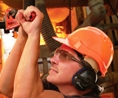
A panicked reaction during one unprotected moment cost a worker his livelihood and more.
In addition to being able to show that a good-faith effort was made to acquire respirators, an employer will need to implement a hierarchy of controls, said acting OSHA chief Jordan Barab.
"Improperly utilized fall protection equipment is just as deadly as failing to use fall protection at all," said OSHA Area Director Rosemarie Ohar. "Workers who lack adequate and effective fall protection are just one slip, trip or misstep away from a potentially fatal plunge."
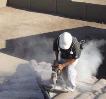
The newly downloadable document addresses methods for controlling silica such as wet cutting during construction operations and using vacuum dust collection systems.
"Workers exposed to occupational hazards requiring head, foot, or eye and face protection will now be provided protection based on a standard that reflects state-of-the-art technology and materials," said acting Assistant Secretary of Labor for OSHA Jordan Barab.
Featured speakers at the IAFC event will include DHS Secretary Janet Napolitano; FEMA Administrator Craig Fugate; Ltc. Greg Gadson, a decorated Iraq war veteran and double amputee; and recently confirmed U.S. Fire Administrator Kelvin Cochran.
"The size of these fines reflects the gravity and recurring nature of these hazards, any one of which could have resulted in death or disabling injury for these workers," said Richard Mendelson, OSHA's area director for Queens, Manhattan, and Brooklyn.

"This is a major threat," says Teresa Dwyer, CSP. "It can cost several hundreds of dollars to have a professional remove an AHB hive and, without the correct protective equipment and training, the potential rescuer may become an additional victim."

Since the publication of our first article ("Vision Testing: A Blind Spot in Occupational Safety," February 2009, page 47), we have been asked many questions, and most people wanted references to the research data.
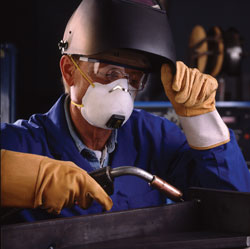
On Feb. 23, 2009, a federal appeals court resolved the final challenges to the Occupational Safety and Health Administration’s Hexavalent Chromium (CrVI) Standard that was promulgated in February 2006. The last challenge argued to lower the permissible exposure limit (PEL) to 1 μg/m3 from 5 μg/m3. This appeal was denied, and OSHA’s PEL was upheld by the court.
Inspectors identified other hazards including locked exits, obstructed exit access, and an unmarked exit; lack of welding screens and personal protective equipment for welders; untrained forklift operators; excess carbon monoxide levels from forklifts; and numerous electrical safety deficiencies including exposed live electrical parts.
SMG's Preferred Supplier of the Year, Jon Cal Murray Distributor of the Year, and Rich Harper Commitment to Excellence Supplier and Distributor Award winners were announced April 9 at the organization's annual conference in Tampa, Fla.
At its April 16 meeting, the California Occupational Safety and Health Standards Board is expected to adopt an amended Section 1598 that requires workers on foot who are exposed to vehicular traffic during work on public streets and highways to wear garments that meet ANSI/ISEA 107-2004.
In the latest inspection, employees allegedly were working on scaffolding, in an aerial lift, and on the roof at a worksite in Torrington, Conn., with exposure to falls of up to 22 feet. Also, electrical, overhead, and chemical hazard communication deficiencies were identified at the site.