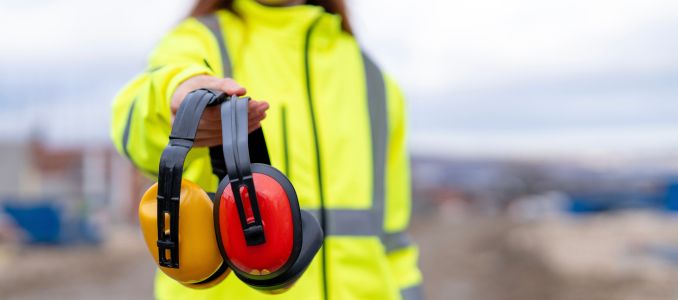
Turning Down the Volume on Workplace Noise
Advances in smart monitoring, wearable sensors and adaptive hearing protection are helping employers better measure noise exposure and strengthen workplace hearing conservation programs.
- By Cindy Pauley
- Apr 27, 2026
Imagine walking into a bustling factory or a vibrant ‑open concept office. Humming machinery, chattering workers and the rhythmic clatter of keyboards and controls are all a platinum soundtrack of productivity. But beyond the fruitful sound lies an invisible hazard ready to erode worker health and compromise safety.
Noise is everywhere, but in some industries, it’s more than background sound; it’s a serious health hazard. Construction sites, manufacturing floors, transportation hubs, forestry lots and even entertainment venues often expose workers to harmful noise levels that can have lasting consequences. According to the Centers for Disease Control and Prevention (CDC), over 22 million workers are exposed to hazardous noise every year, and nearly 12% experience hearing difficulties. The good news? Most of these cases are preventable.
For decades, workplace noise has been a stubborn challenge, leading to hearing loss, stress and safety risks. And the need for change couldn’t be clearer, as National Institute for Occupational Safety and Health (NIOSH) research shows that most hearing loss cases could have been prevented through effective noise reduction and proper hearing protection. Simple engineering controls, quieter equipment, sound barriers and the provision of high-quality hearing protection devices can dramatically reduce risk. So, what if hearing protection didn’t just block noise but predicted and prevented damage before it happened?
The game is, in fact, changing. Modern technology is revolutionizing hearing conservation with smart, adaptive solutions that make protection easier, faster and more effective than ever. Still, technology works best when paired with a strong foundation of prevention. Employers must begin with thorough hazard and risk assessments that consider varying types of workplace noise and their unique characteristics. Understanding factors like decibel levels (85 dBA or above), noise types (e.g., continuous, impulse, impact) and frequency of exposure helps employers implement the most up-to-date protective measures and safeguard workers’ health and productivity, as well as quality of life.
Destruction By Decibels - The Hidden Impact of Workplace Noise
Noise-induced hearing loss (NIHL) typically develops after prolonged exposure to loud noise, with the earliest sign being difficulty hearing high-pitched sounds. If excessive noise isn’t addressed, hearing loss progresses to include lower frequencies and usually affects both ears. Unlike many injuries, the damage is permanent and doesn’t always take years to occur. Even brief exposure to intense, impulsive sounds, such as from nail guns, can cause irreversible hearing loss and, in severe cases, can rupture the eardrum.
Preventing hearing loss before it starts (and preserving existing good hearing) requires understanding the difference between noise and sound. Simply put, sound is what we hear, but noise is sound that becomes harmful, unwanted or unpleasant. Prolonged noise exposure, particularly at high decibel levels, can lead to hearing loss, which can be permanent and debilitating.
Chronic noise echoes far beyond the physical damage to hearing, making hearing conservation even more important. It affects workers’ mental, emotional and physical well-being by triggering the body’s stress response, which can lead to irritability and fatigue. On a physiological level, over time, this noise fatigue can increase worker anxiety, depression or other behavioral changes; undermine performance; and impede communication, while increasing the risk of incidents. Beyond mental strain, prolonged exposure has also been linked to serious health issues, including high blood pressure, elevated cholesterol and heart disease.
Even chemicals can make a difference in a worker’s hearing health. Some hazardous substances such as organic solvents, toluene and carbons are poisonous to the ear, or “ototoxic.” When chemical exposure is coupled with loud noises, workers are at an even greater risk of hearing damage.
Noise isn’t just sound. It’s a silent stressor shaping worker health, safety and productivity. The question is: What can be done about it?
Turning Down the Volume with Tech Trends
Historically, workplace noise has been accepted as an unavoidable byproduct of profitability. Thanks to advances in smart technology, employers have far more protective options. Technological trends are simplifying how noise is being measured, monitored and mitigated. Worker audiograms are more streamlined, and employers can now automate hazard alerts, predict risks and strategically design workplaces to be sound-smart.
Sound-smart workplace layouts can help dramatically reduce stress, improve focus and protect long-term hearing. This can be accomplished by:
- Optimizing your layout by placing loud machinery or equipment away from high-traffic or office areas and using physical barriers (e.g., partitions or soundproof enclosures or even shrubbery outdoors) to help isolate noise without disrupting workflow.
- Using sound-absorbing materials from the ground up to help reduce ambient noise. Carpeting, acoustic panels and sound-dampening ceiling tiles are effective in lowering reverberation and preventing noise from bouncing around the room.
- Integrating smart design technology like active noise-canceling systems or AI-driven sound masking to manage the acoustic environment in real time by adjusting for fluctuating noise levels.
- Creating “Quiet Zones” in areas with minimal noise intrusion to give workers designated areas to de-stress.
Employers now have access to powerful sound solutions that go far beyond design, including:
- Biometric, AI-driven sensors with wireless connectivity, directional microphones and rechargeable batteries automatically detect, classify, and alert on noise events
- Smart hearing devices with built-in electronics that can be 3-D printed, have active noise cancellation (ANC) or are integrated with hearing aids
- Boothless audiometry that offers on-the-go hearing assessments with major savings in expense, time and dedicated workspace
- AI filter-equipped systems that can differentiate between relevant and ambient sounds and offer alerts in real time
- Bluetooth-enabled, wearable noise dosimeters with extended run time and battery life to help track personal exposures in real-time
- Remote monitoring and cloud platforms that are environmentally sound, can easily integrate and maintain predictive analytical data and provide auto-alerts for hazardous conditions
- Acoustic cameras that use microphone arrays and beamforming to visually map noise sources in real time, including frequency-selective localization and ultrasonic leak detection
- Noise mapping capabilities using measurable data and regulatory exposure calculations
- Monitoring apps that track exposures, schedule tests and receive personalized hearing protection recommendations
- Fit-testing apps that provide quick, smartphone-based hearing checks (e.g., tones or speech in noise) and allow users to adjust their connected hearing aids, monitor battery, track usage and share data with audiologists
Workplace noise is more than just a nuisance, and protecting employees from that noise is more than just a regulatory checkbox. Fortunately, there’s a revolutionary technological movement using innovations like boothless audiometry, smart noise monitoring and adaptive hearing protection, making it easier than ever for employers to protect workers, improve productivity and create safer, healthier environments. The future of hearing protection is here!
This article originally appeared in the April/May 2026 issue of Occupational Health & Safety.