The Dual Evaluation and Certification Program with UL and ICC-ES was launched in December 2009 to help building manufacturers show compliance with standards and codes through one point of contact.

The roundtable discussion will include opinions and insights from panelists representing Carhartt, Glen Raven Technical Fabrics, and Old Toledo Brands.
"This facility has not experienced an injury resulting in lost time in the last four years," noted Richard S. Terrill, OSHA's regional administrator. "Their outstanding efforts have included significant management commitment and employee involvement."
Investigations Supervisor Don Holmstrom briefed reporters today about the investigation so far into the Feb. 7 Kleen Energy explosion, which has claimed six lives.
"Out of sight does not mean out of mind when it comes to underground petroleum storage tanks, and it is critical that facilities monitor their tanks and make sure they are not leaking," said EPA Regional Administrator Judith Enck.
The company's location in Lenexa, Kan., generates hazardous and non-hazardous solid waste as a result of ordinary breakage, leakage, and spillage from the approximate 400,000 packages workers handle at the facility each day, EPA said.
Specifically, OSHA found blocked exits, workers lacking safety glasses and gloves while working with acid, unlabeled containers of hazardous chemicals, unmarked electrical equipment, exposed live electrical parts, and moisture in electrical equipment.
The willful violations cited address the inappropriate location of an air material separator that lacked explosion venting, an inadequate housekeeping program, and allowing combustible dusts to collect at depths greater than one-eighth of an inch.
"From the top down, Fred Weber Inc. has displayed outstanding effort in implementing a comprehensive safety and health management system," said Charles E. Adkins, OSHA's regional administrator in Kansas City, Mo. "The company is an exemplar of workplace safety."
According to the study, the market is driven by the fact that more than 120 million workers across the globe are exposed to dangerously high noise levels (over 85 dB). In the United States alone, more than 30 million workers are exposed to prolonged noise levels in their day-to-day life.
EPA noted that a spill of only one gallon of oil can contaminate one million gallons of water. SPCC regulations require onshore oil production or bulk storage facilities to provide oil spill prevention, preparedness, and responses to prevent such discharges.
"Our honorees will be diverse. They won’t all be public figures, well known, or famous; they will be everyday heroes making a difference in the lives of others,” said ASSE WISE Chair Kelly Bernish.
The dairy facility and its former owner are the last two of five defendants to settle claims made in a 2008 civil lawsuit accusing the company of violating the Clean Water Act and befouling the Elkhorn River.
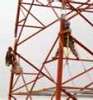
The National Association of Tower Erectors worked with tower owners and operators to develop the content, which will guide on-site employees of owners, carriers, broadcasters, and general contractors.
Specifically, EEOC alleged that an immediate supervisor and co-workers, all Hispanic, made racially derogatory jokes, comments, slurs, and epithets, while the company, despite learning of the harassment, took no steps to prevent or correct it.
According to market research firm Global Industry Analysts Inc., which published the study, the market is primarily driven by greater residential and industrial safety requirements and technological advancements.
Guidelines highlight transport platform operation, inspection, maintenance, and fall protection.
The two deadly incidents, which befell separate worksites, were among five that occurred during a 15-day span in the Pittsburgh area last summer.

A day after President Obama announced $8.33 billion in federal loan guarantees to build and operate two new nuclear reactors, the Nuclear Regulatory Commission issued its report summarizing the nuclear power industry's performance in FY2009.
Personnel working at the site had no training on the operation and maintenance of equipment to prevent discharges, no training on discharge procedure protocols, no training on applicable pollution control laws, rules and regulations, and spill prevention briefings were not scheduled and conducted periodically.