The Chemical Safety Board (CSB) released a final report on Oct. 5 on the uncontrolled oleum release from INDSPEC Chemical Corporation in Petrolia, Pa., which forced the evacuation of three surrounding towns in October 2008.
In a new safety bulletin based on preliminary findings from the ConAgra Foods natural gas explosion in Garner, N.C., the U.S. Chemical Safety Board (CSB) urged companies, gas installers, and contractors to follow safe practices during gas purging operations, including venting purged gases outdoors whenever practicable.
"The process of pandemic planning may be unfamiliar to many organizations," said Safety Services Canada President Jackie Norman. "We felt it was necessary to create a course that would answer important questions and give employers a solid foundation regarding H1N1 flu prevention in the workplace."

A revised eyewash and showers standard is available. Comments on a chemical apparel standard are due by Nov. 9, the opening day of the association's Fall Meeting.

In a tough economy it may be tempting to reduce spending by purchasing lower-cost safety equipment or protective apparel, but at what price?
A study on the self-reported health of Americans ages 18 to 64 revealed that the flu is responsible for 200 million days of diminished productivity, 100 million days of bed disability, and 75 million days of work absence. Each episode of illness translates into five to six days of symptoms and between a half-day and five days of work missed.
Many companies kick back reflexively during tight times, like a crossed knee tapped by a rubber mallet.
"Work-related respiratory symptoms in hospital workers may be associated with diverse biological contaminants," the researchres concluded.
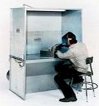
The responsibility of today's maintenance and engineering managers to maintain a clean indoor air environment has increased markedly in recent decades.
Downsizing doesn't have to be a train wreck, even though in today's world of Twitter and Facebook, a single employee's bad experience can have a very broad audience.
OSHA's inspection found 24 alleged serious violations of the OSH Act, the majority of which stemmed from overall deficiencies in the company's process safety management program.
The St. Peters, Mo.-based facility became the latest VPP star site, OSHA's highest recognition for meeting or exceeding workplace safety and health standards.
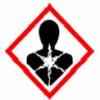
The Globally Harmonized System was developed to provide a single, consistent system to classify chemicals, labels, and safety data sheets for workers, employers, and chemical users. Under GHS, labels would include signal words, hazard and precautionary statements, and pictograms such as the one shown, used for carcinogens, respiratory sensitizers, and germ cell mutagens.
"You might not think of a carwash as a particularly dangerous workplace, but hazards can be present in any workplace if the proper safeguards are not provided and maintained," said Robert Kowalski, OSHA's area director in Bridgeport, Conn.
The serious violations include unguarded machinery, inadequate training, failure to develop energy control (lockout/tagout) and hazard communication programs, obstructed emergency stop buttons, a lack of hand rails on industrial stairs, and failure to prohibit workers from riding on a conveyor.
Attendees will have the opportunity to participate in 22 technical committee meetings on the institute's standards and guidelines. Other program highlights include a CEO roundtable, a pump knowledge workshop, an HR network session, and a bowling tournament.
OSHA, the University of the Sacred Heart, and the Puerto Rico OSHA also vowed to work together on specific issues and projects regarding construction and general industry safety and health that are developed and addressed through the alliance.
Under an agreement signed last week, OSHA and LSU Continuing Education will work together to deliver workplace safety and health courses, specifically focusing on related hazard awareness and the recognition and benefits of an effective safety and health management system.
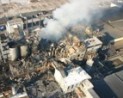
Lax housekeeping and equipment that was inadequately designed and maintained allowed the buildup of sugar dust that exploded in February 2008, the board's final draft report concludes. Georgia's two U.S. senators today joined in backing OSHA's plan to issue a combustible dust standard.
According to the investigation, the worker was covered by almost 240-degree asphalt released from an open valve on the transfer system due to a pressure increase that separated the transfer hose from the system.