
The proposal would revise existing limits for vehicle response to track conditions and establish safety limits for wheel profile and truck equalization.
The three-hour programs, designed to help prevent noise-induced hearing loss among workers, are set to take place in Dallas, San Antonio, Corpus Christi, and Houston, June 7-10, respectively.
"While it's fortunate that no collapse occurred, excavation safety cannot rely on good fortune," said OSHA Area Director Brenda Gordon. "Required safeguards must be in place and in use at all times."
Within the past five years, OSHA has conducted more than 900 inspections at USPS facilities across the country and has issued more than 600 citations.
Among other violations, the company failed to provide workers with a fall arrest harness with a lanyard and did not adequately plank scaffolding during masonry work that reached as high as 24 feet, OSHA said.
Specifically, the facility failed to adequately train workers on respirator selection, use, storage, and maintenance; did not supply positive-pressure filtered air to all work cabs; did not label containers of coke-contaminated clothing; allowed food and beverages to be consumed in an area with visible accumulations of coke-oven emissions; and more, according to investigators.

Saying at least 100,000 people die from snakebites each year, the World Health Organization last week published new guidelines for producing, regulating, and controlling antivenins and a helpful online database about dangerous snakes.
In its fifteenth OSHA inspection since 1974, the company was charged with nine willful, four repeat, and 17 serious violations, including hazards of confined space entry and combustible dust.
Some of the loans made by the company and a subsidiary defaulted shortly after they were made as a result of their disregard of Small Business Administration rules, regulations, and underwriting requirements, DOJ said.

The Truck Safety Coalition will present the honor May 11 at the Sleep Apnea & Trucking Conference in Baltimore.
"These informal stakeholder meetings and written comments from stakeholders will help give OSHA direction to develop innovative ideas that will allow employers, workers and researchers to participate in improving occupational safety and health through the use of occupational injury and illness data," said OSHA chief Dr. David Michaels.
The settlement resolves the natural resource trustees' claims against the aerospace and defense company, which are contained in a complaint filed with the consent decree. The complaint asserts claims for natural resource damages under the Superfund statute, the Clean Water Act, the Oil Pollution Act, and Washington's Model Toxics Control Act.
EPA alleges that the company discharged partially treated slaughterhouse wastes into nearby waterways without a permit for an extended period, and it also exceeded the level of pollutants allowed by its permit on numerous occasions.
To do this, it asks users to answer a few relevant questions and then generates a customized list of federal disability nondiscrimination laws that likely apply, along with easy-to-understand information about employers' responsibilities under each of them.
The agency is hosting three meetings next month -- one on June 3 in East Brunswick, N.J., another on June 10 in Dallas, and the final on June 29 in Washington, D.C. -- to gather comments. Registration will remain open until the meetings are full.
As a result of an October 2009 inspection in Cincinnati, OSHA issued Lowe's four willful citations with a proposed penalty of $40,000. Based on a November 2009 inspection, OSHA issued the Dayton store seven willful citations with a proposed penalty of $70,000.
This contractor has been inspected by OSHA 25 times since 1991 and has been issued numerous willful, serious, and repeat violations, including many lead violations, the agency said.
The stored materials uncovered by inspections included xylene, hydrochloric acid, sodium hydroxide, paint wastes, petroleum distillates, flammable liquids, sodium hydroxide, waste aerosols, and broken fluorescent bulbs, among others.
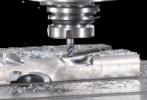
A revision of ASTM E2148-06, Standard Guide for Using Documents Related to Metalworking or Metal Removal Fluid Health and Safety, will add a reference to the new E2693-09, Standard Practice for Prevention of Dermatitis in the Wet Metal Removal Fluid Environment.

One would treat it as non-hazardous, the other as a "special waste" -- a definition selected to encourage continued reuse. Environmental groups won't be happy, but this would be the first national rule regulating coal ash, EPA Administrator Lisa Jackson said today.