Berkshire CEO Warren Buffet said his company will acquire the remaining 40 percent of the group through staged acquisitions over a five- to six-year period for consideration to be based on Marmon's future earnings.
The current method of arc flash testing under IEEE 1584 does not represent real-world conditions as well as two alternative methods do, three researchers concluded.
Unhealthy habits to lose weight, head injuries, and exposures to lead, fires, and other hazards have been brought to the agency's attention.
LONG considered the "ugly duckling" of the safety footwear business, the safety toe overshoe developed from the venerable galosh has a new lease on life. To be fair, there have been some pretty ugly ones, and even some that were downright dangerous. However, the "gumshoe" has come a long way since African-American inventor Alvin Longo Rickman first patented an overshoe in 1898.

Apparel, ergonomic furniture, security, and fire protection were hot at this year's event. The next A+A will take place Nov. 3-6, 2009.
The "supersport" motorcycles are extremely popular, with registrations up 83 percent in 2005 from 2000. Their drivers have a worrisome death rate.
The U.S. Labor Department, U.S. Chamber of Commerce, National Chicken Council, and American Meat Institute filed amicus briefs in the appeal.
The second annual event is intended to help employers of about 4,000 laborers who move from Arizona to California to harvest crops.
WHILE monitoring and auditing multiple potential layered outfits does impose extra effort on a safety team, it benefits the organization's workforce and bottom line.
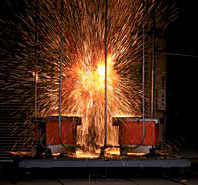
ANY petrochemical worker or electrician exposed to electric arc has something in common with a meth lab cleanup team. Shawn Arbuckle of Denver's National Jewish Medical and Research Center describes the scene: "When we work in a cleanup, we don't know exactly what we'll be exposed to, but we do know the potential is there for fire and chemical exposure."
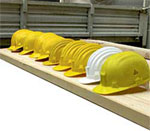
MILLIONS of hard hats are worn every day. In fact, the hard hat is one of the most recognizable pieces of safety equipment in the industrial workplace. It's also one of the most important pieces of safety equipment because it protects the brain. Unfortunately, this ubiquitous piece of personal protective equipment (PPE) is rarely part of an inspection, maintenance, or replacement program.
SIGMUND Freud, the father of psychoanalysis and one of the most authoritative thinkers of all time, is often quoted as having said, "Sometimes a cigar is just a cigar." By that he meant, sometimes a person just wants to smoke a good cigar, so people shouldn't try to read any special significance into it. It's not something a person should overthink.
FOR many industrial protective apparel end users, determining the proper protective garment to ensure worker safety is problematic. 29 CFR 1910.132, the personal protective equipment section of the OSHA General Industry Regulations, requires that employers "assess the workplace to determine if hazards are present, or are likely to be present, which necessitate the use of personal protective equipment (PPE)."
ON June 1 way back in 1999, a new standard for high-visibility safety apparel was established by ANSI/ISEA. This methodically researched and carefully written standard provides a concise, consistent, and authoritative guide for the design, performance, and use of high-visibility garments in the workplace. (More than 65 percent of all high-visibility garments are used in the road construction segment.)
PUNCTURE resistance has become the latest darling in safety footwear features for many manufacturers. Is it really a necessary component, or is it just an extra feature that offers little to no real value?
TODAY, businesses that require workers to wear cut-resistant gloves are faced with a dilemma. Greater safety awareness together with regulatory requirements, higher worker's compensation premiums, and other factors are prompting companies to mandate higher levels of protection.
Safety professionals realize that high-dexterity gloves result in increased safety and job performance. Corporate managers know that increased safety reduces costs while increased performance enhances productivity, both of which boost the bottom line.
Editor's note: Some ideas are so smart that you wish you'd thought of them yourself. Reused protective footwear, for example. If you haven't considered the possibility until now, Wayne Elsey, president of Kodiak-Terra USA, Inc. (www.kodiakterra.com) of Portland, Tenn., may make you a believer.