The deal secures a strategic position in a region that is expected to experience significant growth in the industries both companies serve, according to Capital Safety.

Safety 2011, the American Society of Safety Engineers' big conference in Chicago, is the setting for the debut of the Center for Safety and Health in Sustainability -- a collaboration of ASSE, AIHA, and IOSH.
Otis Brawley, chief medical officer of the American Cancer Society, noted that there could be some risk with cell phone use, but the evidence is not strong enough to confirm the link, and needs to be researched further.
A look at the behavioral lessons of the Deepwater Horizon disaster, Dr. E. Scott Geller's "People-Powered Safety" session, and a report by some of the ASSE delegates who visited China in November 2010 are among the highlights on June 13.
Our first Twitter conversation was a modest success. Send me your ideas for our next one.
A committee will discuss a possible standard for decent work for domestic workers.
This type of asbestos is currently classified as a Class 1 carcinogen, and Sir John Beddington concluded there's no justification for an imminent change in that classification.
The data confirm the Airbus 330 stalled, but the Bureau d’Enquêtes et d’Analyses (BEA) continued May 27 to caution that it has not yet determined why the aircraft crashed.

A lawsuit by 18 former employees of Anglo American South Africa may go to trial next year. Mining executives dispute an estimate that it may cost them $100 billion to settle all potential silicosis claims.
For instance, IH consultants will be happy to know about the results of SKC Inc. research showing alternative air sampling bags work well.

Mike Weightman's interim report for the British government said there's no need to curtail operations at the country's nuclear power plants in light of the Japanese crisis.

This is the third consecutive year for this program, in fact. OSHA is currently running a photo contest of its own.
“W503 Noise - Measurement and its Effects” will provide registrants with a better appreciation of the nature of noise hazards in the workplace and the effects of noise on people, noted AIHA.
A survivor survey of the World Trade Center attacks shows anticipating people stopping for information and the seeking out of others in crises are critical factors in emergency planning.
Michael P. Wilson, associate director for Integrative Sciences at UC Berkeley's Center for Green Chemistry, observed that while the United States continues to lead the world in areas of occupational safety and health, the European Union has decidedly taken the global lead in chemicals policy initiatives with its adoption of REACH.
The Bomb Arson Tracking System is a tool geared to aid U.S. fire departments and fire marshals in their efforts to track arson incidents, manage investigation data, and apprehend arsonists.
Noncommunicable diseases such heart disease, stroke, diabetes, and cancer now make up two-thirds of all deaths globally, due to the population aging and the spread of risk factors associated with globalization and urbanization.
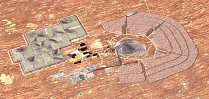
BHP Billiton on May 13 published its final Supplementary Environmental Impact Statement for a huge expansion of its Olympic Dam operation in South Australia.
Vive Nano specializes in encapsulation and in developing new formulations for the crop protection industry.
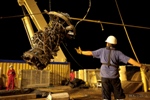
They may help French aviation investigators solve the mystery about the 2009 crash off the coast of Brazil.