It's clear that U.S. safety managers understand cash is a bad motivator of safer behaviors and performance on the job. Nine out of 10 potential customers he sees at industry trade shows accept that statement as a given, said Brian Galonek, CPIM, president of All Star Incentive Marketing of Fiskdale, Mass.

Today's on-site occupational health centers are the fruition of an evolution that began soon after the OSH Act was signed into law 40 years ago, when the chief task involved was treating work-related injuries. Medical surveillance was part of the package, then and now, but nonwork- related acute care and health management are now important components, said Stu Clark, executive vice president of Comprehensive Health Services Inc. (CHS), based in Reston, Va.
Are there people in your company who are working inflamed? Angry, hot around the collar, on guard, suspicious, untrusting, disbelieving, on edge, ready to react? All are potentially dangerous to their company's smooth functioning — and to their personal safety.
Cutting back on safety expenses could amount to gambling with not only the health and well-being of workers, but also with profits and perhaps the company itself.
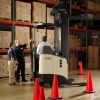
Ongoing reminders and a dedicated effort to keep important safety information in front of operators and pedestrians help to make safety top-of-mind for employees.
The four-axis design of the ULTRA™ Drilling System allows it to walk in eight directions; the company, Global Energy Services, said it enables natural gas drillers to raise the rig faster and more safely, without using cranes.

Throwing sharps containers, red bags, and spill cleanup materials into the trash sends up a red flag to commercial or municipal trash collectors because they are not allowed to take this waste.
Being prepared for an unexpected disaster requires planning well in advance in order to manage any emergency situation. Whether it is a natural, weather-related, man-made, or technological disaster, the key to survival lies in your pre-disaster efforts. Taking the time to assess the company's functions, develop plans to keep the business operating, detail strategies to lead recovery, and conduct employee training can make the difference between survival or closure for a business.
Based on the violations found, total penalties assessed would amount to $125,000 if the employer was in the private sector, but under the law, federal agencies are cited without penalties.
A March 30 letter from the National Association of Chemical Distributors, for example, expresses concern that the proposed rule, "which will result in a negative economic impact for the chemical distribution industry, is a prelude towards a more expansive and burdensome ergonomics framework."
The company, which manufactures guyed and self-supporting towers and monopoles, was charged with three willful and 38 serious violations.
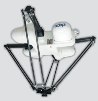
The Robotic Industries Association will host the April 15 presentation as part of National Robotics Week. The food industry is "ripe for adopting more robots and automation," RIA says.
According to EEOC, a store pharmacy manager openly professed on several occasions that the worker was "too old," "should just retire," and was "greedy" for continuing to work at age 70.
The first installment will highlight recent enhancements to the global Oeko-Tex® Restricted Substances List (RSL) and the Oeko-Tex® Standard 100 Certification, which ensures that textiles are tested to be free from dangerous levels of more than one hundred substances believed to be harmful to human health.
The Advisory Committee on Construction Safety and Health (ACCSH) advises OSHA chief David Michaels, Ph.D., M.P.H., on worker safety and health in the construction industry.
Thirty-seven percent of respondents are optimistic about health care being a hot market this year, but 40 percent are in the "wait and see mode," and 23 percent are not touching it.
“Employees were exposed to a potentially fatal fall hazard of more than 13 feet from scaffolds while applying a final coat of stucco to a building,” said Patricia Jones, director of the OSHA office in Avenel, N.J.
The deadline for lead-safe renovator certification and company certification is April 22. The March 31 conference by AIHA's Wisconsin Section will discuss the rule, which the state Department of Health Services has explainedd to contractors and others through a series of meetings.
EPA said that by issuing complaints it is sending a message to construction site operators, public or private, that these regulations must be met.

The company, a unit of Chicago-based Exelon Corp., operates 17 reactors in Illinois, Pennsylvania, and New Jersey that represent about 20 percent of the U.S. nuclear industry's power capacity. The Green Cross for Safety Dinner will be held May 13 in Chicago.