So you want to improve your safety culture? Boost employee engagement, activate visible management leadership, heighten attention to safety, see all embrace personal safe behavior? Set a high-level baseline of awareness, judgment, and actions? Even when others know they’re not being closely observed?
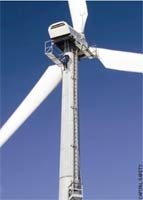
Wind towers reap the power of wind to generate electricity. How ironic, then, that wind towers can take the wind out of those who must repair, maintain, or inspect equipment there. According to one published account, three wind tower technicians were installing bolts in a turbine in a wind tower in Minnesota when their work ignited a fire. The tower quickly became engulfed in flames. One worker fell more than 200 feet and died; the other two escaped with injuries.
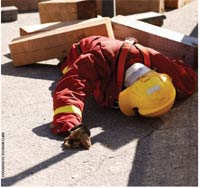
When someone has a work-related incident or illness, one of the most critical steps toward preventing future incidents like it is to let all other workers know as soon as possible what happened.
So what’s new with respirators? It’s true that most respirator designs do not change much from year to year. And when they do, the changes are very likely within the expected evolutionary range.Components are enhanced by technology to provide more safety for users. Cartridge designs are a little sleeker. The air for air-supplied respirators is bottled in a smaller or larger cylinder that may be made from a new material or improved by a new manufacturing process.

From moving parts to flammable fluids,engines contain a number of materials that can harm a mechanic who’s not cautious. Some safety items may seem simple, but sometimes a little reminder can go a long way when the focus is on the job and safety measures are unintentionally neglected.
Gift card companies are a popular choice among corporations that give their employees motivational incentives for job performance and safety. It’s important to reward employees for performing their job well—and safely— by letting them know they are appreciated for their efforts. The byproduct of this is that your company will be rewarded with lowered insurance rates for safe work behavior and increased productivity from a decrease in employee absenteeism.

Work can be a hazardous place. Accidents happen. Employees can slip, trip, or fall. They can be exposed to harmful chemicals or toxins. They can physically overexert themselves in strenuous situations. And the list goes on. Workplace accidents are the byproduct of unforeseen but, fortunately, often preventable causes.
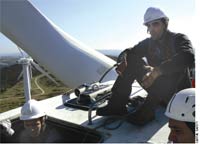
The world is watching as more wind turbines are popping up to generate enough power to sustain a city, a state, or maybe even a country. Information and predictions about the wind energy market change every day. Every time someone estimates the market to be on a certain growth path, it turns out to be even bigger.
Under the “general duty” clause of the Occupational Safety and Health Act of 1970 (OSHA), 29 U.S.C. §§ 651- 678, “[e]ach employer . . . shall furnish to each of his employees employment and a place of employment which are free from recognized hazards that are causing or are likely to cause death or serious physical harm to his employees.”. There is little question that allowing guns at the workplace endangers workers.
Ideally, the workplace would be hazard-free and safe from potential injuries and accidents. However, many operations involve a certain amount of risk that cannot be controlled through engineering measures, administrative controls, or personal protective equipment. These situations require careful measures to prevent workplace accidents and injuries. The value of safety signs in these situations shouldn’t be ignored.
AEDs are much improved since they began showing up in airports, arenas, and workplaces. Training is an essential part of getting workers to use them when necessary, and that training performs a valuable service in accurately educating the trainees about the latest guidelines for performing CPR, said Pam Erno, national account manager for the Health & Safety Institute.
Because the sudden slide in U.S. stock prices was happening just as the OH&S 2008 Executive Safety Summit was taking place, managing in difficult times became a major theme for several presenters. Keynote speaker Robert Pater, managing director of Strategic Safety Associates Inc. and MoveSMART®, started the trend when he asked the audience to consider how stressful times affect people: They lose their sense of humor and develop tunnel vision.
This article is an attempt to briefly cover the most common differences between types of sprinkler systems. Most sprinkler systems fall within one of four categories.
Larry wakes up in the middle of the night with a prickly, tingling sensation in his hand. At first, he thinks nothing of it; maybe he slept in a bad position and his hand “went to sleep.”
Leaders know how important developing strategy is to setting the course. But if you aspire to highest levels of performance, you’ve got to go beyond just focused thinkiStrongest leaders know that real
Here it is December, and we’re talking about hot work. No, we aren’t talking about working when it’s hot—but, sometimes, we have to. We’re talking about working on equipment, making it hot, and having to be careful with the heat we generate and the surrounding environment.
In its more than 30 years of existence, the Emergency Response Guidebook (ERG) has been the “go-to” reference for first responders faced with the possibility of a hazardous materials incident— and it will continue to be the essential reference. In order to reflect changes in both domestic and international regulations, the ERG is republished every four years in English, French, and Spanish.