
Layoffs have hit safety and health professionals like everyone else. For those fortunate enough to still be employed, the economic crisis has quickly translated into a budget crisis. But how does one keep costs down and convince the boss it's worth every penny to continue to attend conferences?
Michael Sears is a soft-tissue injury reduction specialist. He's one of the (too few, from my experience) exceptional breed of chiropractic physicians who, rather than focusing on scheduling ever-ongoing sessions with clients, instead emphasizes self-care and personal control of well-being. Perhaps this is because he's also a restorative Yoga instructor.
Determining the level of hand protection performance required in a safety glove is critical to the right glove specification. However, different standards and different test methodologies are in use, which can be confusing and complex for safety managers. It is imperative that buyers and safety managers of gloves seek out expert advice and counsel to help them make sense of the different and often incomparable data available.
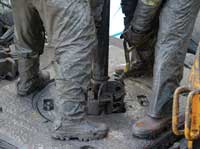
Occupational foot protection is very often ignored until a serious injury occurs. Safety professionals should take the following steps to ensure their facilities and employees are following best practices when it comes to foot protection.

Both wellness and workplace occupational health and safety (OHS) have benefits to employees and employers alike. While both can be implemented separately, there are proven additional benefits to combining the two programs into one overall Employee Health, Safety, and Wellness (HSW) Program where the total is greater than the sum of the parts. Combine your efforts in these 12 areas and enjoy improved wellness.
In the midst of changes taking place throughout the health care industry, many OHNs are rightly feeling they are in a whole new profession, which helps explain why organizers of this year's annual AAOHN conference have for months now been plugging the event with the tagline "It's a Whole New Symposium."
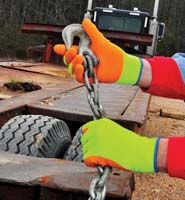
Statistics show the percentage of injuries involving lacerations is considerably higher for the construction industry than for all other industries. And yet, despite the availability of comfortable, cut-resistant gloves, it is not unusual for most construction workers to go gloveless for at least part of the work day.

Both lifelong users and those just introduced to fall protection equipment struggle with hardware compatibility. Unfortunately, there are cases where workers using equipment designed according to American National Standards Institute (ANSI) standards have been seriously injured or have died as a result of incompatible connections.
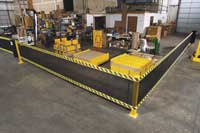
When combined with a well-designed safety plan, industrial safety barriers greatly minimize the risks associated with a host of potentially disastrous accidents that threaten the safety and productivity of virtually any fast-paced industrial environment.

Hot work continues to be a leading cause of industrial fires, consistently in the top five across all industries, and it has been responsible for many of industry's most severe fire losses.

Remember the Alamo? If so, you may recall that it was originally named Misión San Antonio de Valero and became the Shrine of Texas Liberty 173 years ago this month when, on the morning of March 6, 1836, the last of Col. William B. Travis’ 189 woefully outnumbered “Texian” and Tejano fighters finally succumbed to what seemed a sea of Mexican soldiers led by General Antonio López de Santa Anna. The battle was pivotal in Texas’ fight for independence, which it achieved the following month, and it remains one of the all-time heroic struggles against impossible odds. Historians say Santa Anna’s men numbered 4,000.
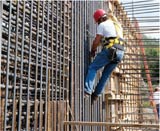
It is a dangerous business to make your living hundreds of feet off the ground. We’ve come a long way from the cavalier attitude so often depicted in the popular prints of the Rockefeller center construction project: the long line of ironworkers having their lunch on a suspended beam high above the ground.

A program to prevent heat illness will protect workers’ health and also improve the safety of your operation, because even mild heat illness can impair an employee’s judgment and performance. Workers are also more productive when they are protected from heat illnesses.
We know the basics of head and face protection: impacts, flying particles, glare, radiation, and chemical exposure are givens, as is bloodborne pathogens exposure for medical personnel. Injuries range from the simplest scrapes to deaths and activities from medical care to heavy construction. Most companies have the physical items of PPE to work safely in all types of situations. Considering the potential for a workplace head/face injury, is basic really enough?
A recent survey of nearly 100 employers regarding their worker’s compensation policies and practices, conducted by Occupational Health & Safety and Injury Management Partners LLC, demonstrated some alarming findings. The most disconcerting result was that nearly 60 percent of the respondents did not know how their insurance companies, third-party administrators (TPAs), or managed care organizations (MCOs) were compensated for the building and management of medical provider networks.
For years, we’ve known many workers in the “real world” do not achieve the same amount of attenuation from hearing protectors as indicated on the EPA required Noise Reduction Rating (NRR) label. Numerous studies show the NRR greatly overestimates the amount of attenuation that workers get in the field. This problem is so widely accepted that OSHA recommends de-rating the NRR by 50 percent. However, studies also show that a one-size-fits-all de-rating is also inaccurate when compared to individual measures of attenuation. EPA will soon make an announcement proposing a major change in the required labeling and method of testing of hearing protection devices (HPDs).
Music not only “hath charms to soothe a savage beast, to soften rocks, or bend a knotted oak” (William Congreve), rhythmical principles can elevate your leadership. And you don’t have to play an instrument or sing to realize positive gains.