Leadership:Making positive change happen.Working with and through others. Seeing and heading off snags to improvement at the earliest levels.Maintaining focus in times of distraction and turmoil.
Warriors? Safety seems like warriors sometimes, the way we champion causes to reduce employee injuries. We display dogged determination for working in the future, planning long before other teams consider new standards of working safely. Problem solvers? You bet. We work on any problem and try to resolve it, often with no fanfare.
Traditionally, when operators or maintenance personnel required access to the hazardous section of machinery, employee health and safety regulations required removing all energy to that machinery.

It is tempting to think in simple terms about lockout/tagout—that you merely need to power down a machine and put a lock through the deenergized disconnect to achieve safety. The reality is that it’s not that simple, and it’s dangerous to think otherwise.
On Sept. 24, 2007, OSHA issued a Safety and Health Information Bulletin, Respiratory Disease Among Employees in Microwave Popcorn Processing Plants. The purpose was to inform employees and employers about the potential hazards of food flavorings containing diacetyl, recommend exposure controls to reduce exposures to food flavorings containing diacetyl, and inform employers of applicable mandatory OSHA standards.

The wheels are in motion to create the Fifth Edition of the "ILO Encyclopaedia of Occupational Health and Safety," with experts all over the world invited to contribute. It will be the first 21st Century edition of a reference dating to the 1930s and the first update since the 1990s' four-volume Fourth Edition, which cost nearly $7 million and took five years to produce.
The use of fire protection technology in “mission critical” facilities has long been a standard for most engineering, IT, and facilities professionals. Whether it be as simple as portable extinguishers or as complex as high sensitivity smoke detection coupled with clean agent suppression systems, some sort of fire protection is a must.
Globalization is good for you! Keep saying it (even if you don’t believe it): It really is good for everyone. Things change, and the individuals and companies that can improve, innovate, and automate will win.
Globalization is good for you! Keep saying it (even if you don’t believe it): It really is good for everyone. Things change, and the individuals and companies that can improve, innovate, and automate will win.
There are lessons for firefighters and fire departments in the city of Charleston, S.C.’s comprehensive Phase II report on nine Charleston Fire Department firefighters’ deaths on June 18, 2007, in the Sofa Super Store fire— the worst single loss of life for the fire service since 9/11. The cultural lessons may be most important and also hardest to embrace.
Only six directors have headed the agency since its creation, and with Dr. John Howard having handed over the post in mid-July to an acting director, a vacancy of at least six months seems likely this time.
Looking for a solid way to boost worker involvement? If you’ve read any of my other writings or attended my presentations, you’ve likely heard me extol the paybacks of training workers as peer Safety change catalysts. I know this from worldwide experience—we’ve trained more than 20,000 such “Instructor-Catalysts” in our injury- prevention systems and have seen results that one senior manager called “miraculous” in both Safety performance and cultural turnarounds.
Hands and fingers are always close to the action, so they need appropriate protection. How do employees know which hand protection they should use? They don’t, unless they’re aware of the hazard(s) and wear the necessary PPE.
With springtime comes the surge of construction activity—an exciting time, and possibly a dangerous time, too. Lots of new sites begin work as soon as the severe weather breaks. New crews, different trades, and subcontractors work in close proximity with seasoned workers, temporary employees, and even interns.Multicultural and -lingual sites are common.In such settings, how do you know who is at risk for injury?
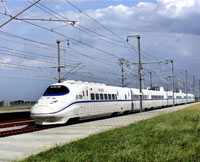
Billions of people beheld an Olympics of unprecedented size and beauty when the opening ceremony raised the curtain Aug. 8 on Beijing, China, home to 15 million residents. Their water system, fire protection, transportation, and air quality have been improved expressly to showcase this event, and American companies' products are involved in much of this transformation.
OSHA has two significant rules due for release this fall. MSHA has a proposed rule and two final rules pending. Will any of the five see the light of day before the presidency of George W. Bush ends in January 2009, probably closing the book on one of the longest-serving Labor secretaries in history, Elaine Chao?