Good communication is one of the most important tools for ensuring workers’ safety and work efficiency, especially when confronting the hazards of confined space entry. Benefits are also realized in productivity, costs, and workers’ confidence. In some circumstances, communication makes an otherwise impossible task possible.
Respiratory protection is a complex topic.One of the more vague elements of it is making sure the employee really understands the training provided so that he/she can use the respirator as designed for personal protection.
It used to be that bird infestations were frustrating simply because they forced facility managers to waste money cleaning up after a renewable source of mess. Today, we have to deal with the threat of lawsuits, as well as the day-to-day expense of bird infestation problems.
Several highly publicized explosions and fires in the refining and fuel storage industries have resulted from vapor leaks followed by ignition. Heavily regulated by governments throughout the world, refineries and similar energy industries have a responsibility to ensure any explosion risk is kept to a minimum.
Heat stress can be a major concern in workplace environments, potentially causing irritability, low morale, absenteeism, shortcuts in procedures, and unsafe behavior. In extreme cases, heat stress, in the form of heat stroke, can be fatal. The United States Bureau of Labor Statistics data for the years 2003-2005 indicate an average of 31 worker deaths annually from exposure to “environmental heat.”
Any motor carrier’s best defense against an unsatisfactory safety rating from the Federal Motor Carrier Safety Administration (FMCSA), and possibly even a carrier compliance review, is a good proactive program for complying with the Federal Motor Carrier Safety Regulations. A winning strategy for motor carrier management regulatory compliance has two components:
In this series, we have laid out the emerging challenges that safety professionals are experiencing, the new skills we must possess to operate in this new era, and the challenges we will face if we decide to remain stagnant.
The selection of any protective garment is complicated and carries the potential for serious consequences should the decision prove to be incorrect or the selection in any way inadequate. For this reason, standards bodies, vendors, customers, and workers are engaged -- often in the pages of this very magazine -- in ongoing conversations to determine the appropriate levels of protection for a given task.
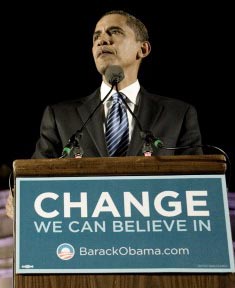
Regarding worker safety and health, there's not a lot of voting history to speak of with Sen. Barack Obama, which is understandable since he is still in his first term as a U.S senator. Thus far, his chief connection to workplace safety and health has to do with his support for and from labor unions, which have a long history of effective advocacy for workers' safety and well-being on the job. The law that created OSHA and NIOSH was signed during a Republican administration, but Democratic presidents have tended to do more in terms of enacting new safety and health regulations. (It's fair to say many safety professionals seem to agree that old regulations should be updated without undue delay but don't desire new regs.)

Experience vs. youth is one way to view the contest between John McCain and Barack Obama, and how they differ becomes clear when weighing these two presidential contenders' views and potential impact on workplace safety and health. Very few votes or sponsored bills exist to tell us where Obama stands on safety, health, and environmental issues, but this is not true of McCain, who was first elected to the Senate in 1986.

Experience vs. youth is one way to view the contest between John McCain and Barack Obama, and how they differ becomes clear when weighing these two presidential contenders' views and potential impact on workplace safety and health. Both have drifted closer to centrist stances in the final days of the race. Very few votes or sponsored bills exist to tell us where Obama stands on safety, health, and environmental issues, but this is not true of McCain, who was first elected to the Senate in 1986. His label as a "maverick" Republican is accurate.
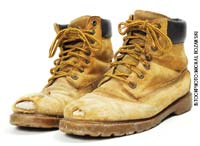
That’s a clever use of duct tape, I thought, but it’s not reasonable for work boots. The employee wore a pair of dry, rotted-leather safety shoes that were being held together with duct tape, and he was trying to make it to payday. I’ve seen other employees who have purchased used safety shoes that had been worn down, causing uneven foot surfaces or treads that could potentially cause a fall. I’ve also seen the super-discount safety shoes, which are hard to walk in and extremely heavy.
Fluids are essential to most manufacturing processes. They arrive in containers, drums, totes, bulk shipments, and pipelines. When all is going well, they seem to be the lifeblood of the facility. When they leak or spill, however, the mess they create can range anywhere from being a nuisance to being a health and environmental liability.
The key to high-speed industrial door safety is understanding what you need and when you need it.

It has long been recognized that back injuries account for a disproportionate share of worker’s compensation dollars paid in permanent disability, in questionable worker’s compensation claims, and in litigated cases. OSHA has not developed specific standards, in large part because individual susceptibility factors (age, physical health, pre-existing conditions, etc.) makes a one-size-fits-all standard impossible.
Veolia Water North America, the nation’s largest services provider for municipal and industrial water and wastewater systems and facilities, takes safety very seriously. Our company understands not only the impact safety has on our bottom line, but also its impact on our employees’ morale and ability to go home to their families the way they left them. From 2000 to 2005, the organization saw its safety performance level off with little or no improvement, year over year.
It's not enough to assume a fresh workforce, even if eager, will magically divine the safest ways to do new jobs.
How can you make a first step solid? Ergonomically, starting up a new site is the best time to institute new design interventions. Put the desired tools and workstation setups into place up front, rather than playing catch-up later. Similarly, this is true for setting desired behaviors.