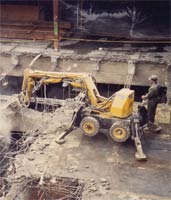
Best practices keep demolition's dangers to a minimum.
Although the prevailing perception is that the demolition industry by its very nature is a dangerous business, the truth is that the industry’s continued commitment to safety education and best practices is creating a relatively safe industry in which to work.
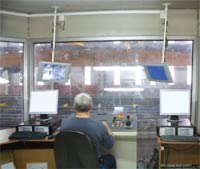
The objective of any ergonomics program is to ensure that work areas and/or jobs that produce musculoskeletal injuries are identified, evaluated, and made more “worker friendly.” The procedures for selecting work areas and/or jobs for review are not new; however, they are precise and do produce results—fewer injuries, fewer employee complaints, and productivity improvements.
Currently, much thought and discussion are being given to leading indicators in the world of safety. Everyone is drawn to the promise of getting ahead or seeing the potential for injury before it is realized. Only recently has technology evolved to the point where we can start to review leading indicators in real time, providing safety professionals with a new perspective and suite of tools from which to work. This article will provide some common working definitions and then explain how you can begin to use two leading indicators—at no cost—that may help you achieve your injury reduction goals.
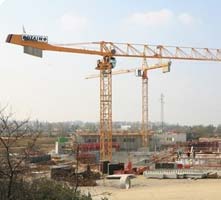
An average of 22 construction workers died in crane-related incidents per year from 1992 to 2006, according to a report released June 17 by the Center for Construction Research and Training (CPWR), which derived the number from BLS data. The "Crane-Related Deaths in Construction and Recommendations for Their Prevention" report, spurred by tower crane collapses in New York City and Miami that killed 10 workers and one bystander this spring, listed eight recommendations. Certification of operators, inspectors, riggers, and signalpersons are the top three.
Arc flashes occur when electrical current jumps the gap between two or more energized conductors. Depending upon the amount of current, arc temperatures can exceed 35,000 degrees F. That’s why electrical workers must wear fire-resistant (FR) personal protective equipment when working near exposed, energized equipment.
Weather tools available to emergency responders have improved considerably in recent years. As important as National Weather Service (NWS) watches and warnings are, they’re just the starting point. You can now access everything from detection of likely tornadoes to real-time lightning and frost and icing forecasts.
NFPA 70E, Standard for Electrical Safety in the Workplace, has become a critical part of the safety equation for companies and individuals who work on or near electrical power systems and their components.
When first responders reach the site of an emergency that is in progress, it is often unnerving and unsettling. They must keep their wits about them and perform their duty, all the while focusing on their own personal safety. And in certain situations, first responders must work to deflate rising levels of emotionalism to prevent further incidents.
No matter whether the AED order is large or small, companies taking the plunge to deploy automated external defibrillators at their facilities are doing their homework, comparing available models, and making selections based on performance and reliability. Safety managers who are overseeing two recent deployments say their companies adopted AEDs proactively—not because of a fatality in their ranks—to build on a strong foundation of health and safety at their facilities
The safety professional’s primary role is to help the organization move toward an injury-free environment. Transitioning from “technical expert only” to versatile change agent gets us part of the way by helping us reorient ourselves around a bigger-picture view of the causes and influences of safety. This article takes the next step with a look at the heart of the safety professional’s activity in the organization: setting—and keeping— improvement mechanisms in motion.
Employers intuitively understand the consequences of an unsafe workplace. Our customers tell us there’s a lot at stake: employee injury or fatality, decreased productivity, disappointed customers, loss of profits, and loss of business top a long list.

As we travel during the course of the day,we are often exposed to the sounds of the environment: trucks and buses honking horns, subways screeching around corners, and trains blowing their whistles at crossings. All these modes of transportation use sound to help keep people aware of their presence and safe from it.And while many of these noises are loud, few are hazardous to those in the vicinity.
Allowing your employees to schedule and receive their training online, from basic to ultra-specific needs, can reduce administrative time, increase timely attendance, and allow instructors visibility into their schedules.
Organizations that care about their employees care about safety and will go to great lengths to communicate the importance of working safely. Regular safety meetings, creative safety contests, safety Web sites, sharing lessons learned—safety communicators tend to use a variety of methods to distribute procedures and critical safety information to help employees plan and perform work.
A quick scan of recent newspaper headlines reveals many employees who may not have received adequate on-the-job safety training: three employees electrocuted in a confined space situation, several dead from an crane collapse, toxic chemical exposures, an excavation cave-in on unprotected employees (with proper shields on site), along with BBP exposures and improper use of PPE.
Maybe you’ve seen the T-shirt: “A bad day of fishing is better than a good day of work.” But what about when a bad day of fishing is a bad day of work, as it is for the estimated 38,000 men and women who fish commercially in the United States?