
With two renewals, the new centers expand training opportunities throughout the United States, according to the agency.
In 2004, the U.S. Department of Homeland Security, under presidential order, instituted the National Incident Management System. This nationwide initiative was targeted at getting federal, state, tribal, and local governments to work together to prepare for, prevent, respond to, and recover from domestic incidents, such as terrorist attacks or natural disasters.
The U.S. Department of Labor recently announced proposed rules to align the national apprenticeship system with a more flexible and user-friendly approach for apprentices and employers, necessary in the 21st century global economy..
The facility has 27 bays equipped with lifts, hoists, and tooling for major engine handling. Engines and thrust reversers are available for hands-on training.
The chairman of the U.S. House Subcommittee on Aviation asked for the audit, saying he is concerned about air traffic controller training and the high rate of failures.
The U.S. House of Representatives failed Thursday night to override President Bush's veto of the FY2008 appropriation bill for Labor, HHS, and Education. Congress appears ready tol adjourn for two weeks before trying to send an omnibus funding bill to Bush.
No kidding around, they say, the volume of occupational illnesses and injuries must be reduced.
Proactively managing stormwater runoff requires the right tools for handling flow, storage, and time
Seventy percent of cancer deaths occur in developing countries, the agency says.
"Louisiana is firmly committed to keeping our workforce on the cutting edge when it comes to job skills," Louisiana Labor Secretary John Warner Smith said.
The alliance will center on hazards such as ground conditions, machine mobility, and overloading, as well as hoisting employees improperly.
Stickler calls the program "a fitting tribute to the miners lost at both the Sage and Jim Walter #5 mines."

It is the culmination of many years' work by a consortium of partners dedicated to reducing occupational injuries and illnesses among youth, NIOSH says.
The event will focus on best practices for effective hearing protection programs.
The second annual event is intended to help employers of about 4,000 laborers who move from Arizona to California to harvest crops.
Safety committee chairmen in both houses of Congress want answers from MSHA about the Crandall Canyon mine disaster Aug. 6, which claimed nine lives in all. MSHA has already appointed its own investigative team.
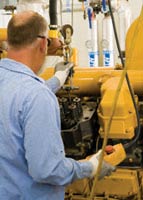
COMPANIES serious about safety performance often talk about the injury-free culture. These three simple words carry a lot of weight and importance. Indeed, it is hard to know how an organization could espouse any different vision of safety. Yet, saying that you want to be "injury free" is not the same as actually moving to this level of performance. For one thing, what do we mean by injury free? Is such a thing even possible?

WOULD you like to shift the tide of your maturing workforce from resistant and at risk to involved and secure? The Baby Boom, the birth bulge from 1946 to 1964, is now a Gray(ing) Wave that makes up 40 percent of the U.S. workforce. Many organizations are concerned they will have to pay the costs associated with their aging workers.
SAFETY has never been a 9 to 5 proposition. So it's good to see organizations increasingly realize that workers can't switch on safe judgment and actions upon clocking in. But, for the longest time, safety emphasis has almost exclusively been at the work site, exemplified by policies and procedures, observation/monitoring, and ergonomic emphasis on design/redesign/purchase of specific tools.