In addition to the combustible dust hazards, among 32 serious violations cited are failing to provide a lockout/tagout system to control the release of hazardous energy, ensure exits were unblocked, and protect employees from electrical and chemical hazards.
The particle trap removed about 98 percent of all particles in the diesel exhaust and 99.8 percent of the smallest and most damaging particles (less than one micrometer).
OSHA initiated an inspection on Oct. 21, 2011, in response to a complaint alleging that the employer had not abated safety and health violations cited on July 14, 2010.
OSHA's Dallas Area Office began the investigation Oct. 10, 2010, at the plant after workers were injured while vacuuming explosive dust to clean out a natural gas processing unit.
Workers exposed to welding fumes may be at increased risk of damage to the same brain area harmed by Parkinson's disease, according to a new study by researchers at Washington University School of Medicine in St. Louis.
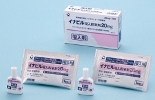
The U.S. Biomedical Advanced Research and Development Authority, BARDA, announced the $231 million, five-year contract on March 31.
The company faces penalties totaling $45,000 as a result of an OSHA inspection conducted in October 2010.
Special impact inspections, which began last April following the explosion at the Upper Big Branch Mine, involve mines that merit increased agency attention and enforcement due to their poor compliance history or particular compliance concerns.
The April 29 extended deadline announced by NIOSH Director Dr. John Howard gives people living and working in the area more time to submit information about cancers related to 9/11 direct exposures.
The planned inspection found that employees working on or around hazardous machinery were not properly protected.
The documents explain how spirometry testing helps to protect workers from respiratory hazards. One is meant for employers and the other for workers.
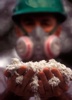
"The NIOSH roadmap outlines a strategic framework for designing, conducting, and applying the research that will best serve the need to address persistent scientific uncertainties about occupational health and elongate mineral particles," said Director Dr. John Howard.
Three violations are health-related, including failing to provide a hearing conservation program, exposing workers to airborne styrene that exceeded the permissible exposure limit, and not providing suitable protective clothing and gloves for employees whose skin was exposed to styrene-containing resin.
The Consumer Product Safety Commission and the Department of Housing and Urban Development are issuing an updated remediation protocol for homes with problem drywall. A study conducted on behalf of CPSC by Sandia National Laboratories in New Mexico, finds no evidence of a safety hazard to home electrical systems.
Effective for standards reporting in the Fall 2013 revision cycle are significant changes that include a new website to be the centralized entry point for participants in the process and also a single comment stage.
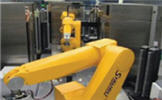
Several federal agencies, including the National Institutes of Health, recently unveiled a new high-speed robot screening system that will test 10,000 different chemicals for potential toxicity.
OSHA cited the company with 16 safety and health violations that include allowing explosive dust to accumulate and exposing workers to 1.2 times the permissible exposure limit for unwashed cotton dust.
A new report from the Federal Institute for Occupational Safety and Health says workdays lost to injury and illness rose from 98.4 per 100 workers in 2006 to 114.3 in 2009.

Several employees at a Tennessee elephant refuge were infected in 2009, including some who had no close contact with the animals. Air flow tests indicated bacteria that were aerosolized during routine pressure washing of a quarantine barn entered an adjacent administrative building.
In August 2010, anhydrous ammonia leaked out of a 12-inch pipe located on the roof of a Millard Refrigerated Services facility, due to hydraulic shock within the pipe.