
SPONSORED
To protect personnel and manage compliance with OSHA’s HAZWOPER Standard at “uncontrolled hazardous waste sites” (e.g., Superfund sites), EHS professionals must have a full understanding of the Standard—especially the training requirements.
The FAQs were developed by OSHA, along with industry and labor organizations. They provide guidance on the crystalline silica standard requirements for employers and workers in construction.
The agency is considering revising for specific areas of the regulations, including extending the current 14-hour on-duty limitation by up to two hours when a truck driver encounters adverse driving conditions. The first in a series of public listening sessions is set for Aug. 24 in Dallas.
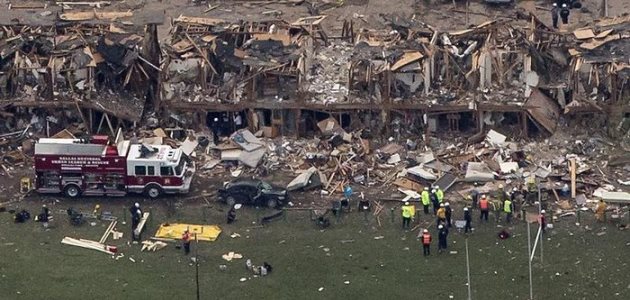
EPA promulgated the rule in on Jan. 13, 2017, to revise requirements for Risk Management Programs under the Clean Air Act, in the wake of the West explosion and other chemical accidents. When the Trump administration took over soon afterward, EPA delayed the rule three times.
Robin Townsend, chair of the ISO technical subcommittee that developed the 17339:2018 standard, said it "is designed to provide manufacturers with what is required to ensure the anchors not only work effectively, but withstand the conditions in which they are stored. It also features test methods such as for strength, towing, and corrosion."
The speakers at Safety+, which takes place Aug. 28-31 at the Gaylord Opryland Convention Center in Nashville, Tenn., include Tennessee Gov. Bill Haslam; Phyllis L. Bayer, assistant secretary of the Navy (Energy, Installations and Environment); and Steve Hawkins, Tennessee Occupational Safety & Health Administration assistant commissioner.

The new regulations bolster the existing requirements for fire-fighting and life-saving equipment, establish standards for construction and arrangement of newly constructed vessels, and phase in machinery and electrical standards during the next decade.
The Aug. 28-31 event in Nashville will feature more than 100 educational workshops and an expo hall filled by more than 250 exhibitors.
"We intend to look at these differences in relation to potential public health consequences. There are reports that indicate this issue needs examination," FDA Commissioner Dr. Scott Gottlieb said July 26.

The new standard offers a dynamic control of food safety hazards combining the following generally recognized key elements: interactive communication, systems management, Prerequisite Programs (PRPs), and Hazard Analysis and Critical Control Points (HACCP) principles.
ANSI will honor the 23 recipients during an Oct. 17 ceremony held in conjunction with World Standards Week 2018 in Washington, D.C.
The standard provides organizations with guidance on navigating information security risks.
"Standards play a critical role in virtually every industry, delivering transformative impact on safety and performance," said Sally Seitz, co-secretariat of ISO TC 285 and senior program manager at ANSI. "With the publication of this standard, the clean cooking sector is poised to make significant strides toward better products and, ultimately, toward improved outcomes for consumers who use them."
ANSI/ISEA 121-2018: American National Standard for Dropped Object Prevention Solutions aims to reduce workplace accidents, injuries, and deaths related to falling objects.
The vertical licenses will make it easier to identify people under the age of 21, with the hope that it will help police and vendors in keeping minors from obtaining alcohol illegally.

While showers and eyewashes can't prevent exposure to hazardous materials, they can certainly minimize the effects when exposure to injurious corrosive materials happens.

Sign labels that can be printed with laser or ink jet printers in minutes and removed cleanly from most surfaces serve to notify, instruct, and even protect personnel in just about every area in a facility

The combination of initial risk and risk reduction measures fixes the residual risk, thus simplifying the determination of residual risk and avoiding errors.

OSHA requires that engineering controls be used to achieve necessary exposure reductions unless infeasible; organizations may not simply issue respirators and "be done with" their attempts to lower exposures.

One of the CSB's recommendations to FEMA following the explosion in West, Texas, was to fund training for fire departments on pre-incident planning for fires at facilities storing fertilizer grade ammonium nitrate.