Top Features


The May 2016 report from the White House says research suggests 30 million American workers are currently covered by non-compete agreements, and enforcement of them apparently is rising.

Obama Administration Eying Non-Compete Agreements

A May 2016 report from the White House says research suggests 30 million American workers are currently covered by non-compete agreements, and enforcement of them apparently is rising.

And 45 percent of U.S. full-time workers don

Teleworkers' Wellness Efforts So-So, Survey Finds

And 45 percent of U.S. full-time workers don't participate in exercise or wellness programs at all, either through their workplaces or on their own, Flex+Strategy Group/Work+Life Fit Inc. found.

ANA defines a Culture of Safety as one in which a health care organization

American Nurses Association Stresses Importance of Culture of Safety

ANA defines a Culture of Safety as one in which a health care organization's leaders, managers, and workers are committed to core values and behaviors that emphasize safety over competing goals, and where openness and mutual respect are present when discussing safety concerns and solutions without shifting to individual blame. It also is marked by a learning environment; transparency and accountability; and reliable teams.


Of the 721 cases and nine deaths statewide, investigators examined the records of 119 UMMC patients, including three deaths, and found 71 percent tested positive for a synthetic cannabinoid – and more than three fourths of the positive tests identified MAB-CHMINACA, a potent synthetic cannabinoid.

CDC's 65th Annual Epidemic Intelligence Service Conference Under Way

The Atlanta conference for EIS officers includes sessions on Zika, e-cigarettes, chronic diseases, serious illnesses associated with the synthetic cannabinoid MAB-CHMINACA, visitor injuries from with bison in Yellowstone National Park, and more.

Lake Maracaibo

NASA Crowns Earth's New Lightning Capital

Lake Maracaibo in Venezuela experiences more lightning than any other location on Earth, with an average rate of about 233 flashes per square kilometer per year.

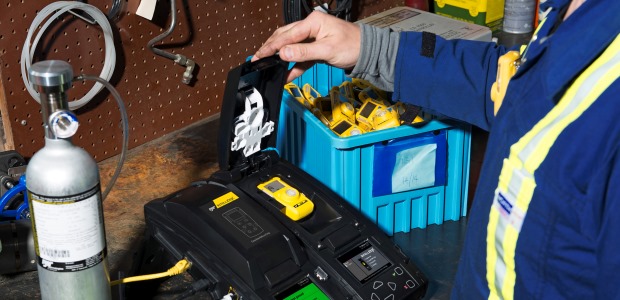
Although the dangers posed by smoke and toxic gases have increased over the years, gas detection devices are keeping pace with new features to protect firefighters and first responders. (Industrial Scientific photo)

Where There's Smoke . . .

Even if we can't stop the production of deadly gases during a fire, we can take precautions to protect ourselves.

A spill from an overturned railcar or tanker could be from small amount to 5,500-11,000 gallons of liquid cargo. If this material is volatile, 1 cc of liquid (not pressurized) would be converted into 1L of vapor, and one gallon of liquid contains 3,800 cc (3.8 million liters of gas) X volume spilled. In many cases, the chemical spilled has been liquid chlorine or ammonia.

Sources and Measurement of Toxic Chemicals

The PID is one of the most sensitive detectors available for many toxic compounds with detection limits in the low or sub-ppb range.

A safety shower is a piece of equipment that business and industry have seen, until recently, as an afterthought. It may stand unused for weeks, months, or even years, which hardly makes it the most vital piece of equipment; that is, until there

To Heat or Not to Heat? That Is the Question

Improvements in health and safety awareness, duty of care to employees, and increasingly extreme environmental conditions mean more thought than ever has to go into safety shower purchasing decisions.

Research was completed at the new Dow Northeast Technology Center, shown here, using an in-house noise mapping tool to complete a baseline sound level assessment. (Dow Chemical photo)

Assessing High-Noise Areas

Industrial hygienists are challenged to protect employees from noise exposure in all types of work environments, including variable conditions. This project completed a baseline noise assessment at the Dow Northeast Technology Center’s mechanical areas.

Companies often send out an all-staff email if bad weather is predicted, but would employees really know what to do in a serious emergency, be it related to nature or man-made?

Providing Psychological First Aid Following a Disaster

PFA doesn't rely on skills of a professional mental health provider, but rather, engages the skills that most of us already have.

Now is the perfect time for employers to review their HazCom program. (J.J. Keller & Associates photo)

All In for Chemical Safety!

Workplace labels must include the product identifier and general information regarding all of the hazards of the chemical(s).

The Baltimore Convention Center is hosting AIHce 2016, taking place May 21-26. (Visit Baltimore photo)

Baltimore Beckons

This year's AIHce conference will be year five for the wildly popular Ignite sessions, which are five-minute talks on pretty much any IH topic.

Dry Media Dust Collectors vs. Wet Scrubbers: Two Technologies for Combustible Dust Control

At first glance, wet scrubbers may appear to be preferable because they inherently control the combustibility of a dust.

Do consider using SMART goals in training program implementation. In addition to SMART goals, stronger training programs may also address a behavior change and/or enhancement and establish behavioral objectives.

Best Practices for Engaging Workers in Health and Safety Training

Provide relevant consequences. Consequences will assist in showing your workers what is in it for them.

Figure 1. Organizations that create a culture of safety by incorporating senior leaders, a facility coordinator, an emergency response team, and the general workforce into their emergency response plans have a much higher rate of success when responding to emergencies.

Is Your Emergency Response Plan a Living System or Just Gathering Dust?

Use these practical tips and best practices to create and maintain an effective emergency response plan. Frequent practice drills are essential.

Many companies incorporate a wear trial into their process for selecting FR apparel. Both Lippert and Zumstein cautioned that a hazard risk assessment is a necessary step to take before conducting a wear trial. (Glen Raven Technical Fabrics, LLC photo)

Lasting Protection

A hazard risk assessment is a necessary step to take before conducting a wear trial. Only when the risk assessment is completed should the customer conduct a wear trial of fabrics that will meet the anticipated energy levels.

The OSHA/NIOSH toolkit contains an appendix that is an editable document any hospital can use to draw up its respiratory protection program.

Essential Precautions for Health Care, General Industry

CDC's Healthcare Infection Control Practices Advisory Committee divides ATDs into those two categories, diseases requiring Airborne Precautions and diseases requiring Droplet Precautions.

Featured

Artificial Intelligence

Webinars