Gov. Schwarzenegger signed SB 28 on Wednesday, the same day the expo of the 96th Annual National Safety Congress & Expo closed in Anaheim.
"This funding will help the New York metropolitan area to acquire equipment, training, and support to further our mission of preventing dangerous radiological and nuclear materials from entering a high-risk urban area."
Specifically, the agency proposes to add export notification and consent requirements for spent lead-acid batteries and to revise the existing RCRA regulation regarding the transboundary movement of hazardous wastes for recovery among countries belonging to the OECD, among other revisions.
Although it functions solely as an advisory body, the committee assists OSHA on matters relevant to the safety and health of employees in the maritime industry, including shipbuilding, ship-repair, shipbreaking, longshoring, and marine-terminal industries.
The award is the highest honor bestowed on an individual safety professional by the NSC in recognition of outstanding service to the field of safety and health.
The leading cause of this increase has been attributed to abuse of prescription painkillers--primarily opioid analgesics such as oxycodone, methadone, hydrocodone, and more.
The effort seeks the safety profession's help in achieving gains in home and community safety that match what has been accomplished in workplace and highway safety.
A leading transportation company with annual revenues of more than $10 billion per year, FirstGroup America transports more than 2.5 billion passengers a year.
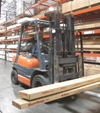
"We want people to be aware that whenever they see a fork lift truck--whether it's at work or in their local garden centre or DIY store--they need to be careful, they need to keep clear, and they must certainly never assume the operator has seen them," said FLTA Chief Executive David Ellison.
The action is a temporary prohibition pending formal rulemaking. A June 2008 accident and the Sept. 12 Metrolink collision in Chatsworth prompted the ban.
More Americans are buckling up than ever before, with 83 percent of vehicle occupants using seatbelts during daylight hours, U.S. Secretary of Transportation Mary E. Peters announced recently. In 2007, 82 percent used seat belts.
The new policy will be enforced starting 30 days from now.

The Metrolink engineer's cell phone records confirm he had sent and received messages last Friday, when his train ran through a red signal and hit another train, killing 25 people.
Did you know that if you are driving at a speed of 65 miles per hour, you are traveling at approximately 100 feet per second? At this speed, if you were to look down for a few seconds, you would travel the length of a football field. A lot can happen in a very short time.
Part I of this article was devoted to understanding Federal Motor Carrier Safety Administration (FMCSA) expectations of carriers regarding regulatory compliance and the methodology FMCSA uses to measure carrier compliance and assign carrier safety ratings.
The federal government is making $5 million available immediately to begin funding work to repair roads, bridges, and airports damaged by Hurricane Ike, U.S. Secretary of Transportation Mary E. Peters announced yesterday during a visit to the Houston region. She added that more funds will be made available for repair and reconstruction work once damages assessed for the region's transportation network have been completed.
More than 9,000 postal facilities are getting educational materials that explain how injuries and death can result when children get too close to delivery vehicles.
U.S. Department of Transportation Chief Economist Jack Wells yesterday noted that increasing transportation spending does not immediately create new jobs. Unemployment rates and the way the money is spent are factors.
If a motor carrier contests the denial of a safety permit, claiming crashes that caused its rate to be in the top 30 percent of the national average weren't preventable, the agency will consider it.