"Work-related respiratory symptoms in hospital workers may be associated with diverse biological contaminants," the researchres concluded.
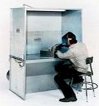
The responsibility of today's maintenance and engineering managers to maintain a clean indoor air environment has increased markedly in recent decades.

More than 10,000 personnel at McChord Air Force Base, near Tacoma, Wash., provide a fast, flexible, responsive airlift capability to DoD. Motor vehicle accidents are a special concern as the holiday season approaches.
OSHA's inspection found 24 alleged serious violations of the OSH Act, the majority of which stemmed from overall deficiencies in the company's process safety management program.
The St. Peters, Mo.-based facility became the latest VPP star site, OSHA's highest recognition for meeting or exceeding workplace safety and health standards.
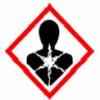
The Globally Harmonized System was developed to provide a single, consistent system to classify chemicals, labels, and safety data sheets for workers, employers, and chemical users. Under GHS, labels would include signal words, hazard and precautionary statements, and pictograms such as the one shown, used for carcinogens, respiratory sensitizers, and germ cell mutagens.
According to EPA, one the company's drivers failed to provide immediate notification to authorities following a 920-pound release of anhydrous ammonia while making a delivery to a farm.
"You might not think of a carwash as a particularly dangerous workplace, but hazards can be present in any workplace if the proper safeguards are not provided and maintained," said Robert Kowalski, OSHA's area director in Bridgeport, Conn.

While lawyers said last week they have found a new cluster of Hepatitis C among patients treated at Las Vegas clinics involved in lawsuits and bankruptcy, the surgery technician who reused dirty needles at a Denver hospital pleaded guilty to federal charges Friday and faces sentencing in December.
The serious violations include unguarded machinery, inadequate training, failure to develop energy control (lockout/tagout) and hazard communication programs, obstructed emergency stop buttons, a lack of hand rails on industrial stairs, and failure to prohibit workers from riding on a conveyor.
OSHA, the University of the Sacred Heart, and the Puerto Rico OSHA also vowed to work together on specific issues and projects regarding construction and general industry safety and health that are developed and addressed through the alliance.
Under an agreement signed last week, OSHA and LSU Continuing Education will work together to deliver workplace safety and health courses, specifically focusing on related hazard awareness and the recognition and benefits of an effective safety and health management system.
OSHA cited the company with one willful violation for failing to provide an adequate protective system for employees working in an excavation 8 to 10 feet in depth and one serious violation for failing to ensure employees were wearing high visibility vests.
This recall affects Buderus gas-fired, floor-standing boilers sold by plumbing and heating wholesale distributors to plumbing and heating contractors nationwide from April 2008 through February 2009 for between $12,000 and $24,000 installed.
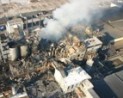
Lax housekeeping and equipment that was inadequately designed and maintained allowed the buildup of sugar dust that exploded in February 2008, the board's final draft report concludes. Georgia's two U.S. senators today joined in backing OSHA's plan to issue a combustible dust standard.
According to the investigation, the worker was covered by almost 240-degree asphalt released from an open valve on the transfer system due to a pressure increase that separated the transfer hose from the system.
Proposed penalties against the two companies total more than $97,000. John Healy, OSHA's area director in Englewood, Colo., said the agency "will be stepping up its enforcement of fall hazards, especially in those areas of the state that experienced significant hail damage this year--areas where we expect to see an influx in roofing work."
"This case clearly shows that an unprotected excavation can turn deadly in seconds, trapping and burying workers before they can react or escape," said Brenda Gordon, OSHA's area director for Boston and southeastern Massachusetts.
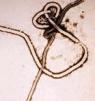
But the two senators who introduced legislation on Sept. 8 to strengthen security and federal oversight of the six laboratories say the labs remain vulnerable.
The company also received one repeat citation, which alone had a proposed $25,000 fine, for not developing and implementing specific hazardous energy control procedures for all machinery at the plant. It was cited for a similar hazard in February 2007.