Workers often don't file for hearing loss compensation until they retire. But with workers staying in the workforce longer, will the compensation bill eventually be larger? There are ways to prevent noise-induced hearing loss (NIHL), even for those workers who may already have some level of hearing impairment.
A May 28 conference co-sponsored by the California Department of Public Health looked at sustainable farming and ecologically friendly pest control, along with health impacts of pesticide use.
In addition, the standard's Fire Protection in Shipyard Employment subpart includes sections on implementing a fire safety plan, fire watches, and fire response. Hexavalent chromium has been added to the list of air contaminants whose concentrations should not exceed stated exposure levels.
On-site activities at the two-hour event Saturday in East Boston will include in-the-water demonstrations of self and assisted rescues, as well as proper paddling techniques.
This year's awards recognize research that made ambulances safer for EMS workers and passengers and also EMS protective clothing recommendations used in the 2008 edition of the NFPA 1999 standard.
"Plain and simple, if things go wrong on the water and you’re not prepared for the immediate shock of sudden cold water immersion, your chance for survival is greatly reduced," said Al Johnson, the recreational boating specialist for the First Coast Guard District in Boston.

Several Tennessee safety groups are taking part tomorrow at Bumpus Harley Davidson in Murfreesboro, with a motorcycle training, road tests, and a bicycle safety course for kids.

For users, the key to the new ANSI/ISEA 201 standard is a label that will provide information to make garment selection based on the work environment and tasks.
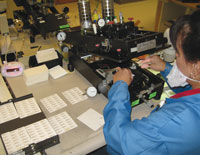
Beryllium is the fourth element in the periodic table. It comes right after lithium and before boron. It's a metal that looks like aluminum but is lighter and stronger. In ceramic form, beryllium oxide (BeO) conducts heat but not electricity and has the highest thermal conductivity of commercially available ceramics. It is used in everything from wireless base stations to satellites and advanced radar systems.

The U.S. Fire Administration and the International Association of Emergency Medical Services Chiefs have both issued detailed guidance for EMS and other responders to use during the flu.
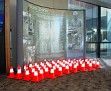
This photo shows part of the 2008 ceremony, held April 25. The annual event honors 56 Washington State Department of Transportation workers who have died in work zones since 1950. On May 4, WSDOT will again deploy an automated camera to catch work zone speeders.
The company disclosed more than 680 violations of water, air, hazardous waste, emergency planning and preparedness, and pesticide regulations to EPA after auditing 12 facilities it acquired from DuPont in 2004.
The application period is April 15 to May 20 for $510 million being awarded in this program, which is more vital now than ever for fire and EMS departments as local budgets shrink.
SMG's Preferred Supplier of the Year, Jon Cal Murray Distributor of the Year, and Rich Harper Commitment to Excellence Supplier and Distributor Award winners were announced April 9 at the organization's annual conference in Tampa, Fla.

A former NFPA senior electrical specialist, Mastrullo is now an OSHA employee in Boston. NFPA says his evangelism in the cause of electrical safety helped to make 70E and other electrical safety programs more prominent around the world. This photo shows, from left, NFPA Chief Electrical Engineer Mark Earley; OSHA New England Regional Administrator Marthe Kent; NFPA President James Shannon; and Mastrullo.
At its April 16 meeting, the California Occupational Safety and Health Standards Board is expected to adopt an amended Section 1598 that requires workers on foot who are exposed to vehicular traffic during work on public streets and highways to wear garments that meet ANSI/ISEA 107-2004.
The state fire marshal announced the grant money on April 1. Applications must be postmarked no later than April 30.

Frost & Sullivan's Chemicals and Materials Research & Consulting practice predicts the country's demand for apparel, gloves, footwear, and head, vision, hearing, and respiratory protection will reach $1.7 billion in 2015.
Determining the level of hand protection performance required in a safety glove is critical to the right glove specification. However, different standards and different test methodologies are in use, which can be confusing and complex for safety managers. It is imperative that buyers and safety managers of gloves seek out expert advice and counsel to help them make sense of the different and often incomparable data available.