In any work environment, there can be many reasons to keep sound levels within a reasonable range. Sound levels above this range are perceived as "noise." Noise can distract the workforce, creating an unsafe workplace. Or, worse yet, it can cause hearing loss.
A recent USA Today list of the 25 Top Medical Events of the past 25 years listed "The rise of the AED" at number 9: "Hundreds and perhaps thousands of cardiac arrest victims are saved each year by folks using an AED, which delivers a shock to a dying heart. The first models were sold for home use in 1986, but it was in the early 1990s when the device became so simplified with voice prompts that even children could use one to save a life." (Big Dose of Medical Change, July 16, 2007)
IGNORANCE is never bliss when it comes to the safety clothing you should be wearing. In fact, ignorance is no longer an excuse accepted by employers for workers not wearing the proper gear. Organizations such as OSHA impose a variety of safety requirements, and some insurance companies compel certain shops to publish minimum safety requirements in full view of the workers.
COMPANIES all over the world are being challenged to do more with less, gain a competitive advantage by maximizing the effectiveness of their employees, and boost productivity in their operations--none of which is an easy task to accomplish. Although there's no silver bullet to magically attain these noble goals, there is a proven methodology for achieving just that in your safety incentive programs.

IN the world of gas detection, one fact stands out above all else: Gas monitors are made to protect and preserve your life. And while serving as a life-saving device, they can be considered a multi-purpose tool in many other ways, as well. For example, they can be used to monitor a confined space prior to entry to ensure the area is safe for anyone entering the space.

GLOBAL economic growth—spurred by the popularity of outsourcing manufactured goods—continues its unprecedented rise. During this period, it’s interesting to note that much of the offshore industrial windfall is focused within warmer, often downright hot, climates. Geographically warm areas in Asia are struggling to keep pace with a mushrooming demand for lower-cost parts, components, and finished products.
In a place where temperatures can reach 125 degrees and heavy forklift traffic is a constant, safety is bound to be an extreme challenge. With 80 employees in an aluminum smelting facility, achieving any significant safety milestone may seem like a far-fetched concept.
WHAT can you do when you've "tried everything" technically, yet still have stubborn problems? Try a strategic leadership approach.
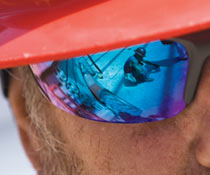
A disgruntled field employee (in front of a crew of scowling, arms-crossed guys) tossed a set of dirty, beat-up safety glasses at me in disgust. "They're scratched, this no good piece of #@*!" he exclaimed. The explanation: A piece of debris or gravel had been slung while on a maintenance job, deeply scratching the lens.

NANOTECHNOLOGY safety regulations may be years away. Many have suggested OSHA can use existing standards and the General Duty Clause to regulate safe nanotechnology practices, but the latter requires having some guidance on exposure limits and best practices from EPA or non-regulatory organizations.

THIS is part of my continuing series of useful links from the Internet. In this month’s edition, we look at Summer Safety. Underground Cables and Electricity In the summer, we may be doing some home remodeling to ensure that we have curb appeal. This means we have to dig up the ground around the home. Before we can do that, we have to get a utility markout by calling at least three days before we start work.
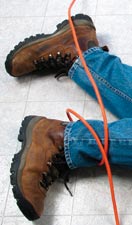
IN the first installment of this series, we discussed the foundation of the injury-free culture, creating alignment around what we mean by “zero injury,” and establishing true ownership for this vision. Once we have created alignment and ownership, what’s next? How does this new vision change our approach to, and thinking about, the basic mechanisms that drive safety performance?
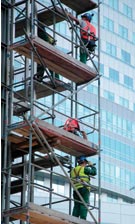
A vast number of those in the construction industry use scaffolding on a daily basis. According to OSHA, nearly 65 percent of workers in the construction industry work on scaffolds frequently. From steel erectors to building equipment installers, bricklayers, window washers, carpenters, and painters, just to name a few, nearly 2.3 million construction workers frequently work on scaffolds. Construction sites are inherently unstable environments, with movement of workers, materials, etc. and changing landscapes. In 2004, approximately 400,000 workers suffered construction-site injuries. The Bureau of Labor Statistics revealed in 1996 that 25 percent of workers injured in scaffold accidents had received no scaffold training. With the high potential for serious injury, construction safety education remains a top priority.
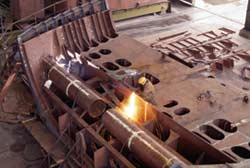
THIS article by Northrop Grumman Ship Systems, Inc. (NGSS) addresses lessons learned from a fatality at its New Orleans facility involving a suspended load. The shipbuilding industry faces many unique hazards. Like all major shipyards, NGSS builds its vessels through modular construction. In modular construction, NGSS builds hundreds of separate units that are assembled into larger units and then integrated into the vessel.
WHILE monitoring and auditing multiple potential layered outfits does impose extra effort on a safety team, it benefits the organization's workforce and bottom line.
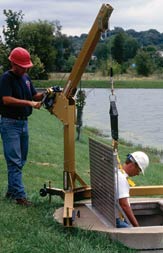
THE American Federation of State, County and Municipal Employees (AFSCME) defines a confined space as an area that has limited openings for entry and exit, has poor natural ventilation that can pose serious risks, and is not designed for continuous occupancy by workers. Workers in various industries are required to inspect, clean, test, and maintain these spaces, making it incredibly important that proper safety precautions are in place to prevent injuries from falls. Confined spaces (such as sewers, tanks, or manholes) are one of the most challenging rescue situations. Access can be difficult given small openings and a lack of space. Along with these concerns, confined spaces often present additional risks, such as the lack of oxygen or noxious air that makes immediate rescue a priority.