The agency plans to issue new risk-informed, performance-based security regulations for spent nuclear fuel and high-level radioactive waste storage facilities.

The proposed rule clarifies that veterinary-care benefits are authorized and sets up a clear procedure for VA to award those benefits.
CSA Standards has recognized Alex Milne for his work on lighting standards, electrical safety standards, and the Canadian Electrical Code Parts I and II.
The violations include failing to provide appropriate machine guarding on equipment, such as the automated bread oven, and provide fall protection for employees working on top of the ovens.
"This tragedy could have been prevented," said Assistant Secretary of Labor for OSHA Dr. David Michaels. "It is imperative that employers take steps to eliminate hazards and provide a safe working environment."

The standards that are being revised cover two types of protective equipment for law enforcement.
A new Broad Spectrum label and SPF 15 or higher means the product are beneficial against skin cancer, early skin aging, and sunburn.
OSHA's investigation found that at the time of the incident, employees were filling an 18-foot-high by 65-foot-long concrete block wall with cement when the wall collapsed, killing one employee and hospitalizing three others.
During the middle of a bustling afternoon on day two of ASSE’s Professional Development Conference, OSHA Chief Dr. David Michaels and NIOSH Director Dr. John Howard took time to discuss what to expect from the two agencies in the coming years.
OSHA inspectors found four Lessard employees exposed to potentially life-threatening falls of 23 feet while working without fall protection on a steep-pitched roof at a work site in Lewiston, Maine.
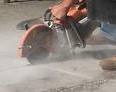
The Montreal research agency's database identified a group of skilled workers that includes bricklayers and heavy equipment operators as the second group exposed.
"Methylene chloride exposure can have very serious health effects, such as cancer and cardiac distress," said Paula Dixon-Roderick, director of OSHA's area office in Marlton, N.J.
From 2000−2009, 350 workers died in trenching or excavation cave-ins—an av¬erage of 35 fatalities per year.
OSHA's investigation was initiated in March after an employee was pinned and injured in a 9-foot-deep trench when a large piece of the trench wall caved in on him.
A trade association and the U.S. Labor Department offered very different interpretations of the U.S. Supreme Court's 2005 decision in IBP, Inc. v. Alvarez when they commented on its application to FSIS inspectors.
"This precedent-setting agreement will go a long way in protecting the interests of workers employed by this farm, as well as others in the industry," said Patrick Reilly, director of the division's Southern New Jersey District Office.
Two petitions ask for rulemakings to warn consumers that the glass can reach high temperatures, posing a burn risk.

A new direct final rule from the Federal Aviation Administration adjusts its 2006 lightning requirements for expendable launch vehicles to match changes adopted by the U.S. Air Force, increasing launch availability.
OSHA initiated an inspection on Feb. 1 as part of its National Emphasis Program on Amputations. As a result, the company was cited for 18 serious violations.
The final rule will take effect July 8 and will save employers more than $45 million annually, according to OSHA.