The violations occurred primarily because employees were not compensated for all hours worked when the company failed to pay for breaks that were less than 30 minutes in length, or for time spent by employees waiting for work areas to become available even though their shifts already had started.
Training of cleanup employees is ongoing throughout the Gulf Coast region. The agency has officials monitoring the training and observing the cleanup efforts that are already underway.
"This is a landmark day in the history of Kansas City," EPA Regional Administrator Karl Brooks said of the 25-year improvement plan. "This agreement charts a course for the largest infrastructure project in the city's history, and what we believe to be one of the largest municipal green infrastructure projects undertaken anywhere in the nation."
The Connecticut-based metal finishing company also was cited for not establishing a regulated work area and ensuring contaminated protective clothing remained in the work area, and for not conducting cadmium exposure sampling.
“As part of the underground economy, illegal businesses often do not pay state taxes and take advantage of employees by not providing workers’ compensation coverage or paying proper wages," said California Labor Commissioner Angela Bradstreet.
The rule would prohibit the use of an electronic device—whether personal or railroad-supplied—if it interferes with an employee’s or another employee’s performance of safety-related duties.
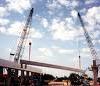
The technical amendment was added as a result of the May 15, 2004, collapse of a steel bridge beam onto an interstate highway in Colorado, killing three people in an SUV passing below.
MSHA did not provide dates of two public hearings into the Upper Big Branch Mine explosion but said Tuesday that they'll be streamed online.
The 33 serious violations include a lack of training, electrical hazards, inadequate personal protective equipment, failing to implement an adequate hazard communication and respiratory protection program, and failing to properly handle confined spaces.
During an inspection that was part of a regional emphasis program, investigators observed employees working without adequate protection on platforms as high as 20 feet.
“Air carriers cannot let maintenance issues lapse,” said FAA Administrator Randy Babbitt. “When a problem is discovered, it needs to be corrected immediately.”

One of the largest safety blitzes ever conducted by the province's Ministry of Labour resulted in 784 stop-work orders and 121 summonses issued for fall hazards on hundreds of construction sites.
OSHA issued citations for, among other things, failing to ensure workers were not exposed to noise levels at or above 85 decimals and to adequately protect employees from exposure to hazardous chemicals such as formaldehyde.
The company was cited for violations at its Parsippany, N.J., worksite, which it shares with Salonika Associates LLC, also cited after a Site-Specific Targeting Program inspection.
EPA conducted an inspection of the company’s warehouse to determine its compliance with the federal Resource Conservation and Recovery Act. The inspection found several alleged violations, including storage of waste pharmaceuticals, including hazardous wastes, without a proper permit.
"This facility has been inspected previously and received citations for various workplace hazards," said Darlene Fossum, OSHA's area director in Fort Lauderdale, Fla. "Management cannot delay taking action any longer to improve its safety and health program in order to protect workers."
“Our heat sweeps are designed not only to send employers a strong enforcement message but also to provide employers and employees with information they need to keep their workers safe," said Cal/OSHA Chief Len Welsh.
"While it's fortunate that no collapse occurred, excavation safety cannot rely on good fortune," said OSHA Area Director Brenda Gordon. "Required safeguards must be in place and in use at all times."
Within the past five years, OSHA has conducted more than 900 inspections at USPS facilities across the country and has issued more than 600 citations.
Among other violations, the company failed to provide workers with a fall arrest harness with a lanyard and did not adequately plank scaffolding during masonry work that reached as high as 24 feet, OSHA said.