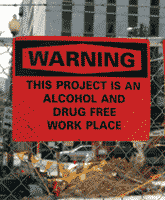
The trends between alcohol and drug use in the workplace are interesting. According to a recent study funded by the National Institute on Alcohol Abuse and Alcoholism, about 15 percent of U.S. workers, or 19.2 million workers, are under the influence of alcohol at least occasionally while on the job. Managers are more likely impaired on the job than are their reports.
ATHLETES and steroids have become a sad combination in modern Olympic and professional sports worldwide. It seems as if a day cannot go by without some reported scandal of an athlete abusing steroids or some other performance-enhancing compound to gain a competitive advantage.
COMPANIES serious about safety performance often talk about the injury-free culture. These three simple words carry a lot of weight and importance. Indeed, it is hard to know how an organization could espouse any different vision of safety. Yet, saying that you want to be "injury free" is not the same as actually moving to this level of performance. For one thing, what do we mean by injury free? Is such a thing even possible?
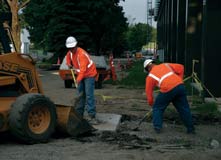
AS the November 2008 deadline approaches for compliance with the Federal Highway Administration's new high-visibility mandate, it is critical that individuals in affected industries know how they will be affected by the changes to come. Affected occupations include road workers and first responders exposed to the low-visibility hazards of moving vehicular traffic.
THE toughest Air Force mission of my life was not in combat. It wasn't even in the cockpit of an F-16. It was a mission I never flew. It happened while I was en route to the United States from the Saudi Arabian desert. My wingmen and I were deployed there for two months flying missions to protect the southern "no-fly zone" of Iraq, and the deployment was over. It was time to head home.
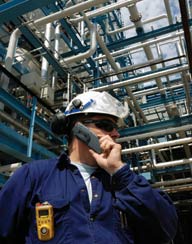
WHEN power plants, oil refineries, and food processing, pharmaceutical, chemical, paint, and plastic plants need to have major service, that work is called a plant turnaround. These times without production are both high stress and high cost, in terms of labor as well as lost production revenue. The positive side can be substantial: increased equipment reliability and a lower risk that broken equipment will cause an unscheduled outage or catastrophic accident.
SAFETY has never been a 9 to 5 proposition. So it's good to see organizations increasingly realize that workers can't switch on safe judgment and actions upon clocking in. But, for the longest time, safety emphasis has almost exclusively been at the work site, exemplified by policies and procedures, observation/monitoring, and ergonomic emphasis on design/redesign/purchase of specific tools.
ONE doesn't need an MBA to recognize that getting high productivity from company assets is a fundamental element to managing a successful business. Any asset that is not maintained and improved eventually will stop producing.
AS facility and safety managers have recognized the need for a range of safety solutions across many applications, much has been written about meeting American National Standard Institute (ANSI) requirements and the importance of routine emergency testing. The ANSI standards are mostly black and white, but there are other issues surrounding emergency equipment that are more like fuzzy shades of gray.
SUMMER is traditionally a carefree time for teen-agers, but it is a time to work for as many as 4 million teens ages 15 to 17, according to NIOSH. Accordingly, agencies and organizations ramp up their efforts each year to inform the public of certain occupational dangers; one example is OSHA's 2007 Teen Summer Job Safety Campaign.
THE National Fire Protection Association’s Technical Committee on Fire Service Occupational Safety and Health is significantly revising NFPA 1584 according to a timetable that would produce a new standard for firefighters’ rehabilitation in 2008.
MOST employers think of the services of an Employee Assistance Program (EAP) as a health benefit, focusing particularly on the free sessions available to an employee prior to using behavioral health insurance benefits.
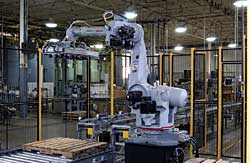
DAN Schodowski faced a challenge. As president and CEO of Solon, Ohiobased JTM Products, Inc., Schodowski knew the company was ready to grow, and making the right investment choices would be critical. Should the company buy an existing facility or build a new one? What new material handling equipment would be needed to support its growth?
DO you remember the days of the typewriter? Correction tape, carbon paper . . . the days when editing usually meant re-composing your thoughts once again from scratch. The word processing capabilities of the modern computer changed all of that forever, and for the better! However, the ease of today's "copy and paste" functions can sometimes make it too easy to duplicate past directions without visiting appropriate changes.
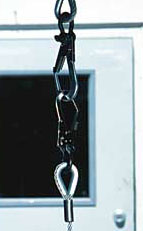
YOU buy and use fall protection harnesses, lanyards, rope grabs, lifelines, retractables, and other equipment every day. Each item is labeled, ensuring that it conforms to ANSI specifications and OSHA regulations. These product certifications give you confidence and peace of mind.

JUST before Christmas, I went to purchase supplies at a "big box" retailer. As I turned a corner to enter a wide aisle, I saw a narrow forklift coming toward me. It was moving too fast for a retail store. The driver was traveling with forks trailing but looking behind him. He was laughing. I heard no alarm. When the forklift was 20 feet away, the driver was still unaware of my existence. He continued to drive. I screamed. He turned his head.
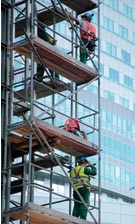
I read the preceding statement while performing a simulated OSHA inspection. Most fall-related injuries result from the lack of fall protection. Additional injuries occur from improper use of fall protection—utilizing a body belt instead of a full body harness, improper use of lanyards, or utilizing an inadequate anchorage point.