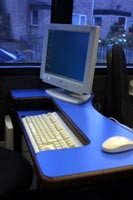
The ability to adapt the workplace to the size variation among computer workers is critical to both promoting users' comfort and protecting their health. While adjustable workstations are commonly thought of in terms of adjusting heights and depths to accommodate differences in sizes of users, it is also important to recognize the importance of adjusting computer workstations to accommodate differences in tasks.
Do you believe a person's mind can make him sick? Or, on the flip side, the way we think can potentially boost our health?
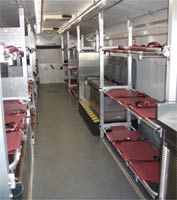
Last year, the 6,000-squaremile National Capital Region around Washington, D.C., which includes the Pentagon and offices for about 340,000 federal workers, received the first seven Mobile Evacuation Buses produced by High Point, N.C.’s Sartin Services Inc. Ed Sartin, the company’s president, said emergency responders in many jurisdictions are looking for vehicles that can accommodate multiple patients.

Question: One of our forklift truck operators recently complained of headache. I think he might have been overexposed to carbon monoxide (CO).
TradeFair Group Inc.'s Industrial Fire, Safety & Security conference is growing rapidly, in terms of attendance and exhibitors, and the 2008 edition (Feb. 6-8) offers a strong seminar lineup at Houston's Reliant Center. It has become a leading conference for Gulf Coast petrochemical emergency officials and vendors serving the energy sector.

Ergonomic hazards can get dicey when conditions turn icy. Here's some advice.
Cold is relative. Just ask a spouse. The old joke about Floridians firing up their furnaces while, in the same weather, Minnesotans are out gardening in shorts and flip-flops is funny because it's grounded in truth. What is refreshing to one can be uncomfortable to another.
It was a model job site, each employee wearing spotlessly clean safety glasses or goggles at every workstation. (Here is where experience comes in, however. The trash cans and floors held the evidence: newly deposited wrappers from someone walking through and handing out new equipment just before the inspection!)
Increasingly, health & safety professionals find themselves the dubious owners of a variety of software tools and large-scale software systems. These tools and systems serve a variety of purposes, from assessment to measurement, to data management and analysis, to large-scale EH&S program automation and administration.
The summer of 2003 was one of the wettest in Maryland history. Later that fall, an indoor environmental quality (IEQ) investigation in a leased facility revealed mold growth in the air handing units (AHUs) and main supply duct of all 12 of the building’s HVAC systems. During the next two months, we worked with occupants, our leasing agent, the building owner, and his contractor to successfully remediate the mold growth. We decided to assess mechanical hygiene in 15 other buildings.
I’ve seen many executives and senior managers sincerely seeking to enhance employee involvement. They realize engaged workers are more likely to be more motivated, do higher-quality work, make better suggestions, deliver improved service, be more alert and aware—and show far better Safety results.
Kimberly-Clark’s Conway, Ark., plant reduced its musculoskeletal incidents by 50 percent following installation of an on-site Employee Maintenance Center (EMC). Improvements in reportable incident rates have continued each year since the EMC launched in 2004. At a sister plant 20 miles down the road in Maumelle, reportable incidents fell from eight to zero in the year following the launch of its center.
The Lean Sigma Scorecard brings together the best of Lean Enterprise thinking, Six Sigma processes, and the Balanced Scorecard’s multiple perspective management. It combines the use of data to deploy strategy and drive improvement, as well as streamlining internal processes and procedures to maximize efficiency. The Lean Sigma Scorecard framework is uniquely positioned to address many of the shortcomings in traditional safety management.
We see horrifying images everywhere: devastating ice storms, hurricanes, traffic pile-ups, crumbled buildings and sinkholes, mall shootings, and sometimes catastrophic workplace accidents. Are your workers really prepared to be safe? (And what about the looming threat of a widespread pandemic flu?) We are living in an instant-access, drive-by world these days. When we need a set of gloves, a first aid kit, a faceshield, or a respirator, we stop by the local hardware or big-box store and get it immediately, or we order online and await delivery within hours. Viewing icebound Oklahoma landscapes last month should have given us pause: What if there are long-term, serious power and traffic interruptions?

Sawn fingers, severed limbs, crushed torsos, and blinded eyes are among the many and sometimes deadly injuries common to sawmill work. Today’s laser-enhanced, electronically operated blades are a far cry from the water-powered saws of yesteryear, but the industry’s hazards have remained largely the same since the nation’s first mill was built at Jamestown, Va., in 1608. Four hundred years later, OSHA still considers sawmilling one of the most dangerous occupations in the country.
Keith White was dancing with his wife, Ingrid, at a dinner celebrating the 60th anniversary of Immaculate Heart of Mary Church in Cincinnati. He remembers feeling dizzy, then slipping from her arms, a victim of sudden cardiac arrest (SCA). Although White is a very active parishioner, he was unaware the church obtained an automated external defibrillator (AED) just 10 days before the dinner dance.
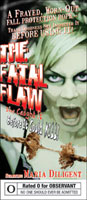
Ordinary Coffee Spilled On The Stairs Turned Them Into A Deathtrap! Those Stairs Were DEADLY WHEN WET. Starring Slick DeMise. Rated P for PERILOUS. Is this an ad for the latest direct-to-video horror movie? No, it's text from the front of a Safety Stuffer released by the Mechanical Contractors Association (MCA) of Chicago and United Association Local Union (LU) 597 -- small flyers dispersed with weekly paychecks to LU 597 workers employed by member contractors of MCA Chicago. The back of that particular safety flyer reveals the rest of the message: Please, clean up spills as soon as possible. Twenty-six different stuffers are being distributed, each conveying its safety message in the form of a scary movie ad that features eerie illustrations. The Safety Stuffers are sponsored by the LU 597/MCA Joint Safety Committee.