Under the “general duty” clause of the Occupational Safety and Health Act of 1970 (OSHA), 29 U.S.C. §§ 651- 678, “[e]ach employer . . . shall furnish to each of his employees employment and a place of employment which are free from recognized hazards that are causing or are likely to cause death or serious physical harm to his employees.”. There is little question that allowing guns at the workplace endangers workers.
Ideally, the workplace would be hazard-free and safe from potential injuries and accidents. However, many operations involve a certain amount of risk that cannot be controlled through engineering measures, administrative controls, or personal protective equipment. These situations require careful measures to prevent workplace accidents and injuries. The value of safety signs in these situations shouldn’t be ignored.
AEDs are much improved since they began showing up in airports, arenas, and workplaces. Training is an essential part of getting workers to use them when necessary, and that training performs a valuable service in accurately educating the trainees about the latest guidelines for performing CPR, said Pam Erno, national account manager for the Health & Safety Institute.
Because the sudden slide in U.S. stock prices was happening just as the OH&S 2008 Executive Safety Summit was taking place, managing in difficult times became a major theme for several presenters. Keynote speaker Robert Pater, managing director of Strategic Safety Associates Inc. and MoveSMART®, started the trend when he asked the audience to consider how stressful times affect people: They lose their sense of humor and develop tunnel vision.
This article is an attempt to briefly cover the most common differences between types of sprinkler systems. Most sprinkler systems fall within one of four categories.
Larry wakes up in the middle of the night with a prickly, tingling sensation in his hand. At first, he thinks nothing of it; maybe he slept in a bad position and his hand “went to sleep.”
Leaders know how important developing strategy is to setting the course. But if you aspire to highest levels of performance, you’ve got to go beyond just focused thinkiStrongest leaders know that real
Here it is December, and we’re talking about hot work. No, we aren’t talking about working when it’s hot—but, sometimes, we have to. We’re talking about working on equipment, making it hot, and having to be careful with the heat we generate and the surrounding environment.
In its more than 30 years of existence, the Emergency Response Guidebook (ERG) has been the “go-to” reference for first responders faced with the possibility of a hazardous materials incident— and it will continue to be the essential reference. In order to reflect changes in both domestic and international regulations, the ERG is republished every four years in English, French, and Spanish.
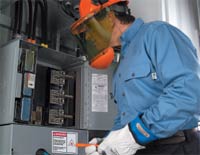
Understanding and protecting against arc flash and other electrical hazards and meeting the requirements of NFPA 70E has become more widely practiced in the past several years, and “8 cal” has become the industry standard for daily-wear FR clothing. This refers to the amount of protection from incident energy, expressed in calories per centimeter squared, that a fabric will provide in an arc flash exposure. It’s also expressed as an “ATPV” (Arc Thermal Performance Value) or arc rating.
The Nov. 4 election gave voters a golden opportunity to revolutionize Washington's safety pantheon. Not only were seven of the 21 members of the U.S. Senate Health, Education, Labor, and Pensions (HELP) Committee either seeking re-election, the presidency, or retiring and leaving their seats open, but also eight of the 15 members of the Senate Appropriations Subcommittee on Labor, HHS, Education, and Related Agencies were running or leaving office -- and one of them, Republican Sen. Ted Stevens, 85, of Alaska, was convicted eight days before the election of seven federal felony charges of lying on his financial disclosure forms to hide $250,000 in gifts and home renovations. Alaska voters denied him a seventh term, early and absentee votes counted Nov. 18 indicated.

Despite the very real risk that an influenza pandemic poses to U.S. businesses, studies and anecdotal evidence show there’s a disconnect between risk managers and the Csuite that can make it difficult for pandemic preparedness to receive the attention—and funding—that it deserves. This article will present strategies and new developments that risk managers can leverage to help improve understanding among senior management about the value of comprehensive pandemic planning and to secure C-suite support.
Many organizations have encountered resistance or noncompliance trying to get plant-bound employees to work safely. This despite reminders, threats, or tomes of policies and procedures (some so ponderous they might create back problems from lifting them). So what chance do you have of inculcating safety checkoffs, judgment, and actions with people who receive minimal or no supervision, who work outside and perhaps check in only occasionally? Actually, a lot, if you approach it the right way—slim, if you don’t.

Drop into any hardware store or home improvement center, and you're likely to find aisles full of tools labeled "ergonomic." But what exactly does that mean for consumers? Simply put, ergonomics is the science of designing and producing tools, furniture, and other work-related implements that improve a worker's efficiency while reducing discomfort, fatigue, and risk of injury.
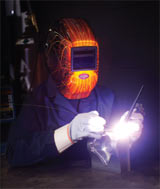
PAPR. No, it has nothing to do with the clapper (Clap On, Clap Off), but it does have something to do with helping some of your employees breathe easier. A PAPR (pronounced PAP-er), or Powered Air Purifying Respirator, is a respirator of convenience for those employees who may be problematic into fitting in a regular respirator facepiece or for those jobs where you need cool air or where you need to have a high assigned protection factor (APF; more on that later).
Whether or not it’s true that some forward-looking caveman started it all by strapping a turtle shell to his head, it’s certain head protection has been a matter of survival throughout human history.