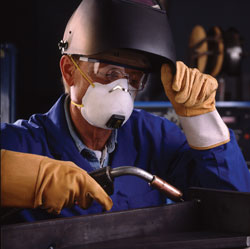
On Feb. 23, 2009, a federal appeals court resolved the final challenges to the Occupational Safety and Health Administration’s Hexavalent Chromium (CrVI) Standard that was promulgated in February 2006. The last challenge argued to lower the permissible exposure limit (PEL) to 1 μg/m3 from 5 μg/m3. This appeal was denied, and OSHA’s PEL was upheld by the court.

No one can predict when a chemical splash will occur. But we can plan for the possibility, put in place preventive and protective measures, and prepare for a quick emergency response.

The string of bad news coming out of New York City in the past year—from Eliot Spitzer's sockladen rendezvous to the domino effect of a failing Bear Stearns to Bernard Madoff and his minions of mini-Madoffs— may make the megalopolis seem more like the notorious Gotham City of the '20s and '30s than the gentrified clean streets of Sex and the City. However, despite the overnight return to its grainy, corrupt past, the city may be one of the only places that can get the nation out of the recession. Companies are tightening their purse strings, cutting everything from office supplies to their workforce, and employees are going to work fearing they may be next on the chopping block.
There's been lots of talk lately about safety culture. How setting your sights on cultural change may be the A-1 approach for engaging the clutch of safer and more productive performance, especially during these beleaguered times.
In the first of this series of articles (March 2009, pages 66-67), we explored the difference between primary and secondary prevention strategies of employee injuries. As we stated, the dramatic reduction of employee injuries in the past 15 years demonstrates the employer's success in preventing an injury from occurring. However, when an injury does occur, the cost of that injury continues to spiral upward. We find ourselves in an environment where the frequency of injuries is down, but severity is up.

Here comes Pete. It looks like he'll be carrying me today. I'm the portable four-gas detector that Pete will use to monitor the air. I'll make sure he doesn't walk into a situation that puts him in danger of being caught in an explosion or being overcome by poisonous gases. It's a pretty important job. I'm in the business of saving lives, and I take it very seriously. If only everyone would treat me like what I do is that critical.

In the 10 years since the American Industrial Hygiene Association and the American Conference of Governmental Industrial Hygienists last held their annual conference and exposition in Toronto, the world has changed—often dramatically, more often subtly. One subtle change is that American attendees of AIHce 1999 did not have to carry their passports just to return home from the event, as they will for AIHce 2009, which convenes at the Toronto Convention Centre May 30 through June 4.
The 10th annual National Work Zone Awareness week was held April 6-10, 2009, with "Drive to Survive—Our Future is Riding On It!" serving as the week's theme. The national kickoff took place April 7 on the George Washington Parkway near a bridge replacement project between Washington, D.C. and Virginia, a fitting location given the federal government's stimulus of infrastructure projects this year. More money brings more work zones, more (temporary) congestion, and more risk.
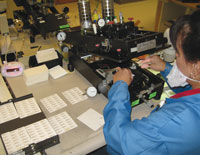
Beryllium is the fourth element in the periodic table. It comes right after lithium and before boron. It's a metal that looks like aluminum but is lighter and stronger. In ceramic form, beryllium oxide (BeO) conducts heat but not electricity and has the highest thermal conductivity of commercially available ceramics. It is used in everything from wireless base stations to satellites and advanced radar systems.

Layoffs have hit safety and health professionals like everyone else. For those fortunate enough to still be employed, the economic crisis has quickly translated into a budget crisis. But how does one keep costs down and convince the boss it's worth every penny to continue to attend conferences?
Michael Sears is a soft-tissue injury reduction specialist. He's one of the (too few, from my experience) exceptional breed of chiropractic physicians who, rather than focusing on scheduling ever-ongoing sessions with clients, instead emphasizes self-care and personal control of well-being. Perhaps this is because he's also a restorative Yoga instructor.
Determining the level of hand protection performance required in a safety glove is critical to the right glove specification. However, different standards and different test methodologies are in use, which can be confusing and complex for safety managers. It is imperative that buyers and safety managers of gloves seek out expert advice and counsel to help them make sense of the different and often incomparable data available.
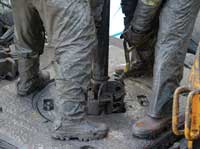
Occupational foot protection is very often ignored until a serious injury occurs. Safety professionals should take the following steps to ensure their facilities and employees are following best practices when it comes to foot protection.

Both wellness and workplace occupational health and safety (OHS) have benefits to employees and employers alike. While both can be implemented separately, there are proven additional benefits to combining the two programs into one overall Employee Health, Safety, and Wellness (HSW) Program where the total is greater than the sum of the parts. Combine your efforts in these 12 areas and enjoy improved wellness.
In the midst of changes taking place throughout the health care industry, many OHNs are rightly feeling they are in a whole new profession, which helps explain why organizers of this year's annual AAOHN conference have for months now been plugging the event with the tagline "It's a Whole New Symposium."
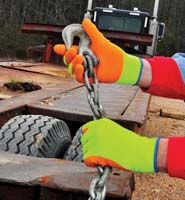
Statistics show the percentage of injuries involving lacerations is considerably higher for the construction industry than for all other industries. And yet, despite the availability of comfortable, cut-resistant gloves, it is not unusual for most construction workers to go gloveless for at least part of the work day.

Both lifelong users and those just introduced to fall protection equipment struggle with hardware compatibility. Unfortunately, there are cases where workers using equipment designed according to American National Standards Institute (ANSI) standards have been seriously injured or have died as a result of incompatible connections.