
As baby boomers begin to retire, an infusion of new workers is vital. However, abuse of illicit drugs and alcohol is a concern.

HEAT STRESS
Many workers are medicated today for various ailments, but few are aware of the dangers their drugs can cause with heat stress.
The American public's concern about potentially pandemic influenza A(H1N1) waned in early May as schools in some affected states reopened and Mexico appeared to have its outbreak in hand. The number of confirmed cases and countries in which they were found continued to rise steadily, however, primarily in the Americas and Europe, the World Health Organization reported.
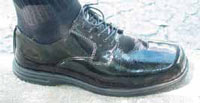
G4S Wackenhut tried out a new slip-resistant shoe with about 800 security officers at two offices in Cincinnati and Fort Myers, Fla., early this year. Asked April 28 how the trial was going, Director of Safety Frank Knapfel said the results were excellent at that point in the trial.
Total annual health care costs reached $2.4 trillion in 2008 and are projected to reach $3.1 trillion in 2012. In fact, there appears to be no end in sight to this trend.1 As a result, organizations and individuals continue to search for strategies to deal with escalating health care costs that are outpacing the rate of inflation.
Each year when federal statistics are released, it comes as little surprise that violations of OSHA's Hazard Communication Standard are among the top 10 safety citations issued to general industry. With more than 4,000 violations issued each year, OSHA continues to make it quite clear that having a dusty, nearly empty binder of MSDS wedged on the top shelf of someone's office is not enough.

The voice is the primary occupational tool for many professions, yet rarely do we think about the demands placed on the human voice. If a famous singer cancels a concert tour due to a voice problem—that might make the news. Yet every day, millions of Americans spend the majority of their work day using their voice in some capacity, especially workers such as salespersons and schoolteachers.
Imagine you've been thrust into the cockpit of a packed commercial airliner on its final approach, you've never piloted an airplane—and now, you're at the controls. "Scary" doesn't begin to describe how almost anybody would feel in a situation that pressure-packed and urgent.
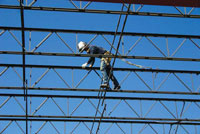
In Alabama, a framing crew member who was moving a roof truss into place while supporting himself on an 8-inch wide structural beam fell 27 feet to the ground inside the partially constructed building. The native Mexican laborer, who understood little English, was not wearing or using personal fall protection equipment. An 8-foot by 4-foot truss fell at the same time, striking the worker's head when he hit the ground. He was pronounced dead at a local hospital.
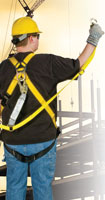
User weight is an important consideration when determining personal protective equipment for workers. Most fall protection product capacity rates up to 310 pounds, a weight aligned with most safety standards' and regulations' test criteria. Users should note that product capacity is more than just user weight, because it includes all clothing and equipment attached to the worker.
Whether in the public or private sector, risk managers with limited resources are constantly faced with the challenge of prioritizing competing concerns, managing the desire to take all possible steps to protect the organization and its employees. In today's economic climate, shrinking budgets are the norm, and securing funding for things like emergency preparedness can be difficult.

To the thousands of visitors planning to attend the American Society of Safety Engineers' Safety 2009 conference and expo, symbols are valuable tools. At the job site, symbols can warn workers of imminent danger, advise them about proper PPE, or convey the quickest egress route during an emergency.
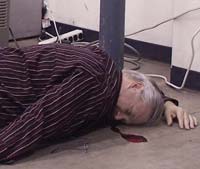
For many organizations, buying automated external defibrillators (AEDs) is the purchase of a bigticket item. For most consumers, a car is a big-ticket item. But buying AEDs is not at all like buying cars, where the effort ends when you park it in your garage for the first time. From then on, all you need to do is drive it around and put oil in it.
Incentive programs demonstrate their power to produce better results during a tough economy, All Star Incentive Marketing President Brian Galonek agrees. In a Jan. 20, 2009, interview with the OH&S editor, he said safety professionals are especially eager to try incentives because they've exhausted the tried-and-true ways of improving safety metrics. Excerpts from the conversation follow.
Whatever can you do to get a handle on safety? Specifically, to prevent injuries to fingers, wrists, hands, and arms that are common to many industries, especially where people use hand tools, assemble, work on machines, lift, load, cut, push, pull, and more?

Since the publication of our first article ("Vision Testing: A Blind Spot in Occupational Safety," February 2009, page 47), we have been asked many questions, and most people wanted references to the research data.
Workers often don't file for hearing loss compensation until they retire. But with workers staying in the workforce longer, will the compensation bill eventually be larger? There are ways to prevent noise-induced hearing loss (NIHL), even for those workers who may already have some level of hearing impairment.