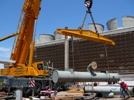
The employer must ensure that, prior to operating any equipment covered by the standard, the person is qualified or certified to operate the equipment.

ISO 16602 and ANSI/ISEA 103 provide a way for you to specify its performance in an objective and detailed manner.
We need to revise fire service training to include awareness training on many different topics, just like this one.
Standards identify the minimum requirements to get into the game. Your requirements may be greater.
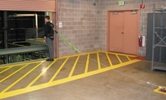
Employers should understand that by choosing a fall arrest system, they are obligating themselves to develop a rescue plan and corresponding rescue training.
Next-generation ENS eases compliance with timely notification.
A material of relatively low hazard can present substantial risk, while a material with a high hazard might present no measurable risk in certain circumstances.
Here's how to effectively use your technology to keep your people safe.

Anti-fatigue mats are an important part of the big picture when it comes to improving worker productivity and reducing costs.
Safety's professional associations will play an increasingly important role in support of the Occupational Safety and Health Administration in the decades ahead.
OSHA can look to states for guidance in standards development and educational outreach.
Where are the safety professionals of tomorrow coming from, and will they be needed?
In general, most companies use a combination of classroom and e-learning delivery methods.
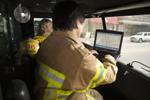
These machines appeal to a growing number of industry sectors, and rugged hand-helds aren't far off, says Dell Brand Manager Joe Trickey.
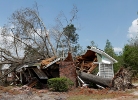
The safety training you do today has a very long lifespan.

Is I2P2 the game changer that Dr. David Michaels hopes it will be? And what does the future hold for OSHA rulemaking, enforcement, and cooperative programs?
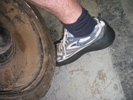
Revolutionary rubber safety overshoes. Try saying that fast three times.