The two Canadian companies involved, the contractor and a drywall/stucco subcontractor, both pleaded guilty to failing to ensure the injured worker was protected by a guardrail.
A new study by two Albanian researchers has found prevalence varying between 19.2 percent and 25.7 percent among workers in the metallurgical industry.
The federal Bureau of Ocean Energy Management, Regulation and Enforcement began this series of public forums Aug. 4 in New Orleans, then moved on to Mobile, Ala., and Pensacola, Fla. Comments are being accepted until Sept. 30.
Sept. 1 is the deadline to apply for the 2011 awards from NIOSH and the National Hearing Conservation Association.

An online survey of 1,058 adults by the American Red Cross found about 20 percent would try to contact responders via e-mail, websites, or social media if unable to reach 911. Most believe help will come soon after they tweet or post an urgent request.
The statistical survey would involve 14,202 respondents, and 85 case study interviews would be conducted asking about safety and health practices on farms with more than 10 workers and at state and local governmental agencies in state plan states.
EEOC filed the suit in New Jersey, saying the health care provider unlawfully fired employees who needed medical leave.

The American College of Emergency Physicians says a new report from CDC "once again debunks the myth that emergency departments are crowded with non-urgent patients."
In addition, OSHA issued the company 50 serious and two other-than-serious violations for failing to provide proper protective equipment for employees working with lead and other extremely dangerous dust and chemicals, and failing to develop or implement a hazard communication program, among other things.
Coronary events are a major health issue in firefighters, causing nearly half of all deaths on duty. Exposure to ultrafine particles could contribute to coronary disease in firefighters—not only as a long-term health risk, but also as a cause of coronary events while responding to fires.
Finalizing a proposed rule to incorporate more than 40 voluntary consensus standards in federal pipeline safety regulations, PHMSA said it will not adopt the 2008 editions of NFPA 58, Liquefied Petroleum Gas Code, and NFPA 59, Utility Liquefied Petroleum Gas Plant Code.
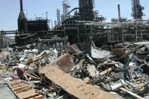
The company also agreed to spend at least $500 million on safety measures at its Texas City plant. Secretary of Labor Hilda Solis today said "The size of the penalty rightly reflects BP's disregard for workplace safety."
The acquisition of Sperian shares held by Essilor International, Ginette Dalloz, and Societe Civile Familiale Dalloz means the current tender offer until Sept. 2 remains on track.
Based on a June 22-23 workshop, the report comes after the spewing BP oil well in the Gulf of Mexico has been capped. The response involved more than 1 million gallons of dispersants and more than 40,000 workers.
The board promised it will be balanced, including railroads, tank car owners, shippers, and others. Its goal: Deliver recommendations within two years to solve the vexing question of liability for rail toxic by inhalation hazard shipments.
Between June 2004 and September 2007, approximately 6,510 barrels of crude oil were discharged from various pipelines and one tank owned and operated by Plains into navigable waters or adjoining shorelines, according to EPA.
“Controlling the mosquito vector can work, but it is very expensive and difficult to sustain,” says Anna Durbin, M.D., who is leading the study at Johns Hopkins. “In the long run, vaccination would be a more efficient and cost-effective approach.”