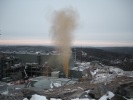
"The fines and penalties reflect the gravity and severity of the deadly conditions created by the companies managing the work at the site," said Labor Secretary Hilda Solis. "No operation and no deadline is worth cutting common sense safety procedures. Workers should not sacrifice their lives for their livelihoods."
A report released Aug. 2 by Safe Work Australia evaluates two possible approaches for using control banding to ensure safety when working with nanomaterials but admits workplaces there have little knowledge of it.
More than 50 public meetings are in the books for this project of CDC and ATSDR about chemical exposures and public health. An action agenda is scheduled for release in December.
The purpose of the SPCC rule, which was finalized in 1973, is to establish requirements for facilities to prevent a discharge of oil into navigable waters or adjoining shorelines.

What can we do to prevent or minimize these incidents? The simple answer is training and increased awareness.
With criminal penalties associated with safety regulation looming, many corporate safety professionals are opting to spread worker protection more broadly across their workforces.
According to the lawsuit, a class of female farmworkers was subjected to threatening behavior by male coworkers who made lewd and unwanted sexual advances and used a forklift to chase women or block them with their bodies or a broom while they walked down the hall of the processing plant.
“Since Southern California has the worst air pollution in the nation, for the sake of public health we must ensure that all businesses are operating in compliance with air quality regulations and doing their part to help improve our air,” said Barry Wallerstein, executive officer of the South Coast Air Quality Management District.
“We depend on professional truck and bus drivers to safely move our economy,” said FMCSA Administrator Anne S. Ferro. “This grant program makes an investment in our workforce, while ensuring that new commercial drivers are well-trained and focused on safety."
Provided as a free service to help trucking companies and truck drivers, the new information includes the latest exemptions to idling regulations in effect in North Carolina, West Virginia, and Detroit.

Its Office of Health, Safety and Security seeks comments about potentially adding both to its current program, which randomly tests for marijuana, cocaine, opiates, phencyclidine, and amphetamines.
When a flight is oversold, DOT regulations require airlines to seek volunteers willing to give up their seats for compensation. DOT's investigation revealed numerous cases in which Comair failed to solicit volunteers to leave overbooked flights and provide passengers with the appropriate denied boarding compensation.
OSHA found that the company had not cleaned the vessel thoroughly enough to ensure the absence of flammable materials or vapors, and had not vented it prior to allowing welding to be performed.
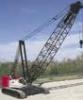
The new standard has been a long time coming, having begun with a July 2002 announcement of the intent to set up a negotiated rulemaking committee.

By early 2011, nine states will have laws on their books banning use of hand-held cell phones while driving. Twenty-seven states have primary enforcement texting bans in place or will begin primary enforcement this year.
“Too many families lose loved ones each year on our nation’s roadways," said Rep. Brett Guthrie. "The I-65 corridor in Kentucky has seen several tragedies this year. Hopefully this program will help to improve safety in these dangerous areas.”
According to the Bureau of Labor Statistics, 21.7 percent of people with disabilities were in the labor force in June 2010, compared with 70.5 percent of people with no disability. In addition, the unemployment rate for those with disabilities was 14.4 percent, compared with 9.4 percent unemployment for those without a disability.
"The gravity of this type of hazard cannot be overstated," said Paul Mangiafico, OSHA's acting area director in Hartford, Conn. "The collapsing walls of a trench can crush or bury workers in seconds.”

The last of four public hearings about proposed rule changes by the Pennsylvania Department of Environmental Protection takes place tonight, and the U.S. Senate HELP Committee holds a field hearing today about safety – both are in Pittsburgh.
According to complaints issued by EPA, Munce’s Superior and Munce’s Superior Petroleum Products of Gorham, and Ryezak Oil Co. of Rumney failed to fully prepare and maintain spill prevention, control, and countermeasure (SPCC) plans.