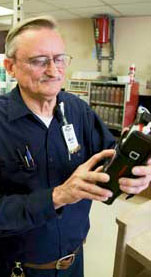
ACCORDING to the National Human Activity Pattern Survey (NHAPS) as referenced by EPA, Americans spend about 90 percent or more of their time indoors. For this reason, the quality of our indoor air should be of great concern, whether it is in a home, a workplace, or a school, hospital, or medical facility--virtually any indoor environment. Poor indoor air quality can lead to a variety of health problems for any building occupant, especially at-risk populations (those younger than 2 or more than 70 years of age, immune system-compromised individuals, asthmatics, or those with severe allergies).
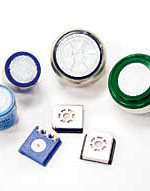
ADVANCEMENTS in safety gas detection sensor technology in the past few years have allowed dramatic reductions in the size and cost of personal multi-gas monitors, making it possible for employers to protect more workers against exposure to gas hazards in the workplace.
DO you want to propel your leadership ability to a higher level? In one of his last articles before passing away in 2005, management guru Peter Drucker wrote that leaders spent too much of their time trying to find the right answers when they should instead be focusing on formulating the right questions.
The global tuberculosis epidemic has leveled off for the first time since the World Health Organization declared TB a public health emergency in 1993, WHO reported March 22 as its released "The Global Tuberculosis Control Report."
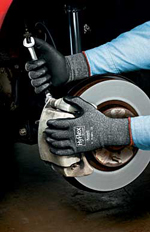
SOARING medical costs and production losses resulting from repetitive motion injuries and related musculoskeletal disorders, including carpal tunnel syndrome, are inciting safety personnel to rapidly advance their consideration of ergonomically designed products that can reduce these types of injuries. This article examines some answers to common questions related to ergonomics and hand protection products--their safety, performance, quality improvements, and cost advantages.
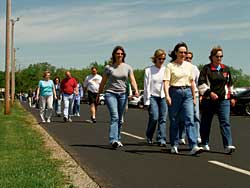
IMAGINE that upper management has charged you with a brand-new assignment, developing an "employee wellness program." This could be a tall order for anyone. There's no standardized program to follow. However, if you are a safety and health professional, you have one trick up your sleeve: your safety and health program.

This article speaks to the training of Industrial Athletes, the men and women whose jobs require strength, agility, and stamina in a variety of industrial sectors. Keeping their bodies healthy and fit is the key to optimal performance and reduced injuries on the job.
EVEN in this age of technology, I seem to collect and accumulate more paper than ever. I have piles of this and that on my desk and can honestly say I don?t know what treasures I have (or don't have) right at my fingertips. Disorganized is the operative word here, but I am trying really hard to recoup some semblance of order.
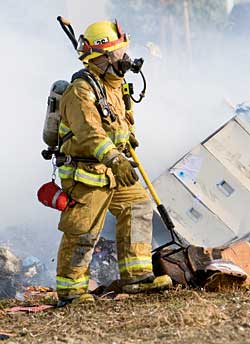
ONE of the most basic tasks of a safety professional is complying with OSHA requirements in regard to fire safety. OSHA requires a company to comply in a number of different fire safety areas. While these standards may look daunting, a basic understanding of how these standards are developed and set up can be helpful in ensuring your company is ready for OSHA scrutiny in this area.
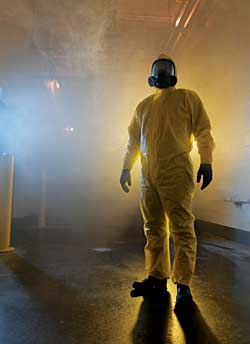
REACHING the pinnacle of safety success, world-class performance with a spotless injury log, can seem unattainable for any number of reasons. Deadlines, culture, turnover, upper management support, and resource shortages can set you back. Yet companies and workplaces achieve it again and again through passion, persistence, accountability, and empowerment.
ARE you concerned about spurring and reinforcing change at sites far from corporate HQ?
IF you have not heard of MRSA (methicillin resistant staphylococcus aureus) yet, you will very soon. MRSA (it is generally verbalized as mersa) used to be found only in hospitals.
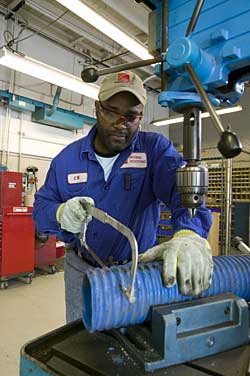
PICTURE, if you will, the new Safety Director at a sheet metal fabricator in the early 1990s. Fresh out of college with a degree in Safety Engineering and a desire to work in industry, he sincerely wants to "help" promote the idea of a safe workplace. He wants to "make a difference."
On the first day of his new job, he is confronted with an accident that results in a severe laceration of a worker's hand. A hospital trip is involved. This one will definitely go down as a Lost Time Accident. There is grumbling about a potential lawsuit.
IMAGINE you are ill and make an appointment with your physician. You walk in the door, register with the receptionist, and are escorted to an exam room. A few minutes later, the physician walks in with a syringe filled with medicine. He asks you to roll up your sleeve. As your eyes widen, you exclaim, "You haven't even examined me yet!" As he walks closer with the syringe, he replies, "That's all right. Most of the time, this usually does the trick."
While this scenario may seem ridiculous, how many times have we approached a safety problem with a "syringe" full of training without diagnosing the underlying issue?
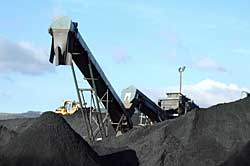
LAST year's spike in mining accidents, which began with the Sago mine explosion Jan. 2 and was followed 17 days later by two fatalities in a conveyor belt fire in the Aracoma Alma #1 mine, also in West Virginia, put a national spotlight on what Cecil E. Roberts, president of the United Mine Workers of America (UMWA), described in his speech before the Senate Committee on Health, Education, Labor and Pensions on March 2 as the Mine Safety and Health Administration's history of "inaction and chronically misdirected efforts."

WITH the warm and humid summer months just around the corner, it is important to remember what kind of illnesses and other heat-related ailments can arise from being out in the heat too much.
CONCRETE pours thick and cool, like a mud milkshake. On a hot day it may even seem inviting, as more than one homeowner has stepped in, shoeless, to level the surface of a driveway. So the idea that this seemingly harmless substance could be responsible for severe burns runs counter to common sense.