The summer of 2003 was one of the wettest in Maryland history. Later that fall, an indoor environmental quality (IEQ) investigation in a leased facility revealed mold growth in the air handing units (AHUs) and main supply duct of all 12 of the building’s HVAC systems. During the next two months, we worked with occupants, our leasing agent, the building owner, and his contractor to successfully remediate the mold growth. We decided to assess mechanical hygiene in 15 other buildings.
I’ve seen many executives and senior managers sincerely seeking to enhance employee involvement. They realize engaged workers are more likely to be more motivated, do higher-quality work, make better suggestions, deliver improved service, be more alert and aware—and show far better Safety results.
Kimberly-Clark’s Conway, Ark., plant reduced its musculoskeletal incidents by 50 percent following installation of an on-site Employee Maintenance Center (EMC). Improvements in reportable incident rates have continued each year since the EMC launched in 2004. At a sister plant 20 miles down the road in Maumelle, reportable incidents fell from eight to zero in the year following the launch of its center.
The Lean Sigma Scorecard brings together the best of Lean Enterprise thinking, Six Sigma processes, and the Balanced Scorecard’s multiple perspective management. It combines the use of data to deploy strategy and drive improvement, as well as streamlining internal processes and procedures to maximize efficiency. The Lean Sigma Scorecard framework is uniquely positioned to address many of the shortcomings in traditional safety management.

We see horrifying images everywhere: devastating ice storms, hurricanes, traffic pile-ups, crumbled buildings and sinkholes, mall shootings, and sometimes catastrophic workplace accidents. Are your workers really prepared to be safe? (And what about the looming threat of a widespread pandemic flu?) We are living in an instant-access, drive-by world these days. When we need a set of gloves, a first aid kit, a faceshield, or a respirator, we stop by the local hardware or big-box store and get it immediately, or we order online and await delivery within hours. Viewing icebound Oklahoma landscapes last month should have given us pause: What if there are long-term, serious power and traffic interruptions?

Sawn fingers, severed limbs, crushed torsos, and blinded eyes are among the many and sometimes deadly injuries common to sawmill work. Today’s laser-enhanced, electronically operated blades are a far cry from the water-powered saws of yesteryear, but the industry’s hazards have remained largely the same since the nation’s first mill was built at Jamestown, Va., in 1608. Four hundred years later, OSHA still considers sawmilling one of the most dangerous occupations in the country.
Keith White was dancing with his wife, Ingrid, at a dinner celebrating the 60th anniversary of Immaculate Heart of Mary Church in Cincinnati. He remembers feeling dizzy, then slipping from her arms, a victim of sudden cardiac arrest (SCA). Although White is a very active parishioner, he was unaware the church obtained an automated external defibrillator (AED) just 10 days before the dinner dance.
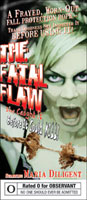
Ordinary Coffee Spilled On The Stairs Turned Them Into A Deathtrap! Those Stairs Were DEADLY WHEN WET. Starring Slick DeMise. Rated P for PERILOUS. Is this an ad for the latest direct-to-video horror movie? No, it's text from the front of a Safety Stuffer released by the Mechanical Contractors Association (MCA) of Chicago and United Association Local Union (LU) 597 -- small flyers dispersed with weekly paychecks to LU 597 workers employed by member contractors of MCA Chicago. The back of that particular safety flyer reveals the rest of the message: Please, clean up spills as soon as possible. Twenty-six different stuffers are being distributed, each conveying its safety message in the form of a scary movie ad that features eerie illustrations. The Safety Stuffers are sponsored by the LU 597/MCA Joint Safety Committee.
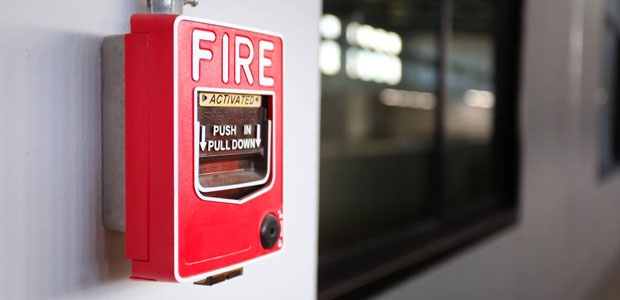
Fire detection systems are designed to discover fires early in their development when time will still be available for the safe evacuation of occupants. Early detection also plays a significant role in protecting the safety of emergency response personnel. Property loss can be reduced and downtime for the operation minimized through early detection because control efforts are started while the fire is still small.
Everyone seeks improvement in “Leadership,” for themselves or in others. Strong Leadership promotes simultaneous returns: boosting safety, productivity, quality, receptivity to change, morale, trust, credibility, and retention and energizing involvement.
Because of heightened security concerns and recent hazmat transportation incidents, the shipping paper has come under more scrutiny by the U.S. Department of Transportation (DOT) and state inspectors than ever before. Shippers and carriers are being asked to demonstrate their compliance with all regulations for preparing their hazardous materials for shipment. Moreover, of the 304 civil enforcement actions closed from May 2005 to April 2006, 215 were shippers in violation of one or more of the hazmat regulations.
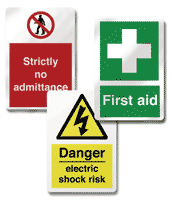
The best way to manage on-thejob hazards is to make sure every step is taken to avoid them. One way to help prevent accidents is by utilizing a safety signage program to keep employees informed and educated about possible hazards, company procedures, and general safety tips.
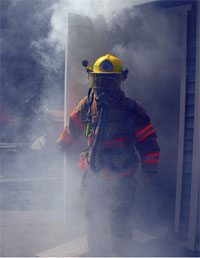
When we talk about workplace exposures, it’s hard to conceive of a more varying and serious set of hazards than what first responders encounter. There are none more courageous and none more exposed to known and unknown industrial hygiene hazards in the regular course of their work than those who deal with front-line lifesaving.
R-E-S-C-U-E. The Merriam-Webster Dictionary defines rescue as "to free from danger, harm or confinement." Confined space rescue can be a very dangerous act. Statistics show that more than 60 percent of those who die in confined spaces are people attempting to perform a rescue.
With 126 million receptors in each retina, our eyes are the primary means by which we experience the world. There's simply no way to put a value on our vision and its impact on our day-to-day activities. Unfortunately, the eyes are also the body part most vulnerable to injury in the workplace.More than 2,000 eye injuries occur on the job every day, according to the U.S. Bureau of Labor Statistics. Almost 100,000 each year lead to temporary or permanent vision loss.
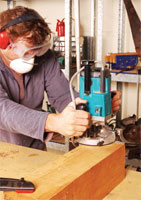
The simple things employees do every day are what can cause injury, ironically enough. Scalping from someone's hair being wrapped around a shaft or caught in a machine and ripped out is one example. Others are acid or chemical burns, lacerations from bumping into pipes or product being slung at the worker through grinding, and toxic chemical exposures.
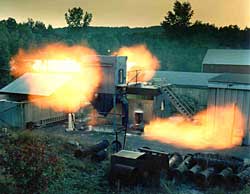
There is no single common substance or mistake involved in dust explosions. Dust explosions occur in a wide variety of industries and applications. One common thing that is a major part of the secondary explosions is housekeeping. Typically, there's a process vessel inside a facility that is processing a combustible material. If you have an explosion in an unprotected vessel (the primary explosion), the vessel is destroyed or ruptured and a fireball is released into the larger process area.