Safety directors at oil refineries today are required to keep up to date with an ever-increasing list of regulations from a number of sources. State and federal regulations govern everything from the maintenance of equipment to training of operators, and new regulations are proposed continuously.
LONG considered the "ugly duckling" of the safety footwear business, the safety toe overshoe developed from the venerable galosh has a new lease on life. To be fair, there have been some pretty ugly ones, and even some that were downright dangerous. However, the "gumshoe" has come a long way since African-American inventor Alvin Longo Rickman first patented an overshoe in 1898.
WHILE many new topics are addressed in the ANSI Z359 family of fall protection standards--which was available for purchase in late August and takes effect Oct. 15--one of the critical concepts presented is certified and non-certified anchorages for fall protection systems.
Recovering from a disaster is never easy, whether it's a hurricane, tornado, earthquake, fire, flood, or thunderstorm. These events have the potential to cause loss of equipment, power failures, non-functioning communication systems, and missing or otherwise preoccupied personnel.
THE night he fell, Gary was working as a line cook at the signature restaurant of a newly opened, 5-star resort hotel. With more than 10 years of experience in restaurants, he had never experienced an injury on the job beyond some occasional cuts and burns--those all minor and mostly when he was learning the ropes. He was glad to have a nice assignment in this prestigious restaurant; the spacious kitchen and gleaming new equipment made for a very pleasant work environment.
EXPOSURE to high levels of hydrogen sulfide gas is a well-documented and understood hazard. OSHA and NIOSH standards have long recognized this acute risk with appropriate short-term maximum exposure levels for workers. However, long-term, chronic exposure to low levels of hydrogen sulfide is not as well understood.
WE live and work in a performance-driven culture. Everything is defined by how well it performs, from the companies we invest in and the vehicles we drive to the laptop computers, i-Pods, and cellphones we use to increase our personal productivity and individual performance. Interestingly, sometimes devices designed for a much humbler purpose turn out to be a bridge to other functional data that prove to be a significant boost to productivity, personal accountability, and major leaps forward in organizational performance.
We live in a world of labels. We trust some labels to be precise: We expect a 250 mg capsule to deliver 250 milligrams of medication, and our 2-liter soft drink bottle undoubtedly holds two liters. But we also accept that some labels provide us only with an estimate.
IN the previous two articles, we discussed the need for clear ownership and a driving focus on exposure in creating an injury-free culture. These two attributes in themselves may compel leaders to reorient their thinking around safety. There is a third attribute, however, where the injury-free culture truly begins to take shape: measurements and metrics.
In recent years, the health and safety industry has recognized and embraced technology in an effort to find a better way to manage chemical information. MSDS management, in particular, has found a ready audience for technology.
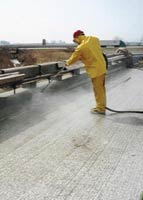
ONE of the most rapidly emerging service industries is that of industrial maintenance, and more specifically, water jetting or water blasting. As with any new or growing industry, specific standards and regulations are non-existent, and the industry is left to regulate itself. Fortunately for the water jetting industry, most of the companies providing this service are professionally oriented and strive to take every precaution necessary to protect the interests of employees and clients.
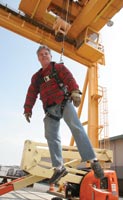
ACCORDING to recent information from OSHA and the Bureau of Labor Statistics, workplace fall-related deaths in the industrial and construction sector rank second only to occupationally related traffic accidents. When it comes to industrial fall protection systems, while challenges exist in designing systems that facilitate workflow, worker protection and safety must come first: Failure is not an option.
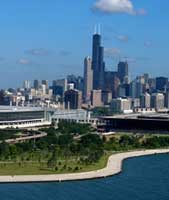
"THE Windy City." "Second City." "Chi-town." More recently, "Da Chi." Chicago is known the world over by these and other monikers, but it is the nickname coined by the city's former Mayor Richard J. Daley (father of current long-term Mayor Richard M. Daley) that the National Safety Council has apparently found most appealing. He called his hometown "The City That Works," and, riffing on that, NSC has made "Safety Works" the theme for its annual Congress & Expo.

You wouldn't let a lawyer operate on you. You wouldn't let a lawyer design a bridge or skyscraper. You wouldn't even let a lawyer drill your tooth. So how on earth did lawyers become the definitive authority on accidental injury causation? Maybe more to the point, why did the safety profession let them? The "I got hurt, so who do I sue?" mentality is spreading rapidly across North America.
WORK and safety footwear is developed for a specific end user, whether that person is an electrician or a drywaller. Choosing the proper safety and work boot can be as easy as breaking down what is most important to keep safe and comfortable on the job. Here are a few things to consider.
CAPT. Scott Perko. That name never leaves me. He was at first my nemesis--and then, over time, my best friend. It was the first day of Undergraduate Pilot Training at Williams Air Force Base in Phoenix, Ariz., and it wasn't just the blistering heat of the Arizona sun in June that made me sweat. As my assigned Instructor Pilot (IP) in the Cessna T-37B twin engine jet trainer, Capt. Perko stood between me and something I wanted more than anything else.
ANIL Mathur is the CEO of Alaska Tanker Corporation. He leads according to Lao Tsu's precept, "Things that are not growing are dying." Consistent with this, Anil, an incisive thinker and articulate, no-nonsense communicator, directs safety with strong expectations of watchful and continuous improvement.