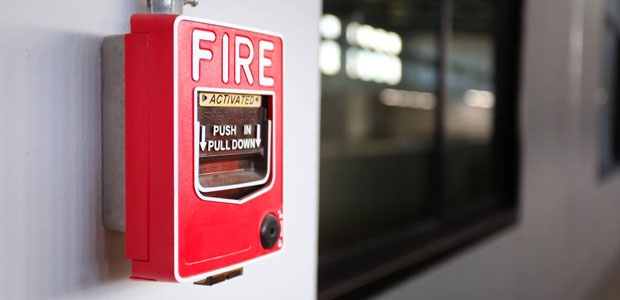
Fire detection systems are designed to discover fires early in their development when time will still be available for the safe evacuation of occupants. Early detection also plays a significant role in protecting the safety of emergency response personnel. Property loss can be reduced and downtime for the operation minimized through early detection because control efforts are started while the fire is still small.
Everyone seeks improvement in “Leadership,” for themselves or in others. Strong Leadership promotes simultaneous returns: boosting safety, productivity, quality, receptivity to change, morale, trust, credibility, and retention and energizing involvement.
Because of heightened security concerns and recent hazmat transportation incidents, the shipping paper has come under more scrutiny by the U.S. Department of Transportation (DOT) and state inspectors than ever before. Shippers and carriers are being asked to demonstrate their compliance with all regulations for preparing their hazardous materials for shipment. Moreover, of the 304 civil enforcement actions closed from May 2005 to April 2006, 215 were shippers in violation of one or more of the hazmat regulations.
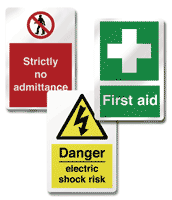
The best way to manage on-thejob hazards is to make sure every step is taken to avoid them. One way to help prevent accidents is by utilizing a safety signage program to keep employees informed and educated about possible hazards, company procedures, and general safety tips.
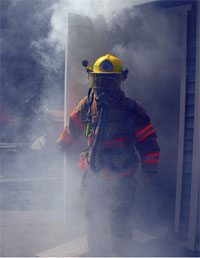
When we talk about workplace exposures, it’s hard to conceive of a more varying and serious set of hazards than what first responders encounter. There are none more courageous and none more exposed to known and unknown industrial hygiene hazards in the regular course of their work than those who deal with front-line lifesaving.
R-E-S-C-U-E. The Merriam-Webster Dictionary defines rescue as "to free from danger, harm or confinement." Confined space rescue can be a very dangerous act. Statistics show that more than 60 percent of those who die in confined spaces are people attempting to perform a rescue.
With 126 million receptors in each retina, our eyes are the primary means by which we experience the world. There's simply no way to put a value on our vision and its impact on our day-to-day activities. Unfortunately, the eyes are also the body part most vulnerable to injury in the workplace.More than 2,000 eye injuries occur on the job every day, according to the U.S. Bureau of Labor Statistics. Almost 100,000 each year lead to temporary or permanent vision loss.
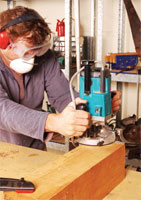
The simple things employees do every day are what can cause injury, ironically enough. Scalping from someone's hair being wrapped around a shaft or caught in a machine and ripped out is one example. Others are acid or chemical burns, lacerations from bumping into pipes or product being slung at the worker through grinding, and toxic chemical exposures.
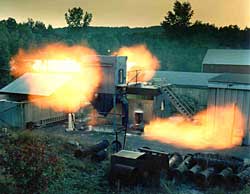
There is no single common substance or mistake involved in dust explosions. Dust explosions occur in a wide variety of industries and applications. One common thing that is a major part of the secondary explosions is housekeeping. Typically, there's a process vessel inside a facility that is processing a combustible material. If you have an explosion in an unprotected vessel (the primary explosion), the vessel is destroyed or ruptured and a fireball is released into the larger process area.
OSHA has long required employers to evaluate the workplace for electrical hazards. Most companies are familiar with possible shock hazards and know that OSHA requires all qualified workers be properly trained to work on or near electrical equipment. However, many safety managers are unaware that OSHA also requires so-called unqualified personnel to be trained to recognize and avoid electrical hazards.
The National Institute for Occupational Safety and Health (NIOSH) conducts a range of efforts in the areas of research, information, and service. The NIOSH program portfolio focuses on relevance, quality, and impact. This is achieved through strong involvement of partners and stakeholders through the entire research continuum (conceiving, planning, conducting, translating, disseminating, and evaluating). The programmatic and support structures provide a foundation for staff to carry out its mission to provide national and world leadership to prevent work-related illnesses and injuries.
Catalytic Leaders work to perceive what's really going on, rather than stumbling, eyes obscured by outdated information or by their own or others' biases. They don't persist with diminishing return strategies or ignore fixes that may be "different."
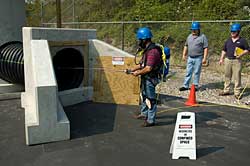
The day began like any other for an experienced contractor of 15 years. He left his house at 7 a.m. to perform storage tank maintenance at a local chemical plant. This was a very routine task, one he had performed hundreds of times. As he kissed his wife and two young children goodbye, he anticipated being done early this day and told them that he would see them for dinner. As he backed his car down the driveway, he honked the horn and waved goodbye. Sadly, this was the last time he would ever see his family.

Workplace discussions of respiratory protection frequently focus on required protection. We may ask, "What about comfort? Are you feeling secure and protected in work environments from potential or imagined respiratory hazards?" We want our employees to feel comfortable at work. One problem is when they "feel" better wearing a respirator when there is no real established need or exposure that would require it.
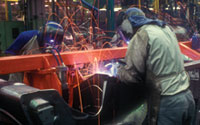
Creating the kind of culture where we go longer periods of time without injuries--and where no injury is acceptable--is a serious undertaking. In the past three articles, we have sketched the characteristics we have observed in organizations that do just this. Notably, the emphasis has been on the role of leaders: taking ownership for the culture, systems, and results; developing an exposure (vs. injury) focus; and rethinking the measurements and metrics that drive safety functioning and shape the assessment of our efforts.
To help ensure that hazardous chemicals are used and handled safety in the workplace, OSHA created the Hazard Communication (HazCom) standard, 29 CFR 1910.1200, in 1994. The standard requires employers to create a program to properly handle hazardous chemicals in their workplaces.
Very few individuals, families, companies, hospitals, cities, or even countries are properly prepared to prevent or minimize the human morbidity and mortality, the social disruption, and the economic consequences caused by the results of an H5N1 avian influenza pandemic.