Leaders know how important developing strategy is to setting the course. But if you aspire to highest levels of performance, you’ve got to go beyond just focused thinkiStrongest leaders know that real
Here it is December, and we’re talking about hot work. No, we aren’t talking about working when it’s hot—but, sometimes, we have to. We’re talking about working on equipment, making it hot, and having to be careful with the heat we generate and the surrounding environment.
In its more than 30 years of existence, the Emergency Response Guidebook (ERG) has been the “go-to” reference for first responders faced with the possibility of a hazardous materials incident— and it will continue to be the essential reference. In order to reflect changes in both domestic and international regulations, the ERG is republished every four years in English, French, and Spanish.
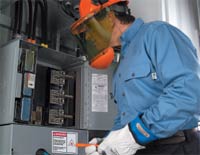
Understanding and protecting against arc flash and other electrical hazards and meeting the requirements of NFPA 70E has become more widely practiced in the past several years, and “8 cal” has become the industry standard for daily-wear FR clothing. This refers to the amount of protection from incident energy, expressed in calories per centimeter squared, that a fabric will provide in an arc flash exposure. It’s also expressed as an “ATPV” (Arc Thermal Performance Value) or arc rating.
The Nov. 4 election gave voters a golden opportunity to revolutionize Washington's safety pantheon. Not only were seven of the 21 members of the U.S. Senate Health, Education, Labor, and Pensions (HELP) Committee either seeking re-election, the presidency, or retiring and leaving their seats open, but also eight of the 15 members of the Senate Appropriations Subcommittee on Labor, HHS, Education, and Related Agencies were running or leaving office -- and one of them, Republican Sen. Ted Stevens, 85, of Alaska, was convicted eight days before the election of seven federal felony charges of lying on his financial disclosure forms to hide $250,000 in gifts and home renovations. Alaska voters denied him a seventh term, early and absentee votes counted Nov. 18 indicated.
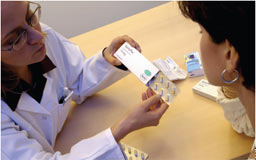
Despite the very real risk that an influenza pandemic poses to U.S. businesses, studies and anecdotal evidence show there’s a disconnect between risk managers and the Csuite that can make it difficult for pandemic preparedness to receive the attention—and funding—that it deserves. This article will present strategies and new developments that risk managers can leverage to help improve understanding among senior management about the value of comprehensive pandemic planning and to secure C-suite support.
Many organizations have encountered resistance or noncompliance trying to get plant-bound employees to work safely. This despite reminders, threats, or tomes of policies and procedures (some so ponderous they might create back problems from lifting them). So what chance do you have of inculcating safety checkoffs, judgment, and actions with people who receive minimal or no supervision, who work outside and perhaps check in only occasionally? Actually, a lot, if you approach it the right way—slim, if you don’t.

Drop into any hardware store or home improvement center, and you're likely to find aisles full of tools labeled "ergonomic." But what exactly does that mean for consumers? Simply put, ergonomics is the science of designing and producing tools, furniture, and other work-related implements that improve a worker's efficiency while reducing discomfort, fatigue, and risk of injury.
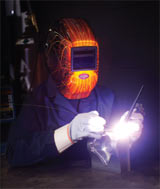
PAPR. No, it has nothing to do with the clapper (Clap On, Clap Off), but it does have something to do with helping some of your employees breathe easier. A PAPR (pronounced PAP-er), or Powered Air Purifying Respirator, is a respirator of convenience for those employees who may be problematic into fitting in a regular respirator facepiece or for those jobs where you need cool air or where you need to have a high assigned protection factor (APF; more on that later).
Whether or not it’s true that some forward-looking caveman started it all by strapping a turtle shell to his head, it’s certain head protection has been a matter of survival throughout human history.
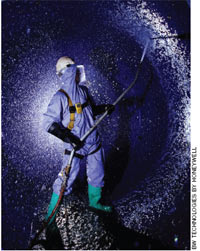
When it comes to hauling cargo such as liquefied natural gas (LNG), oil, or BTEX (benzene, toluene, ethylbenzene, xylenes), safety personnel must be made aware of all safety concerns, especially during transportation at sea. Marine personnel can potentially be exposed to dangers that include oxygen deficiency or enrichment, explosive gases, and toxic effects from cargo and maintenance chemicals.
No facility is exempt from slip-and-fall injuries. Even in non-manufacturing environments, slips and falls to the same level account for more than 15 percent of OSHA reportable injuries and more than 70 employee deaths each year, according to the U. S. Bureau of Labor Statistics.
Now that American industry seems to have focused all of its energies on the newest hot topic—going “green”—many issues that formerly seemed to grab so much attention, such as the health effects of mold, have faded into the background. The fact is that mold continues to be a problem in the residential, commercial, and industrial markets, and it must be dealt with on an ongoing basis. This article takes a look at the state of mold remediation and what’s new in the area.
Proper equipment and PPE are critical for safe operation of a chain saw, a potentially dangerous tool that is tougher to handle than it appears. The most important components of a chain saw user’s PPE ensemble may be his eye and face protection, although protective gloves and footwear are included.

October's final night is much darker than the harmless fun you may imagine. Ghosts and goblins may be prowling the streets with witches, warlocks, princesses, pirates, and countless other costumed carousers, minds fixed on sweets and treats. The truth is, they have good reason to be frightened.
A senior building maintenance employee was working on a building that was undergoing renovations. The job included the installation of an emergency exit light above a doorway. The maintenance employee was positioned on a 10-foot fiberglass stepladder. As he was rechecking the 110-volt electrical wiring using a multi-meter tester, he experienced a strong electrical shock sensation. He was reaching above and behind the light at the time and fell approximately 8 feet to the floor. He sustained a fractured left heel, as well as a compression fracture of his lower back. This employee was hospitalized, according to the OSHA accident report.