Sweating the small stuff can become a big problem. Clear vision is a must in order for your workers to be safe.
We must face the reality that hearing conservation efforts are interdisciplinary, integrated, and need leadership that executes a detailed and appropriate plan.

There will come a point during the upcoming American Society of Safety Engineers Professional Development Conference & Expo, June 13-16 in Baltimore, when visitors will have the opportunity to witness something close to what inspired Maryland native Francis Scott Key by that dawn's early light in 1814, when he penned the words of what would become our national anthem.
"When you're not thinking about your driving, your habits will kick in. If you've got good habits, your chances of having a collision are minimized. If you have poor habits, they're increased."
The majority of construction accidents are not due to a lack of training, skill or knowledge — nearly all accidents are simply related to poor decision-making.
Food safety is getting renewed attention from Congress and the two federal agencies chiefly charged with safeguarding the nation's food supply: the Food and Drug Administration (FDA) and the Food Safety and Inspection Service (FSIS) of the USDA.
In the past, cut-resistant gloves were treated as a commodity, with little training and education of wearers. Now, the emphasis is on information and communication.
Safety directors have good intentions when determining the types of safety eyewear to provide for their programs. After all, program managers are truly interested in protecting the eyes of their employees.

The Centers for Disease Control (CDC) tells us that proper hand washing is the single most important action each of us can perform to help stop the spread of diseases.
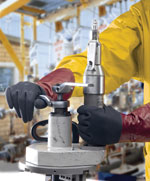
In today's fast paced and ever-changing manufacturing environment, the "personal" aspect of personal protective equipment (PPE) is more important than ever. The process of researching, developing, and manufacturing new products must go full circle, beginning and ending with the workers who wear PPE to perform a variety of tasks day after day.
At some point, most learners will have little experience with traditional approaches to learning that don't involve technology. Finding newer methods is essential.
When it was announced that fatality rates on U.S. roadways had sharply declined in the past 40 years, traffic control experts had a quick explanation: They pointed to the increased use of visual cues, such as reflective signs, raised pavement markers, and rumble strips.
Are you getting the highest levels of respiratory protection that are currently available today?
Buy-in. It is a critical element to a valued safety and health process. The problem is, no one seems to be able to agree on how best to get there from here.
The economy is bad, business is down, and companies are laying off employees in record numbers. They need to cut expenses. An easy target is the company's incentive program. It doesn't produce goods, make sales calls, clean the building, or repair equipment. It just costs money the company doesn't have. Or does it?

June 3, 2008, turned into a nightmare for Chris and Janet Augeri. Instead of celebrating their son Rob's 31st birthday, they were making plans for his funeral.
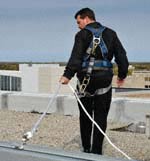
Learning how to minimize the risk of potentially dangerous or fatal fall hazards allows organizations to take a proactive approach to worker safety. In November 2007, the American National Standards Institute (ANSI) released a comprehensive family of standards, known as the Z359 standard or "Fall Protection Code," to help organizations learn how to reduce risk.