When your data shows a troublesome negative trend, rely on core safety principles that have worked throughout the years to get things turned around and your program back on track.

Once a company determines the need for a fall protection system, there are four options to evaluate: eliminate, prevent, restrain, and arrest.
There are currently no legally enforceable occupational exposure limits and very few recommended limits for nanoscale forms of most materials.
The starting point when selecting protective footwear is a Job Safety Analysis to understand the hazards that are present in a given workplace.
A recent NIOSH study found workers from small companies and from well servicing companies are at greatest risk of dying in a motor vehicle crash.

The June 8-11 event in Orlando will be here before you know it, and it follows a highly successful conference in another prime destination, Las Vegas.
Simply put, any time you have a spark, heat, and oxygen near a filter system, you run the risk of a smoldering fire or spontaneous combustion within the system.
"I usually tell class participants that conditions have probably changed, processes have changed in five, ten, fifteen years, and you should constantly be sampling and updating your initial exposure assessment results."
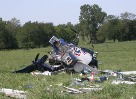
NTSB has reissued a recommendation that FAA require helicopter EMS pilots to undergo periodic, FAA-approved, scenario-based simulator training.
Dr. Bentley J. Bobrow discusses the lessons for employers in a study that involved resuscitation training and AEDs that provide real-time CPR feedback.
It is a best practice to integrate training within the safety incentive program.
A researcher from West Virginia University proposed a battery of audiologic tests that could help to diagnose solvent-induced hearing loss.
Supervisors should seek out opportunities to catch employees working safely, using the right safety equipment and clothing, and following safe work practices.
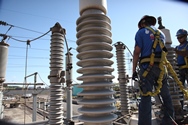
Always test circuits for the absence of voltage before placing personal protective grounds. Just because you know it's de-energized doesn't mean that it really is.
Gift card safety incentive programs are most effective when employees are incentivized based upon both lagging and leading metrics.

ASSE's Safety 2013 conference includes more than 250 sessions and one of the best safety and health exhibit halls of the year.
We need support, engagement, and managers and safety professionals who actually understand real-world performance concerns from our employees, so the proper solutions can be found.