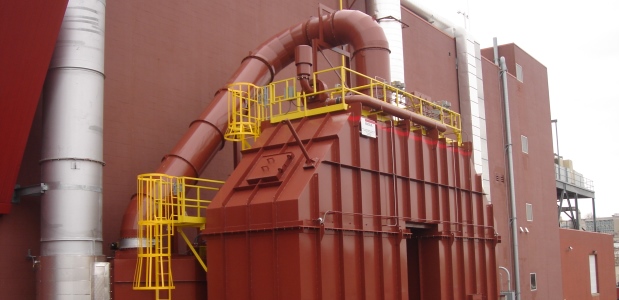
As thermal oxidizer technologies have been applied to a wider range of industrial applications, new challenges are continually uncovered that test their efficacy and durability.

According to OSHA, employers must ensure that Safety Data Sheets are readily accessible to employees for all hazardous chemicals in their workplace, and employees should have immediate access to the information without leaving their work area when needed, even during a power outage or other emergency.

To date no study has been performed that defines the safe threshold COF for a specific tribometer for all combinations of footwear, contaminant, and floor type.

Differentiating between contaminants that are gaseous or dust can be crucial in ensuring your PAPR is the proper PAPR.

When the correct level of persistence is applied toward identifying the hazard exposures, true cost savings will be seen every time.
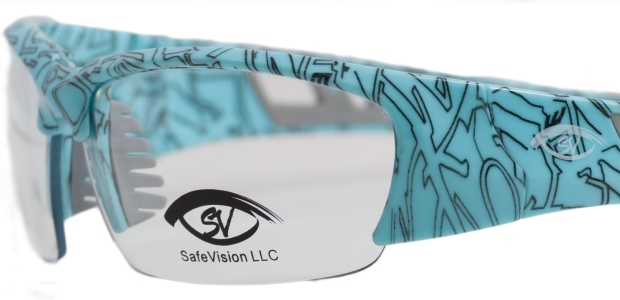
Glasses are more protective, resilient, and fashionable than ever before.

Using elements of the new construction industry regulation for confined spaces in a general industry program will go a long way to save the lives of those who would otherwise fall victim to them.

Given all we know and the resources available to us, "rescue" today should be viewed as an expected event with a positive outcome.

Until we know more, it is recommended that lighting in health care facilities should be designed to minimize acute melatonin suppression in night shift workers.
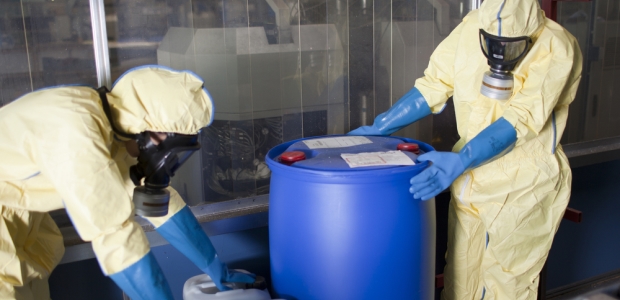
When respiratory hazards cannot be eliminated and employers are considering using respiratory protection, choosing the right respirator is the key.

Strive for consistency to avoid confusion when emergencies occur. Debrief and analyze how an emergency was handled and whether the appropriate transport style had been used.

DuPont Nomex's Dennis Mater and e-Hazard's Hugh Hoagland are presenting webinars Nov. 2 and Nov. 3 on fibers, fabric blends, and arc-rated and flash fire-rated apparel for cold weather, wet weather, or hot weather.

While 80 percent of cases were classified as low severity, 18 percent were moderate severity, and 1 percent were high severity. Two workers died.

U.S. District Judge Carl Barbier of New Orleans issued an order Oct. 25 granting that amount in fees for what he described as one of the most complicated multidistrict litigation cases ever brought to trial.

The DOT agency is tracking its progress month by month. Last month, for example, NHTSA published an interim final rule updating compliance criteria for repeat intoxicated driver laws to reflect section 1414 of the act.

From 2011 through September 2016, NTSB investigated 76 general aviation accidents in Alaska involving loss of control in flight that resulted in 31 fatalities and 38 injuries.

"Canadians are asking for and have a growing need for accurate concussion information across the country. This is very important work, and we look forward to continuing to work with the government on raising awareness of concussion treatment," said Pamela Fuselli, interim CEO of Parachute, an injury prevention charity.