
The TNEC will continue to offer hazard training for workers with the help of the grant.

Episode 46
In this Safety Speak mini episode of the podcast, Editor Sydny Shepard discusses ISO/PAS 45005: General guidelines for safe working during the COVID-19 pandemic, a new study on telecommuting and BLS data that shows workplace fatalities are at their highest since 2007.

Neck gaiters have been proven to provide protection from coronavirus-carrying respiratory droplets.

The death of a California construction worker in June resulted in around $54,000 in fines for two construction companies.
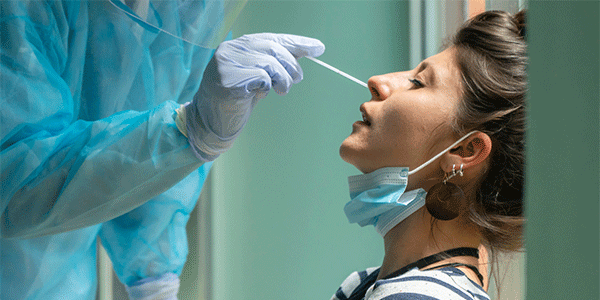
The test delivers results to your smartphone within 15 minutes of collecting a sample.

Ontario, Canada has had a steady increase in construction worker deaths in the past six years.

Episode 45
Listen in as Editor Sydny Shepard and Donaldson's Brent Nelson chat about the adoption of IoT in industrial facilities as well as its specific application with dust collectors.

Fifty percent of Americans would prefer to work from home even after the pandemic is over, says a report by Pew Research Center.

Due to weak workplace safety and coronavirus protection, a Utah representative may begin the process of introducing a bill to protect state workers.
Episode 44
In this mini episode of the podcast, Editor Sydny Shepard discusses a newly revised construction standard for multi-employer sites and the FDA's approval of a new at-home test for COVID-19 and the flu.

The COVID-19 pandemic has increased the need for support, communication and flexibility from employers.

OSHA will continue to work with craft breweries in Ohio to promote worker safety.

The FDA has approved an at-home test that can detect the presence of both coronavirus and the flu.

Choices for Biden’s health team slots include Dr. Vivek Murphy, who served as surgeon general under President Obama.
Episode 43
In this episode of the podcast, listen in as Editor Sydny Shepard discusses Cal/OSHA's new emergency regulations to protect against COVID-19 as well as the CDC and FDA's plan on how a Coronavirus vaccine could be distributed in the United States.

An advisory committee for the CDC voted that health care workers and those who live and work in long-term hair facilities will be first in line to be vaccinated for the coronavirus.

A new record of coronavirus hospitalizations in the United States was reached on December 2.