Electronic tools helping small businesses evaluate workplace safety and health management programs was among the topics presented at a recent OSHA forum titled "Challenges Small Businesses Face in Complying with Regulations."
The construction company's activities at sites around the world continue through Sunday and remind the workers that active planning should precede every task.
The U.S. Fire Administration is recruiting students and instructor candidates to attend an on-campus pilot class for its new six-day off-campus or state enfranchised course Water-Based Fire Protection System Plan Review.
GlobalCynex Inc., a Sterling information technology company, has agreed to pay $1,683,584 to 343 non-immigrant workers after a U.S. Labor Department investigation found the company violated the H-1B visa provisions of the Immigration and Nationality Act.
NIOSH and partners will hold the International Conference on Road Safety at Work on Feb. 16-18, 2009, at the Marriott Wardman Park Hotel, Washington, D.C. Conference co-sponsors include the World Health Organization, Pan American Health Organization, International Labour Organization, U.S. Department of State, and the National Safety Council.
The Department of Labor's updates to the program lets employers use multiple training approaches, gives apprentices interim credentials and lets both use electronic media for technical instruction.

Starring Chandra Wilson, who plays Dr. Miranda Bailey in ABC's weekly drama series, the public service announcements have important tips for parents and caregivers to follow when using OTC oral cough and cold medicines.
The recommendations focus on diagnostic and other testing and treatments for complex regional pain syndrome (CRPS), neuropathic pain, trigger points/myofascial pain, chronic persistent pain, fibromyalgia, and chronic low back pain, among other conditions.
Sessions will discuss state and federal laws covering FMLA, FLSA, harassment, diversity, hiring, employee attendance, technology and information policies, and the aging workforce, among other topics.
Application procedures have been announced for the 2009 Harvard program for Senior Executives in State and Local Government. The program is once again sponsored through a partnership between the International Association of Fire Chiefs (IAFC), the International Fire Service Training Association/Fire Protection Publications (IFSTA/FPP), the National Fire Protection Association (NFPA) and the Department of Homeland Security - United States Fire Administration (USFA). Each organization will fund the tuition costs of two individuals for a total of eight fellowships.
Since the agency's Web site went online in 1995, its traffic has consistently increased by 12 percent to 15 percent annually, according to OSHA, reaching more than 110 million visitor sessions annually, at last count.
Originally signed in 2002, the alliance has resulted in products and resources addressing issues ranging from ergonomics and hazard communication to personal protective equipment and noise and hearing conservation, the groups noted.

However, the Liberty Mutual/SADD study of 3,580 students at 29 high schools across the country found only 57 percent of teen passengers would speak up to stop the driver from racing other cars.
MSHA said the Oct. 22 fatality was the fourth accident in five weeks where a bulldozer operator died or suffered life-threatening injuries on the job.
"Our common goal is to ensure that every employee goes home safe and healthy at the end of each workday," said Jeff Funke, director of OSHA's area office in Charleston, W.Va.
The federal government recently announced it is making $679 million available immediately to states across the nation to cover costs incurred to repair roads and bridges damaged by a variety of natural emergencies and catastrophic events.
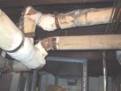
"Asbestos: The Hidden Killer" uses soccer legend and TV star Ian Wright, a former laborer, to highlight the threat. Related diseases are killing 20 building trade workers every week, and 500,000 buildings may contain asbestos in pipe insulation, shown here, or other materials.
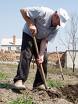
At 25 deaths on average per 100,000 workers in 2003-2006, this industry is on par with high-risk industries such as agriculture and mining. About a third of those who died of injuries in landscaping were self-employed.
The site groups historically significant, policy-shaping accidents and discusses common themes, with the goal of helping users. The earliest accident on the list happened in September 1959 when a Lockheed L-188A (Electra) plane's left wing disintegrated as the plane flew near Buffalo, Texas.