In addition to the combustible dust violations, an inspection found that the Delaware company failed to provide fire retardant clothing for employees and require them to wear adequate eye protection with side shields, among other hazards.
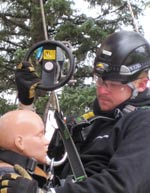
What is the big deal about constructing, operating, and servicing a wind turbine? Ask anyone who has been involved in this industry for more than 20 years, and he will describe a time that is different from today only in the breadth and scale of these renewable energy-generating machines.

Public hearings are set for April 27 in Hood River and April 29 in Salem to discuss the proposed changes.
U.S. Transportation Secretary Ray LaHood announced them Tuesday. One looks at the auto industry as a whole and will be done by the independent National Academy of Sciences. The second, by NASA engineers, will study the problem in Toyotas.
Based on the violations found, total penalties assessed would amount to $125,000 if the employer was in the private sector, but under the law, federal agencies are cited without penalties.
A March 30 letter from the National Association of Chemical Distributors, for example, expresses concern that the proposed rule, "which will result in a negative economic impact for the chemical distribution industry, is a prelude towards a more expansive and burdensome ergonomics framework."

The latest example is a reflective decal that will be required on the front and back license plates of New Jersey drivers who have a Graduated Driver License, as of May 1.
Oregon high school students submitted nearly 50 videos in the second annual contest. Winners will be screened at a Salem theater April 10.
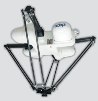
The Robotic Industries Association will host the April 15 presentation as part of National Robotics Week. The food industry is "ripe for adopting more robots and automation," RIA says.
The list is intended to help countries prevent, record, and, if applicable, compensate for diseases caused by work.
“We're driving toward ending malaria deaths by 2015 and making history,” said campaign director Adrianna Logalbo. “We want everyone to join us for the ride.”
The first installment will highlight recent enhancements to the global Oeko-Tex® Restricted Substances List (RSL) and the Oeko-Tex® Standard 100 Certification, which ensures that textiles are tested to be free from dangerous levels of more than one hundred substances believed to be harmful to human health.
The Advisory Committee on Construction Safety and Health (ACCSH) advises OSHA chief David Michaels, Ph.D., M.P.H., on worker safety and health in the construction industry.
It is estimated that the move in Florida from a secondary to a primary seat belt law, enacted last summer, will save the state 940 lives, prevent almost 150,000 injuries, and reduce costs by $5.5 billion in the first five years alone.
“Employees were exposed to a potentially fatal fall hazard of more than 13 feet from scaffolds while applying a final coat of stucco to a building,” said Patricia Jones, director of the OSHA office in Avenel, N.J.
CDC estimates that between April 2009 and January 2010 there have been approximately 57 million cases of H1N1 in the United States, resulting in 257,300 hospitalizations and 11,686 deaths. It is possible that the United States could experience additional waves of the virus throughout 2010, authors note.
A March 19 memo sent to regional administrators and state plans by Richard Fairfax and Steve Witt, who head the OSHA enforcement and state programs units, clarifies when citations should be issued for failing to provide it.
EPA said that by issuing complaints it is sending a message to construction site operators, public or private, that these regulations must be met.

The company, a unit of Chicago-based Exelon Corp., operates 17 reactors in Illinois, Pennsylvania, and New Jersey that represent about 20 percent of the U.S. nuclear industry's power capacity. The Green Cross for Safety Dinner will be held May 13 in Chicago.
One of the most widely implemented NFPA standards, it helps users prepare for disasters and business interruptions. The 2010 version has been reordered and expanded.