It is the first U.S. standard to address the protective apparel needs of workers who require protection from chemical hazards every day, not just in emergency situations.
Companies can use it to assess their needs for various types of protective equipment, from head to toe, based on a hazard assessment.
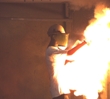
In this webinar, e-Hazard.com's Hugh Hoagland and three other experts will discuss best practices for companies and will explain how they can comply with the new edition before it is published in October 2011.
The maker of Kevlar announced Oct. 18 that it will sponsor a changing exhibition gallery at the museum in the 400 block of E Street NW in Washington, D.C.
The deadline in IAFC's call for presentations is 11:59 p.m. EST on Nov. 1. The conference takes place May 18-22 in Baltimore.
The Oct. 7 letter from the Office of Health, Safety and Security's acting enforcement chief to Savannah River Nuclear Solutions, LLC said SRNS "had extensive deficiencies" in hazard assessment and its electrical safety program.
Bomb suit manufacturers run tests on their protective suits to ensure they can withstand an explosion but lack a single set of requirements the suits must meet before they can be sold.
Mark Levy, president of the Honeywell Life Safety business, says the acquisition completed Sept. 15 positions its 17,000 worldwide employees well for a global market where safety standards are quickly rising.
Sixteen companies win top honors in the magazine's second annual contest, with trophies and ribbons handed out Tuesday at the National Safety Council Congress & Expo in San Diego.
Market Manager Peter A. Kirk said the "decision to engineer a Level B suit was based on feedback we received from firefighters, military personnel, law enforcement and occupational safety professionals who were looking for the quality of Saint-Gobain’s material technology in a Level B suit."
To be built at the famed Worcester Polytechnic Institute in Worcester, Mass., the facility is expected to house a variety of activities related to combustion and explosion, fire suppression, and materials.
Infrared imaging technology helps to improve electricians' on-the-job safety.
The 2010 Congress & Expo’s live exhibitor presentations offer something for everyone. During the interactive 30-minute sessions, attendees will get an in-depth look at exhibitors’ products and services. Each presentation will take place on the expo floor at booth 1239.
A solid lineup of speakers and sessions cover offshore and land operational safety lessons from Kleen Energy, BP, and more Sept. 21-23.
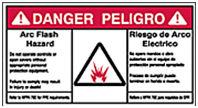
When deciding what information to include on your company labels, always remember for whom the labels are posted: the electrician or maintenance person in the field.

"Creating a safer environment and eliminating hazardous conditions on the high seas is one of the goals of the NTSB," said Robert Sumwalt, NTSB board member. "The forum will provide a great opportunity to identify strategies to improve safety."

At one of the sites, the farmer-owned company failed to test the atmosphere before entry and to have an employee entering wear a safety harness and lifeline. It also failed to post an employee to observe the entry. Both facilities failed to turn off and lock out power to the auger before workers entered the grain bins, investigators said.
The agency's May 2010 request for information attracted comments for and against a rulemaking that would address workers' protection against exposure to H1N1, TB, and other diseases.
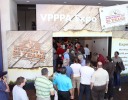
Last year's event in San Antonio, Texas (pictured), drew 2,836 attendees representing all areas and professions affiliated with the safety and health industry. For this year's conference in Orlando, organizers are expecting to up that number to at least 3,000.
Coronary events are a major health issue in firefighters, causing nearly half of all deaths on duty. Exposure to ultrafine particles could contribute to coronary disease in firefighters—not only as a long-term health risk, but also as a cause of coronary events while responding to fires.