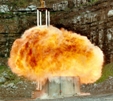
An Oct. 19 seminar and Oct. 20-21 symposium are in Kansas City, Mo., sponsored by the NFPA and its affiliated Fire Protection Research Foundation, will include a case study by Imperial Sugar's vice president of Manufacturing & Engineering.
The U.S. Chemical Safety Board is responding to a congressional mandate for a yearlong, $575,000 study by the National Academy of Sciences on how to reduce or eliminate the stockpile at Bayer CropScience's plant in Institute, W.Va.
“Employers are legally bound to provide a safe work environment for their employees,” said OSHA chief David Michals. “This company has repeatedly failed to do so, costing one worker his life and grievously injuring another. This must stop.”
The citations allege, among other things, that the company did not take air samples as required for workers who were overexposed to airborne lead nor provide the required annual training associated with the hazards. An additional willful violation alleges that the company stopped providing hearing tests to employees overexposed to noise.

Finding the correct frequency for auditing the program is one of the key elements in ensuring long-term success.
Better air = better performance.
The violations include inadequate hearing and respiratory protection programs, electrical hazards, improper use of compressed air, as well as employee exposure to silica, lead, and manganese fumes.
"We are concerned that wastes from mineral processing and associated fertilizer production can pose a serious risk to our nation’s drinking water and the health of families," said Cynthia Giles, assistant administrator for EPA’s Office of Enforcement and Compliance Assurance.
Citations against two USPS facilities in the past week are the latest in a string of penalties against other individual postal facilities nationwide, and follow DOL's filing in July of an enterprise-wide complaint that included 350 postal outposts.
In addition to 18 serious citations, the company received four repeat citations, in part for failing to develop an energy control program, develop and implement a written hazard communication program, and train workers on chemical hazards in their work area.
The board also released a 15-minute safety video titled "No Escape: Dangers of Confined Spaces," which includes a detailed animation depicting the tragedy that unfolded at Xcel's Cabin Creek plant on Oct. 2, 2007, taking the lives of five contractors.
Video footage shows the killer whale repeatedly striking and thrashing the trainer, and pulling her under water even as she attempted to escape. The autopsy report describes the cause of death as drowning and traumatic injuries.
According to DOJ, the company, which treats wastewater in a facility separate from its cheese-making plant, repeatedly violated its National Pollutant Discharge Elimination System (NPDES) permit over a period of three years, affecting a waterway that flows into the Boise River, a salmon habitat.

At one of the sites, the farmer-owned company failed to test the atmosphere before entry and to have an employee entering wear a safety harness and lifeline. It also failed to post an employee to observe the entry. Both facilities failed to turn off and lock out power to the auger before workers entered the grain bins, investigators said.
"The Kansas Department of Health and Environment’s extensive monitoring system helps locate waters in need of our attention. We now must take action to clean them up,” said EPA Region 7 Administrator Karl Brooks.
Many of the alleged violations concern the nationwide food distributor’s process safety management program, which was also the case in April, when a sister facility in Nampa, Idaho, roughly 180 miles away, was charged with penalties totaling $153,000.
The 24 alleged serious violations that resulted from a site-specific targeting program investigation included a failure to have at least two suitable gas masks available and accessible; lack of developed confined space procedures; and grinding wheel, compressed air, and electrical shock hazards.

Last year's event in San Antonio, Texas (pictured), drew 2,836 attendees representing all areas and professions affiliated with the safety and health industry. For this year's conference in Orlando, organizers are expecting to up that number to at least 3,000.
In addition, OSHA issued the company 50 serious and two other-than-serious violations for failing to provide proper protective equipment for employees working with lead and other extremely dangerous dust and chemicals, and failing to develop or implement a hazard communication program, among other things.
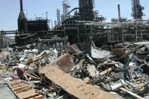
The company also agreed to spend at least $500 million on safety measures at its Texas City plant. Secretary of Labor Hilda Solis today said "The size of the penalty rightly reflects BP's disregard for workplace safety."