CHAIRS are a common point of debate in today's workplace. The questions most frequently debated derive from the differences between an engineering approach and a therapeutic approach to work injury prevention.
Editor's note: Jolanda Janczewski is President and CEO of Consolidated Safety Services Inc., a Fairfax, Va.-based safety and occupational health consulting firm with about 45 employees. CSS was honored in September 2002 as the U.S. Department of State's Small Business Prime Contractor of the Year for on-site testing and decontamination services provided during the October 2001 anthrax episode in the nation's capital. In the following excerpts from a Sept. 19, 2002, conversation with the editors of First Responder, Janczewski discusses the experience and how the safety and emergency response community can prepare for the next crisis.
WE live in a fast-paced society where the world is virtually at our fingertips 24 hours a day, 7 days a week. The popularity of everything from fast food to video on demand, to gas stations with pay-at-the-pump options, has spoiled us.
COMPUTER-based simulation of work experience has proven extremely effective in helping learners achieve their training goals. Simulation increases the learner's involvement and interest in online learning; however, bandwidth limits the forms it can take.
IT has only been a few years since laboratory-based oral fluid drug screening first appeared on the menu of choices for employers' substance abuse testing programs. In the beginning, some in the employer drug-testing market were skeptical of the new screening.
ALL of us have experienced it--that tiny shock we receive when touching a doorknob after walking across a carpeted floor. The shock is the transfer of static charge, or a balancing of our charge to that of the object. This transfer is called Electrostatic Discharge, or ESD. To understand electrostatic discharges, you must first understand the source.
MATERIAL handling carts (also known as utility, hand, or service carts) are used in most manufacturing environments to physically transport goods or parts to other areas of the operation for manipulation, storage, or shipment. Many times, safety and ergonomics professionals will advocate pushing a cart from the back when it has to be moved.
FORWARD-looking companies are thinking "leading indicator" rewards when it comes to safety programs, as they strive to make more efficient use of their safety investment. This proactive approach is paying dividends over the old, outcome-based focus.
THERE'S a lot of protection contained inside a glove these days. Corrosive or toxic material exposures, cuts, abrasions, and vibration are typical hazards these deceptively simple products ward off for employees.
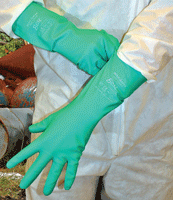
Sharp or rough surfaces/edges, hazardous chemicals, heat, cold, and biomaterials all threaten unprotected hands--and they have for decades. But with ever-changing technology, newer and faster equipment, and emerging health threats, hand protection has never been more important.
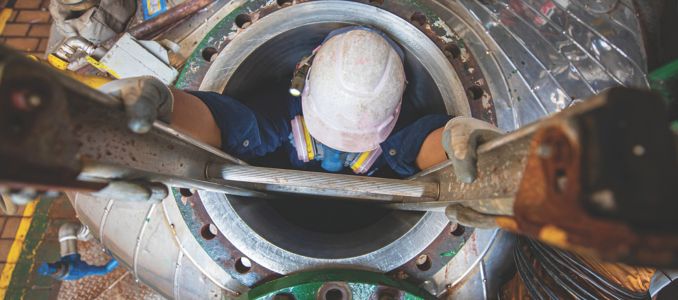
Protect yourself and your employees from confined spaces hazards

The Miami-based company faces a proposed $258,935 in penalties.

Another worker died in 2021 due to injuries at the Mississippi facility.